
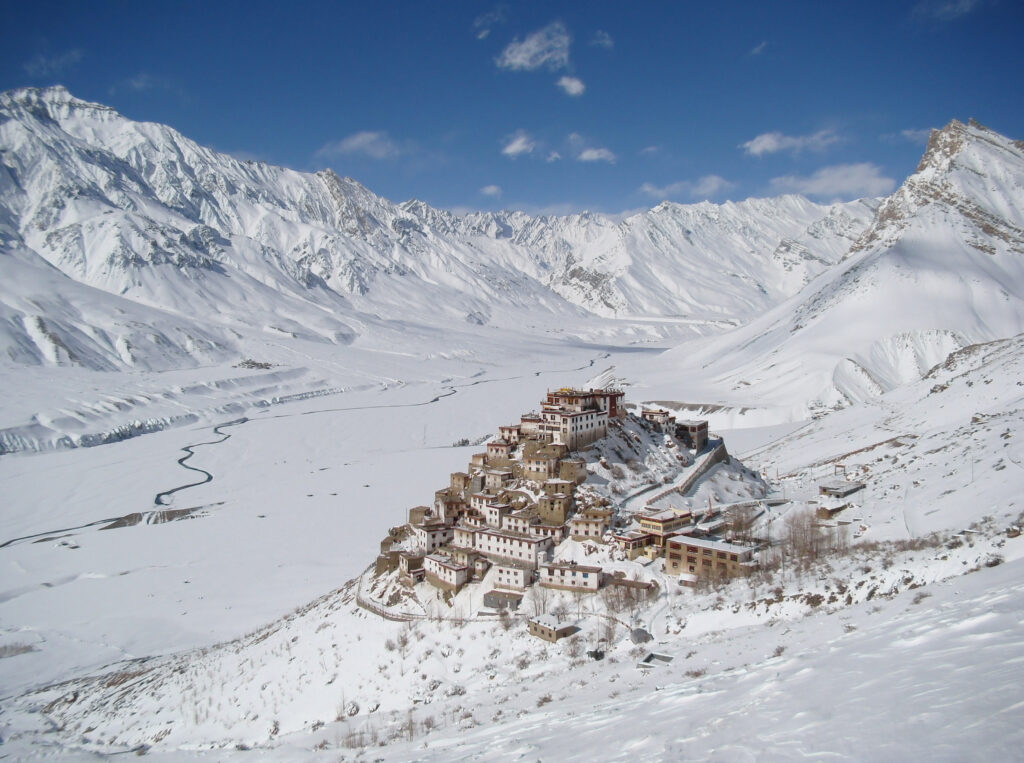
Spiti Valley in November
Visiting Spiti in November is like stepping into a serene winter wonderland. Nestled in the high Himalayas of Himachal Pradesh, Spiti Valley offers breathtaking landscapes, ancient monasteries, and a peaceful retreat from the chaos of city life. But November is not just another month here—it’s when the valley transforms, giving travelers a rare glimpse of its untouched beauty.
This is the moment when Spiti Valley in November reveals its truest character — raw, peaceful, and beautifully isolated. The tourist buzz of summer fades away, leaving behind quiet monasteries, empty roads, and a feeling of being completely one with nature. You can explore ancient villages like Kaza, Langza, or Kibber without the summer rush and actually connect with locals as they prepare for the winter ahead. Every conversation, every cup of butter tea, feels more personal in this season.
Whether you’re a photography enthusiast, an adventure seeker, or someone simply looking to escape into nature, Spiti Valley in November promises an experience like no other.
Why Visit Spiti in November?
November marks the transition between autumn and deep winter a time when Spiti Valley feels both alive and still. The weather turns colder, but the days are still manageable enough for travel. You’ll see the first traces of snow kissing the high passes, the barley fields turning golden, and the valleys echoing with calm before they’re buried under snow.
Choosing to visit Spiti in November means embracing the valley in its raw, unfiltered state. The lack of crowds allows you to experience Spiti more deeply to meditate at Key Monastery in utter silence, to photograph the snow-capped peaks glowing in the morning sun, and to witness life at a pace that the mountains themselves dictate.
Yes, it’s cold, and yes, some routes may start to close toward the end of the month. But that’s part of the charm. You’re not just visiting a place you’re experiencing the shift of an entire region from autumn warmth to winter chill. For travelers who seek solitude, authenticity, and a touch of adventure, Spiti Valley in November is pure magic.
1. The Peaceful Side of the Himalayas
By November, the busy tourist season is over. The roads that once buzzed with bikers and tourists fall silent. Villages return to their slow rhythm — farmers drying barley, monks lighting butter lamps, and children running home before dusk.
There’s something deeply peaceful about it.
You don’t rush. You don’t tick off places. You just be there.
You’ll find yourself sipping tea with locals in Kaza, watching prayer flags flutter in the icy wind, and realizing how beautiful silence can be.
Spiti in November isn’t about adventure — it’s about connection. With people, with the mountains, and with yourself.
2. The Beginning of Snowfall
November marks the first real brush of winter in Spiti Valley. You might wake up one morning in Langza or Kibber to see the ground covered in a thin, white blanket. The sunlight sparkles on the snow, the air feels fresh, and every photo you click looks like it’s straight out of a travel postcard.
Unlike deep winter months when heavy snow cuts off the valley, November offers a perfect balance — you still have road access (via Shimla), but you get to witness the valley’s first snow magic.
Average Temperature:
- Day: 5°C to 10°C
- Night: –5°C to –10°C
It’s cold — but beautifully so.
3. A Photographer’s Dream
If you love photography, Spiti in November gives you the kind of light and drama you won’t find in summer.
The sky turns a deeper blue, the snow glows orange at sunrise, and monasteries like Key and Tabo look breathtaking against the frosty backdrop.
The lack of tourists means you can shoot undisturbed — no crowds in your frame, no honking cars, just raw Himalayan stillness.
Evenings bring golden hour perfection; nights, a million stars scattered across the sky. It’s the kind of place where you’ll forget about Wi-Fi because the Milky Way is your new screen.
4. Real Local Life, Not Tourist Rush
One of the best things about Spiti Valley in November is that life slows down to its roots. Locals aren’t rushing to serve tourists — they’re living their winter routines, preparing food, repairing roofs, and sharing laughter around the fire.
When you stay in a homestay during this time, you’re not just a guest — you become part of their everyday life. You might help knead dough for tingmo bread, join them for butter tea, or listen to stories of how they survive through winter.
These are the moments that make Spiti unforgettable — not the photos, but the people.
5. Roads Still Open (Mostly)
A lot of travelers assume that Spiti Valley in November is inaccessible — but that’s not true.
While the Manali–Kaza route usually closes after early November due to snow at Kunzum Pass, the Shimla–Kaza route stays open most of the month.
That means you can still explore the valley — from Tabo and Dhankar to Kaza, Langza, and Key Monastery — without being completely cut off.
It’s the best of both worlds: fewer tourists but enough accessibility to explore safely.
6. Stargazing Like Nowhere Else
Another reason to visit Spiti are the November nights. Spiti nights in november are long and crystal clear — a paradise for stargazers. With zero pollution and almost no artificial light, the night sky feels close enough to touch.
If you’ve never seen the Milky Way before, Spiti in November will change that.
Kibber, Langza, and Hikkim are some of the best spots to just lie back, breathe the icy air, and lose yourself under billions of stars.
Note:- It’s not just stargazing — it’s therapy.
7. Space to Breathe and Reflect
When you travel to Spiti Valley in November, you travel into stillness. There’s no rush, no crowds, and no noise — just time. Time to breathe. Time to think. Time to feel small in front of these massive mountains and yet completely at peace.
For many travelers, this month becomes a form of healing — a quiet reset before the year ends.
Note:- Spiti teaches you to slow down. To listen to wind, to silence, and sometimes, to yourself.
Spiti Valley Weather and Temperature in November
Traveling to Spiti Valley in November requires careful planning because the weather is cold, and conditions can change rapidly. Understanding the Spiti Valley temperature in November and overall weather patterns will help you pack appropriately and plan your itinerary effectively.
1. Temperature Overview
Here’s a detailed look at average temperatures in Spiti Valley during November:
| Location | Daytime Temperature | Nighttime Temperature | Weather Conditions |
|---|---|---|---|
| Kaza | 6°C – 10°C | -4°C – -8°C | Clear skies, occasional frost, occasional snow |
| Tabo | 5°C – 9°C | -5°C – -10°C | Cold, dry, light snowfall possible |
| Key Monastery | 4°C – 8°C | -6°C – -12°C | Very cold, snow on surrounding hills |
| Kibber | 3°C – 7°C | -8°C – -15°C | Heavy frost, snow accumulation likely |
| Dhankar | 5°C – 9°C | -7°C – -12°C | Chilly winds, clear skies, snowy patches |
Notes:
The valley lies at high altitudes (3,000 – 4,500 meters), so temperatures drop significantly at night.
Early snowfall is common in November, especially in higher-altitude villages.
Even sunny days feel cold due to the crisp Himalayan air and high elevation.
2. Day vs. Night Conditions
Daytime:
Days are generally sunny but cold. With clear skies, sunlight can feel warm during midday, but it doesn’t last long. Temperatures rarely rise above 10°C in most areas.
Nighttime:
Nights are freezing, often dropping below -5°C in Kaza and -10°C or lower in higher-altitude villages like Kibber and Dhankar. Proper thermal wear, insulated jackets, gloves, and warm hats are essential.
Wind Chill:
Winds can make the temperature feel even colder, particularly near passes and open plains. Always check wind conditions before planning treks.
3. Weather Patterns
Spiti Valley weather in November is characterized by:
Dry Climate: Unlike monsoon months, November is dry, so roads are less muddy, and landslides are rare.
Snowfall: Early snowfall is possible, especially at higher altitudes. Low-lying areas like Kaza see light snow or frost.
Clear Skies: November often brings clear skies, ideal for stargazing and photography.
Limited Rainfall: Rain is rare, so traveling is mostly hassle-free.
4. Packing Tips for November Weather
To enjoy Spiti in November safely:
Layered clothing (thermal innerwear, fleece jackets, windproof outer layers)
Heavy insulated jackets and gloves
Warm hats and scarves
Waterproof boots and woolen socks
Sunglasses and sunscreen for daytime sun exposure
Thermos and hot beverages for staying warm during travel
5. Travel Tips Based on Weather in Spiti Valley
Start early during the day as sunlight is limited.
Avoid high-altitude treks during snowfall unless you are experienced.
Check road conditions daily—mountain passes can close temporarily.
Keep emergency contacts and a local SIM card handy; some remote villages may have patchy connectivity.
November in Spiti Valley is cold but stunningly beautiful. Understanding the temperature ranges, weather conditions, and how to prepare for them can make your journey safe, comfortable, and unforgettable.
Road Conditions and Accessibility in Spiti Valley in November
If you’re planning to visit Spiti Valley in November, knowing the road and route conditions is absolutely essential. This month marks the transition from autumn to winter — when the valley slowly starts isolating itself from the rest of the world due to snowfall and dropping temperatures. Still, with proper planning, the journey remains one of the most rewarding and scenic adventures in the Himalayas.
The Two Main Routes to Reach Spiti Valley
There are two primary routes that connect Spiti Valley to the rest of Himachal Pradesh:
1. Shimla – Kinnaur – Kaza Route (Open in November)
Status: Usually open throughout November
Route: Shimla → Narkanda → Reckong Peo → Nako → Tabo → Kaza
Distance: ~420 km
Travel Time: 14–16 hours (with breaks)
This is the safer and more reliable route during Spiti in November.
Note:- Since it runs at a relatively lower altitude compared to the Manali route, it remains open longer and receives less snowfall. However, nights can be freezing, and early-morning frost can make driving slippery.
Highlights Along the Route:
Sutlej River Valley views
Apple orchards and pine forests
Nako Lake and Tabo Monastery
Travel Tip: Start your journey from Shimla in early morning hours and plan your night halt in Reckong Peo or Nako before heading to Kaza.
2. Manali – Kunzum Pass – Kaza Route (Partially Closed in November)
Status: Mostly closed after mid-October or early November due to heavy snow at Kunzum Pass
Route: Manali → Rohtang Pass → Gramphu → Kunzum Pass → Kaza
Distance: ~200 km
Travel Time: 10–12 hours (when open)
The Manali route to Spiti in November is unpredictable. Kunzum Pass (4,551 m) often receives early snow, making it unsafe or officially closed for vehicles. Even if it’s open in early November, expect icy stretches and risk of sudden closures.
Impact of Snowfall on Travel in Spiti Valley in November
By November, winter begins to settle over the Himalayas, and even light snowfall can significantly impact accessibility in Spiti Valley. Here’s what every traveler should know:
1. Snowfall Begins Early in High Passes
Early Snowfall: Higher passes like Kunzum La (4,551 m) and Rohtang La (3,978 m) usually start receiving snowfall by late October or early November, making the Manali–Kaza route risky or completely closed.
Accumulation: Even a few centimeters of snow can quickly form ice sheets on roads due to freezing night temperatures.
Local Updates: Always confirm with locals, BRO (Border Roads Organisation), or Himachal PWD before planning travel beyond Kaza or Kunzum.
2. Visibility and Driving Challenges
Reduced Visibility: Snowfall, even mild, can reduce visibility drastically. Fog also adds to the difficulty during early mornings and late evenings.
Black Ice: Invisible ice patches (black ice) are a major hazard. They look like wet patches on asphalt but cause vehicles to skid dangerously.
Slippery Turns: Sharp mountain curves around Nako, Tabo, and Kibber become particularly tricky post-snowfall — it’s best to drive slowly and avoid sudden braking.
3. Road Closures and Delays
Temporary Closures: Authorities may close roads for a few hours or days after heavy snowfall for clearing operations.
Limited Connectivity: In late November, interior routes to villages like Hikkim, Komik, and Langza can get blocked, leaving only Kaza and Tabo reliably connected.
Backup Plans: Always have an alternate itinerary in case you need to halt longer in one town due to weather.
4. Vehicle and Safety Impact
Fuel Efficiency Drops: Cold weather affects vehicle performance; diesel engines may struggle to start in the morning.
Tyre Pressure: Tire pressure decreases in cold, increasing the risk of punctures — check frequently.
Emergency Gear: Carry snow chains, antifreeze, extra fuel, and a power bank; local shops might be closed due to weather.
5. Positives of Snowfall
While challenging, snowfall adds a magical touch to the journey — turning Spiti into a snow-draped wonderland perfect for photography and serenity seekers.
Light snow on monasteries like Key and Dhankar makes them look otherworldly, offering rare frames for travel photographers.
While snowfall can make travel to Spiti Valley in November challenging, it doesn’t make it impossible. Choosing the right route (Shimla–Kaza), staying informed, and preparing your vehicle properly are the keys to a safe and unforgettable journey.
What to Expect: Snow, Monasteries, and Serenity
When you visit Spiti Valley in November, you’re stepping into a quieter, slower, and more soulful version of the Himalayas. The valley transforms as the first flakes of snow settle gently over rugged mountains, ancient monasteries, and frozen rivers. November is when the region wears its most peaceful expression — stripped of the summer crowd, bathed in silence, and surrounded by awe-inspiring beauty.
1. Snow: The Valley Turns White and Serene
November marks the beginning of the snow season in Spiti Valley, and the transformation is magical.
Snow-Covered Landscapes: By mid-November, white snow carpets the high-altitude villages — Kibber, Langza, Komik, and Hikkim — while Kaza and Tabo begin to show patches of frost. The contrast of white snow against Spiti’s brown mountains makes every frame surreal.
Frozen Streams and Lakes: Smaller water bodies begin to freeze, creating crystal-like textures — perfect for photography.
Sunlight on Snow: The sunlight in November has a golden hue, giving the snow a warm, magical glow during mornings and evenings.
Roadside Beauty: Snow on monastery rooftops, prayer flags fluttering in cold winds, and icy trails make even short drives a visual delight.
Traveler’s Tip:
Carry sunglasses and sunscreen the reflection of sunlight on snow can cause sunburn or snow blindness even in cold weather.
2. Monasteries: Ancient Calm Amid Winter Silence
Spiti’s monasteries are the soul of the valley — and visiting them in November feels almost spiritual.
Key Monastery (Kye):
The most iconic of them all, Key Monastery looks even more stunning surrounded by snow. Fewer tourists mean you can sit in silence, listen to chants, and absorb the monastery’s peace.
Tabo Monastery:
Known as the “Ajanta of the Himalayas,” Tabo remains accessible throughout November. The murals and centuries-old stupas take on a mystical charm under the cold winter light.
Dhankar Monastery:
Perched precariously on a cliff, Dhankar offers jaw-dropping views of the frozen Spiti and Pin rivers. The climb is cold but rewarding.
Kibber and Komik Monasteries:
Smaller, quieter, and surrounded by snow-covered fields perfect for meditation or just sitting with a cup of butter tea in silence.
Local Insight:
Monks stay active in winter, engaging in daily prayers and temple maintenance. With respectful curiosity, visitors can sometimes join a short prayer session a truly unique cultural experience.
3. Serenity: Silence That Speaks
November brings deep silence to Spiti. The wind carries the sound of prayer bells and distant chants rather than traffic or chatter.
Fewer Travelers: You’ll likely meet only a handful of explorers, making it feel like you have the entire valley to yourself.
Slow Living: Locals begin preparing for the long winter — drying vegetables, storing firewood, and sharing stories over butter tea. This gives visitors a glimpse into Spiti a life beyond tourism.
Starry Nights: The skies in November are crystal-clear, offering breathtaking stargazing opportunities. From Key or Kibber, you can see the Milky Way stretching vividly across the horizon a view photographers dream of.
Peaceful Villages: No honking, no crowd — just the sound of wind brushing through the valley and prayer flags fluttering in rhythm.
Travel Tip:
Spend at least one full day doing nothing just soaking in the calm, watching the snow fall, or sitting at a monastery. This stillness is what makes Spiti in November unforgettable.
4. Photography and Visual Magic
For photographers, November is pure gold.
Golden Light: Early morning and dusk light reflect off snowy peaks, creating soft pastel tones perfect for landscape shots.
Frozen Frames: Streams, trails, and even monastery courtyards develop icy textures that photograph beautifully.
Cultural Portraits: Locals wrapped in woolen shawls, smoke rising from chimneys, and snow-dusted stupas make for authentic Himalayan winter imagery.
Pro Tip:
Keep camera batteries warm cold weather drains them quickly. Store them close to your body when not shooting.
Note:- If you’re visiting Spiti Valley in November, expect snow that softens the rugged landscape, monasteries echoing with peaceful chants, and a silence that invites reflection.
It’s not the easiest month to travel — but that’s exactly what makes it special.
Activities to Enjoy in Spiti During November
While November in Spiti Valley is chilly and quiet, it’s far from lifeless. In fact, this is when the valley reveals a more authentic, slow-paced side that most summer tourists never get to experience. Despite the cold, there are several unique things to do that make the journey truly special.
1. Short Winter Treks and Village Walks
You may not be able to attempt long treks like Pin–Parvati or Kanamo Peak in November, but short, scenic walks around the valley are pure magic.
Kibber to Chicham Bridge
A moderate walk offering panoramic views of snow-dusted cliffs and the world-famous suspension bridge.
Kaza to Key Monastery
This 8 km trail (one-way) passes frozen fields and prayer wheels. You’ll likely have the entire path to yourself.
Tabo to Dhankar
An offbeat stretch that lets you experience the changing terrain and local winter life.
Tip: Start treks before noon; temperatures dip sharply after 3 p.m. Carry a thermos of hot tea, it’s a local travel hack that truly helps!
2. Stargazing and Astro-Tourism
By November, nights in Spiti are longer and the skies unbelievably clear. At 10,000 ft +, the thin atmosphere means minimal distortion perfect for stargazers and astrophotographers.
Best Spots: Key Monastery terrace, Langza Village, and Kibber Plateau.
What You’ll See: The Milky Way arch, Orion, and possibly meteor trails if you’re lucky.
Best Time: Between 7 p.m. and midnight — before the moon rises high.
Tip: Carry a tripod, a wide-angle lens, and warm gloves. Even 15 minutes outside can freeze your fingers, but the view is worth it.
3. Cultural and Spiritual Experiences
November is when most monasteries slow down from tourist activity and focus on spiritual practices. For visitors, this is an opportunity to connect more deeply.
Sit through early-morning prayers at Key or Tabo Monastery.
Learn basic thangka painting or butter-lamp offering rituals from local monks.
Spend evenings with locals listening to folklore about the valley’s deities and mountains.
These interactions bring you closer to the spiritual rhythm of Spiti — calm, patient, and grounded.
4. Homestay Life and Local Cuisine
Staying in a Spitian homestay in November is not just accommodation — it’s an experience.
Help families collect firewood or churn yak butter.
Taste local dishes like thukpa, tsampa, and butter tea made with Himalayan salt and yak milk.
Learn how locals survive sub-zero temperatures using traditional mud houses that retain heat.
5. Explore Spiti Hidden Gems That Stay Accessible
Even with snow, several lower-altitude areas remain open and safe:
Tabo Village: Visit the 10th-century monastery and nearby meditation caves.
Dhankar: Offers incredible winter views of the confluence of Spiti and Pin rivers.
Lhalung and Mud Villages: Warm, welcoming locals and great homestay options.
Even though the mercury drops, Spiti Valley in November offers a wealth of meaningful experiences — from silent walks and cozy stays to capturing the grandeur of snow-covered peaks under a million stars.
Note:- If you travel prepared, November in Spiti can easily become one of your most profound and peaceful Himalayan adventures.
Accommodation and Local Amenities in Spiti Valley in November
Visiting Spiti Valley in November, the first thing you’ll notice is how calm everything feels. The busy summer buzz fades away, and what’s left is a quiet valley preparing for winter. Many guesthouses close by the end of October, but that doesn’t mean you won’t find a warm place to stay — you just need to know where to look.
Homestays — The Heart of Spiti Hospitality
November is the best time to skip fancy hotels and stay with local families. Most Spitians open their homes to travelers even in winter, offering cozy rooms, warm food, and genuine mountain hospitality.
Where to find them: Kaza, Kibber, Langza, Tabo, and Dhankar still have active homestays.
What to expect: Mud-brick houses that trap warmth naturally, wood-fired stoves, and home-cooked meals made with love.
Average cost: ₹800–₹1500 per night (with meals included).
You’ll likely end up sipping butter tea with your hosts, talking about life in the mountains, and watching stars from the roof. It feels more like staying with friends than booking accommodation.
Hotels and Guesthouses — Limited but Available
Some hotels in Kaza and Tabo remain open through November, mainly for long-term travelers, bikers, or photographers.
In Kaza: Look for places like Zostel Spiti or small family-run lodges — they often keep a few rooms open with basic heating.
In Tabo or Dhankar: Smaller guesthouses like Nyingma House offer traditional rooms with wood heating.
Tip: Always call ahead. Don’t rely on online booking sites — they often show “available” even when the property is shut for winter.
Staying Warm
Spiti’s temperature in November usually hovers between +5°C during the day and −10°C or lower at night, so warmth is everything.
Carry: Thermal layers, wool socks, hot water bags, and a good down jacket.
Local Hack: Many locals heat small rooms with a bukhari (wood stove). If you’re staying long, ask if they can provide one — it’s worth the little extra.
Electric blankets: Rare, but some guesthouses in Kaza and Tabo offer them.
Tip: Sit near the kitchen — it’s always the warmest part of any Spiti home.
Food and Local Cuisine
In November, don’t expect fancy menus — instead, expect simple, hearty, and comforting food.
Local dishes like thukpa, momos, tingmo bread, and yak-butter tea will keep you fueled through the cold.
Restaurants in Kaza like The Himalayan Cafe or Sol Cafe might still be open in early November.
By mid-month, your best bet is eating in your homestay — it’s fresh, hot, and made with local love.
Must-try winter foods:
Thenthuk (hand-pulled noodle soup)
Butter tea with Himalayan salt
Aloo momos with spicy chutney made from local chili
Water and Essentials
A small thing most travelers forget — running water can freeze overnight.
So:
Don’t expect hot showers every morning.
Carry wet wipes for quick clean-ups.
Ask your host to provide a bucket of warm water instead.
You’ll also find limited shops open, so stock up on:
Dry fruits and chocolates
Battery packs
Common medicines (especially for altitude or stomach issues)
Health and Connectivity
Hospitals: A government hospital operates in Kaza, but facilities are basic. For anything serious, Reckong Peo is the next option.
Pharmacies: There’s one in Kaza — open till 5 p.m. in winter.
Network: BSNL works almost everywhere; Jio and Airtel vanish once you’re past Tabo.
Tip: Keep offline maps downloaded. Internet gets patchy as temperatures drop.
Staying in Spiti in November isn’t about luxury — it’s about warmth, connection, and the pure mountain rhythm. You might not have running water or 24/7 Wi-Fi, but you’ll have something far rarer: silence, starry skies, and the kind of peace that only high mountains can give.
Note:- If you’re okay with a bit of discomfort, November rewards you with something unforgettable —the real, unfiltered Spiti.
What to Pack for Spiti in November
Packing for Spiti in November is less about what looks good in photos and more about what keeps you alive, warm, and comfortable. November marks the start of real winter in the valley — the air turns crisp, the wind gets sharper, and nights can easily dip to –10°C or even lower.
If you’re planning to explore Spiti Valley in November, smart packing can make the difference between a memorable trip and a freezing struggle. Here’s a practical guide to help you prepare for the cold without overpacking.
1. Layer Up – Warm Clothing Is Everything
In November, Spiti’s weather is unpredictable — sunny one moment, freezing the next. The best way to handle it is by dressing in layers that you can add or remove easily.
Essentials:
Thermal innerwear (both top and bottom)
Woollen sweaters or fleece jackets
A good-quality down jacket (your best friend)
Windproof and waterproof outer shell
Woollen cap, muffler, and gloves
2–3 pairs of thick wool socks
Tip: People in Spiti wrap a shawl around their head and neck — it blocks the wind better than any fancy scarf. Try it; it works.
2. Skincare and Health Must-Haves
The cold in Spiti in November isn’t just about temperature — it’s dry, high-altitude air that can make your skin crack within hours.
Pack these essentials:
- Heavy moisturizer and lip balm
- Sunscreen (SPF 50+ — yes, even in winter)
- Sunglasses (the snow glare can be blinding)
- Hand cream and petroleum jelly
- Basic medicines for cold, headache, and altitude sickness
Tip: Drink water even when you don’t feel thirsty — dehydration is common in cold weather and high altitude.
3. Footwear Built for the Mountains
If you’re visiting Spiti Valley in November, sturdy shoes are non-negotiable. Roads can get icy, especially in Kibber or Langza, and regular sneakers won’t hold up.
What to carry:
Waterproof trekking shoes or snow boots
Extra insoles or thermal padding
A pair of indoor slippers or woollen socks for evenings
Tip: Slip your shoes near the kitchen or a warm corner at night — they’ll be easier to wear in the morning.
4. Power and Electronics – Beat the Cold Drain
Cold weather drains batteries at double speed in Spiti Valley in November. If you’re a photographer or content creator, you’ll need backup everything.
Must-have gear:
2–3 power banks
Extra camera batteries (keep them inside your jacket to stay warm)
Torch or headlamp (power cuts are frequent)
Offline maps and a BSNL SIM card for connectivity
5. Food, Drinks, and Comfort Items
Shops and cafes close early in November, so having a few comfort items can make travel days easier.
Carry:
Dry fruits, chocolates, and protein bars
Instant noodles or soup sachets
A thermos for hot tea or water
Reusable bottle (plastic freezes quickly)
Tip: Locals drink butter tea for a reason — it keeps you warm and surprisingly energized during the day.
6. Extras That Make a Huge Difference
A few simple things can elevate your Spiti in November experience from “tough” to “comfy”:
Hot water bag for cold nights
Wet wipes (in case water freezes)
Small first-aid kit
Lightweight backpack for short hikes
Notebook or journal — because you’ll want to write about this trip
If you’re driving, don’t forget:
Extra fuel, tow rope, tire chains, and an emergency blanket.
Packing Summary Table
| Category | Essentials for Spiti Valley in November |
|---|---|
| Clothing | Thermals, woollens, down jacket, gloves, socks |
| Footwear | Waterproof boots, slippers, insoles |
| Health | Moisturizer, sunscreen, medicines |
| Electronics | Power banks, batteries, offline maps |
| Food | Snacks, dry fruits, tea, flask |
| Extras | Hot water bag, wipes, torch, backpack |
Is November the Right Time for You?
Before you pack your layers and head for the high roads, it’s worth asking — is November really your Spiti month?
Because Spiti in November isn’t for everyone. It’s quieter, colder, and less predictable — but it’s also deeper, purer, and more rewarding than any summer journey.
Let’s break it down honestly so you can decide if Spiti Valley in November fits your kind of adventure.
Pros and Cons of Visiting Spiti in November
Pros: The Magical Side of November
Absolute Peace and Solitude: The tourist rush fades away after October, leaving behind serene monasteries and untouched landscapes. You can explore Key, Kibber, and Tabo at your own pace — no crowds, no honking convoys, just silence and mountains.
A Photographer’s Paradise: With crisp air and snowy peaks, Spiti Valley in November offers golden morning light and pastel sunsets that are unbeatable for photography.
Authentic Local Experience: You meet locals who have time to talk — over tea, around bonfires, or at homestays. You see how they prepare for winter, and it feels real, not staged.
Budget-Friendly Stays: Homestays and hotels drop their rates, making it easier to travel longer without spending much.
Chance to Witness First Snow: Early November often brings the first flakes of winter — a quiet snowfall that turns Spiti into a white wonderland.
Cons: The Real Challenges
Freezing Nights: Temperatures drop well below zero, especially in Kaza, Kibber, and Hikkim. Without proper layers or heated stays, nights can be harsh.
Limited Connectivity: Some roads, like Manali to Kaza, might close early due to snowfall, so routes can be unpredictable.
Basic Amenities: Many cafes, camps, and guesthouses shut down for winter. Expect simpler meals, wood-fire heating, and limited supplies.
Shorter Days: The sun sets early, around 5 p.m., so plan sightseeing accordingly.
Note: If you crave comfort and convenience, November might test your patience. But if you seek stillness and soul, this month will reward you like no other.
Ideal Traveler Profiles
Spiti in November attracts a very special kind of traveler — those who prefer the sound of crunching snow over the buzz of tourist chatter.
The Solitude Seeker: If you’re someone who loves peace, mountain silence, and starry nights, this is your Spiti month.
The Photographer or Filmmaker: The soft winter light, frozen streams, and smoky village skylines make every frame poetic.
The Adventurous Soul: You don’t mind long drives, frozen mornings, or basic stays — you chase experiences, not comfort.
The Cultural Traveler: Want to connect deeply with Spiti’s locals? November gives you that rare chance when the valley slows down and opens up to genuine conversation.
However, if you’re a first-time mountain traveler or someone with low cold tolerance, you might want to experience Spiti Valley in May or June, when the valley is lively but still calm.
Tip: Pack wisely — thermal wear, high-quality jackets, gloves, and insulated boots are non-negotiable in November.
Note: Whether Spiti in November is “right” for you depends on what you seek from travel.
- If you want warmth, convenience, and green landscapes — skip it.
- But if your heart beats for solitude, snow, and the thrill of standing alone in the Himalayas as winter begins to whisper — there’s no better time.
Spiti Valley in November isn’t just a destination; it’s a feeling — of stillness, surrender, and raw beauty. And for some travelers, that’s exactly what the soul needs.
Conclusion: Embracing the Winter Charm of Spiti
When you stand in Spiti Valley in November, the world feels slower, quieter, and somehow closer to its true rhythm.
The icy winds may sting your face, and your breath may fog up your camera lens, but deep down — you’ll know you’re witnessing something rare.
November transforms Spiti into a silent poem.
It’s not about ticking off tourist spots anymore; it’s about feeling the valley — its chill, its peace, its depth.
Final Thoughts on the November Experience
There’s something humbling about Spiti in November. The roads are emptier, the air sharper, and the landscapes stripped to their bones. Yet, that’s where its beauty lies — in the rawness.
You’ll sip butter tea beside a wooden stove, trade stories with locals wrapped in wool shawls, and step outside to a sky so full of stars it almost doesn’t seem real.
It’s a time when nature demands respect — and rewards it with unmatched serenity.
Note: Truth is, November in Spiti isn’t easy — but the best things rarely are. It’s for those who don’t just want to see the mountains but want to feel them breathe.
Encouragement to Explore Spiti’s Winter Beauty
If you’ve been dreaming of escaping the noise — both outside and within — Spiti Valley in November might just be your answer.
Yes, it’s cold. Yes, it’s remote. But it’s also real, raw, and unbelievably peaceful.
The roads might test your patience, and the nights might freeze your fingertips, but the reward is unmatched — the feeling of standing at 14,000 feet, surrounded by silence so complete it echoes inside you.
You’ll see prayer flags frozen mid-air, yaks grazing against white ridges, and monks walking through snow with gentle smiles. You’ll realize that beauty doesn’t always bloom in comfort — sometimes, it glows quietly in the cold.
So if your heart is calling for something different this winter, pack your layers and follow the winding road into Spiti in November.
You won’t just visit a place — you’ll live a story that very few ever dare to write.
Note: “If untouched beauty and soulful silence call your name, then Spiti in November is where you’ll find both — because nowhere captures winter’s spirit quite like Spiti Valley in November.“
FAQ Section: Everything You Need to Know About Spiti in November
1. Is Spiti Valley open for tourists in November?
Yes, Spiti Valley in November is open — but access depends on the route. The Shimla–Kaza route usually remains open throughout November, while the Manali–Kaza road can close early due to heavy snowfall around Kunzum Pass. So, if you’re planning to visit, the Shimla route is your safest bet.
Most villages like Kaza, Kibber, Tabo, and Langza remain accessible, though smaller settlements might get isolated after mid-month. Always check local updates before starting your journey.
2. What is the weather like in Spiti Valley in November?
The Spiti Valley weather in November is cold but stunningly clear. Daytime temperatures range between 5°C and 10°C, while nights can drop to –10°C or below, especially in Kaza, Kibber, and Hikkim. Expect crisp skies, snow-dusted peaks, and shorter daylight hours — perfect for photographers and solitude seekers.
3. Can I drive or ride a bike to Spiti in November?
Yes, but only if you’re confident handling icy terrain. The Shimla to Kaza route remains open longer and is safer for vehicles.
If you’re driving or riding to Spiti in November, prepare for:
Frozen patches on the road during mornings and evenings.
Limited fuel pumps between Reckong Peo and Kaza.
Shorter daylight hours, so plan to travel before 3 p.m.
4×4 vehicles or powerful bikes like the Royal Enfield Himalayan are ideal for this season.
Tip: Always inform your stay in advance — some homestays offer heated garages or early check-ins for winter travelers.
4. Are hotels and homestays open in Spiti Valley in November?
Yes, several homestays and small lodges in Spiti Valley stay open through November, especially in Kaza, Tabo, and Kibber. The local families who run them provide warm hospitality, hot meals, and traditional heating (bukhari).
However, many commercial hotels and cafés shut down after October. Booking in advance helps, and staying in homestays lets you experience real Spitian winter life.
5. What are the top places to visit in Spiti in November?
Spiti in November offers a mix of cultural and scenic gems, often wrapped in early snow. Don’t miss:
Key Monastery for golden sunrise views.
Kibber Village for wildlife and starry nights.
Tabo Monastery, one of the oldest Buddhist sites.
Langza and Hikkim, for fossils and postcard-perfect snow scenes.
Dhankar and Lhalung, for solitude and sunset views.
Each destination gives you a different shade of winter — from frozen rivers to silent monasteries glowing in evening light.
6. What should I pack for a trip to Spiti Valley in November?
Packing smart is key to enjoying Spiti Valley in November comfortably. Include:
Thermal inners and insulated jackets
Wool gloves, socks, and caps
Snowproof boots for icy trails
Moisturizer, lip balm, and sunglasses (the sun at altitude is intense)
Portable charger, first-aid kit, and dry snacks
Power cuts and network issues are common, so travel prepared and self-sufficient.
7. Is it safe to travel to Spiti in November?
Yes, Spiti in November is generally safe if you’re well-prepared and cautious. Avoid traveling late evenings, carry basic medicines, and stay updated on weather alerts.
Locals are incredibly helpful — if the weather turns rough, they’ll guide you on alternate stays or safer routes. Travel with a local driver or experienced group if it’s your first winter trip to the Himalayas.
8. How many days are enough to explore Spiti in November?
A 5 day itinerary works best for Spiti in November, allowing time for acclimatization and slower travel. A sample route could be:
Shimla → Kalpa → Nako → Tabo → Kaza → Kibber → Langza → Return.
If snow deepens later in the month, plan extra buffer days — weather changes can delay travel between villages.
9. Why is November special for Spiti Valley travelers?
Because Spiti Valley in November shows you the Himalayas in their most honest form — quiet, cold, and breathtakingly real.
No tourist chaos, no distractions — just you, the wind, and the mountains. It’s a journey for the soul, not the schedule.
10. Can I expect good photography opportunities in Spiti Valley in November?
Absolutely — November is one of the most photogenic months in Spiti Valley. Clear skies, golden sunlight, and snow-tipped peaks create dramatic contrasts.
You’ll capture everything from morning mist over Key Monastery to star-lit skies in Kibber. Just remember to keep your camera batteries warm — they drain faster in the cold.