
Is Spiti Valley Open in November? (Latest Road & Weather Update 2025)
If you’re wondering “Is Spiti Valley open in November 2025?”, the answer is partially yes — but it depends on the route you choose.
By early November, Spiti Valley remains accessible from the Shimla–Kinnaur side, while the Manali–Kaza route usually closes by late October due to heavy snowfall at Kunzum Pass and Rohtang Pass. So, if you’re planning a trip to Spiti in November, the Shimla route is your safest and only reliable option.
Weather in Spiti Valley in November
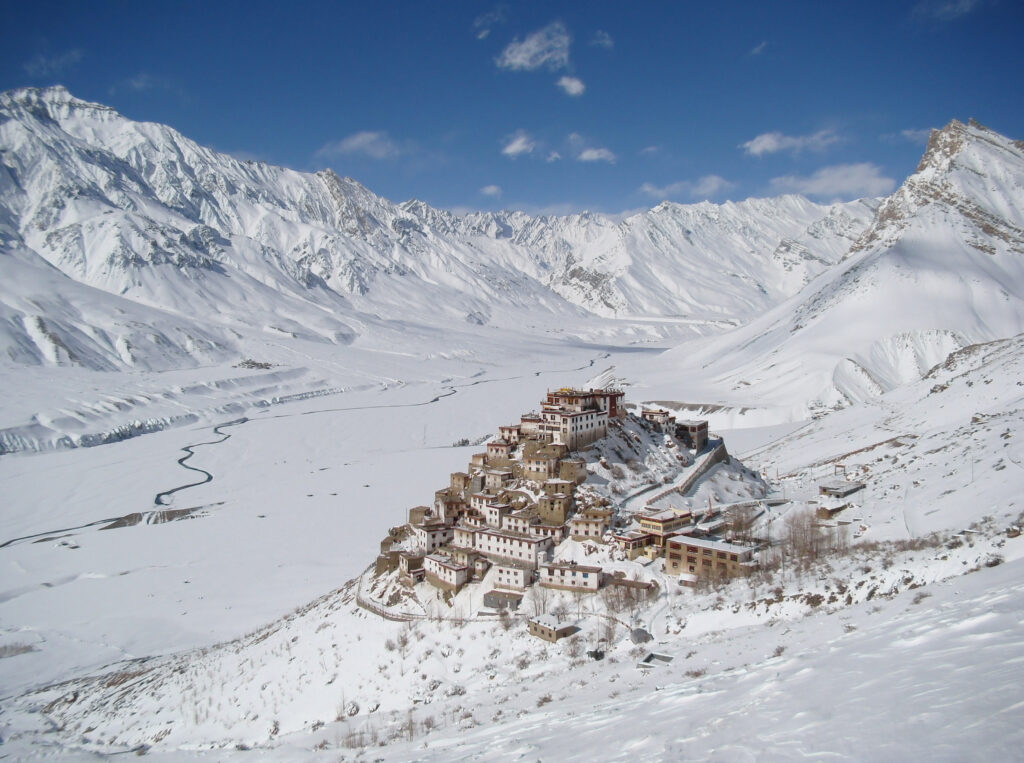
Spiti Valley in November transforms into a cold desert wonderland, but it’s also when winter officially begins.
Temperature: Daytime ranges between 5°C to -5°C, and nights can drop below -15°C, especially in Kaza and higher villages like Kibber or Langza.
Snowfall: Light to moderate snowfall may start around mid-November, turning the landscape white and serene.
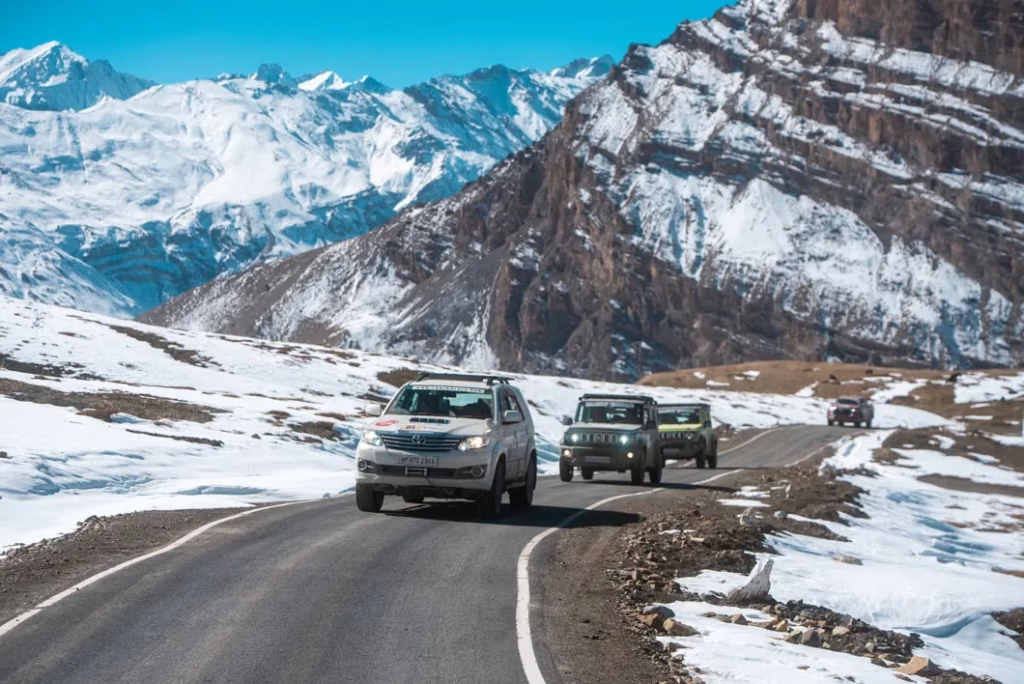
Road conditions: Roads can get icy and slippery, especially during early mornings and late evenings, so a 4×4 vehicle or an experienced driver is highly recommended.
Can You Visit Spiti Valley in November Safely?
The next big question after “Is Spiti Valley open in November?” is — can you actually travel there safely?
The short answer is yes, you can visit Spiti Valley in November, but you’ll need to be well-prepared, weather-aware, and flexible with your plans. November is when Spiti transitions into deep winter, and travel becomes more about endurance and experience than comfort and luxury.
Road & Route Safety in November 2025
In November, road safety in Spiti Valley depends entirely on the route and daily weather updates:
Shimla–Kinnaur–Kaza Route (Open & Safer ✅)
This is the only open route to Spiti Valley in November. It passes through lower-altitude regions like Rampur, Kalpa, and Nako before gradually ascending towards Kaza. The roads are narrow but well-maintained by the Border Roads Organisation (BRO).
However, you might face occasional roadblocks or black ice patches, especially near Malling Nallah, Nako, and Kaza after early morning frost.Carry anti-skid chains if you’re self-driving.
Always start your journey after sunrise to avoid frozen stretches.
Manali–Kaza Route (Closed ❌)
This route is officially closed by early November, as Kunzum Pass (4,551 m) and Rohtang Pass become snowbound. Attempting to cross after closure is extremely risky — roads are buried under snow and no rescue support is available.
Pro Tip: Always check live updates on the Himachal Pradesh PWD or BRO Twitter handles, or ask local drivers in Kinnaur for the latest road status before moving ahead.
Weather-Related Safety Concerns
Spiti Valley in November is freezing cold, with temperatures dipping below -15°C at night. The cold air and high altitude can cause discomfort to unprepared travelers.
Common risks: Frostbite, dehydration (due to dry air), altitude sickness, and icy road skids.
Avoid night travel, as fog and frost make visibility poor.
Layer your clothing: Thermal base layers, insulated jackets, waterproof gloves, and snow boots are essential.
Hydration is key: The dry cold dehydrates faster than you realize.
Local tip: Many Spiti locals begin insulating their homes and closing guesthouses by November, so plan your stays in advance at places like Kaza, Tabo, or Kalpa that still host a few open lodges or homestays.
Accommodation and Food Availability
By November, many homestays and small cafes in upper villages like Langza, Hikkim, Kibber, and Komik start shutting down for the season. However, you’ll still find operational hotels and guesthouses in:
Kaza (main town and administrative hub)
Tabo and Dhankar (lower altitude and less snow)
Kalpa or Reckong Peo (if you’re halting en route)
Electricity and mobile networks (especially Jio and BSNL) can be unreliable during snow spells, so carry a power bank and offline maps.
So, Is It Safe to Visit Spiti Valley in November?
✅Yes, if:
You’re well-prepared for extreme cold and limited facilities.
You travel via the Shimla–Kinnaur route only.
You keep buffer days for sudden road closures.
You’re comfortable driving on mountain terrain or hire a local 4×4 cab.
⚠️ Not recommended if:
You’re traveling with young kids or elderly people.
You expect full tourist amenities.
You’re visiting for the first time without prior experience in Himalayan travel.
Travel Tips for Spiti Valley in November
Visiting Spiti Valley in November is not your typical mountain holiday — it’s an adventure into the high-altitude cold desert when most of the region starts shutting down for winter. To make the journey smooth and safe, you’ll need solid preparation, right gear, and flexible planning.
Here are the most important travel tips for Spiti Valley in November 2025:
1. Pack Smart for the Cold
November in Spiti is bitingly cold, especially during mornings and nights. Packing light isn’t an option — warmth and layering should be your priority.
Essentials to pack:
🧥 Thermal innerwear (2–3 sets)
🧤 Insulated jackets, woolen gloves, mufflers, and beanies
🥾 Snowproof shoes or trekking boots with good grip
🧦 Woolen socks (multiple pairs)
😷 Moisturizer, sunscreen (SPF 50+), and lip balm – the cold winds can be harsh
💧 Reusable water bottle & thermos – hydration is key in dry cold
🔋 Power banks & extra batteries – cold drains battery life fast
🩹 Basic medicines for cold, fever, AMS (Diamox), and motion sickness
Pro Tip: Keep an emergency winter kit in your car — including a small shovel, snow chains, torchlight, and blankets.
2. Choose the Right Vehicle & Plan the Route
Since only the Shimla–Kinnaur route remains open in November, it’s crucial to have the right vehicle and local updates:
Prefer a 4×4 SUV (like Scorpio, Thar, or Fortuner) — small cars struggle on icy roads.
Avoid night driving; roads can freeze post-sunset, especially near Nako and Kaza.
Fuel up completely at Reckong Peo or Kaza — fuel stations in between may not operate regularly.
Keep buffer days (at least 1–2 days extra) in your itinerary for unexpected roadblocks.
🚧 BRO and PWD sometimes close stretches for snow clearance — always confirm live road updates before starting each day’s drive.
3. Book Stays in Advance
By November, most accommodations in high villages like Langza, Komik, and Kibber shut down. Instead, plan your night halts at:
Kalpa or Reckong Peo (en route)
Tabo or Dhankar (lower altitude, better comfort)
Kaza (main base with a few heated stays)
Most hotels rely on wood stoves or electric heaters, but electricity may fluctuate. Carry warm sleeping layers just in case.
4. Health & Altitude Safety
Spiti Valley sits at an average altitude of 10,000–14,000 ft, which can cause altitude sickness if you ascend too fast. In November, the cold air makes breathing even harder.
Stay safe by:
Spending your first night in Kalpa or Nako to acclimatize.
Drinking plenty of water and avoiding alcohol during travel days.
Taking Diamox (after medical consultation) for prevention of AMS.
Avoiding overexertion — even small hikes feel tougher at that altitude.
Keep an oxygen canister handy (available at Reckong Peo or Kaza) if you have breathing issues.
5. Food & Connectivity Tips
In November, expect simple meals and intermittent mobile networks.
Stick to local dhabas and homestays for food — they serve fresh, hot meals like thukpa, rice, and dal.
Jio and BSNL work best in Kaza; Airtel and Vodafone barely connect.
Download offline Google Maps before leaving Shimla.
If you’re working remotely or rely on the internet, November in Spiti isn’t ideal — connectivity can drop for days during snow spells.