
Dhankar Monastery is located in Dhankar Village, right between Kaza and Tabo on the main Spiti Valley route in Himachal Pradesh. If you look at a map of Spiti, you’ll find Dhankar almost at the centre—making it one of the easiest monasteries to include in any Spiti itinerary.
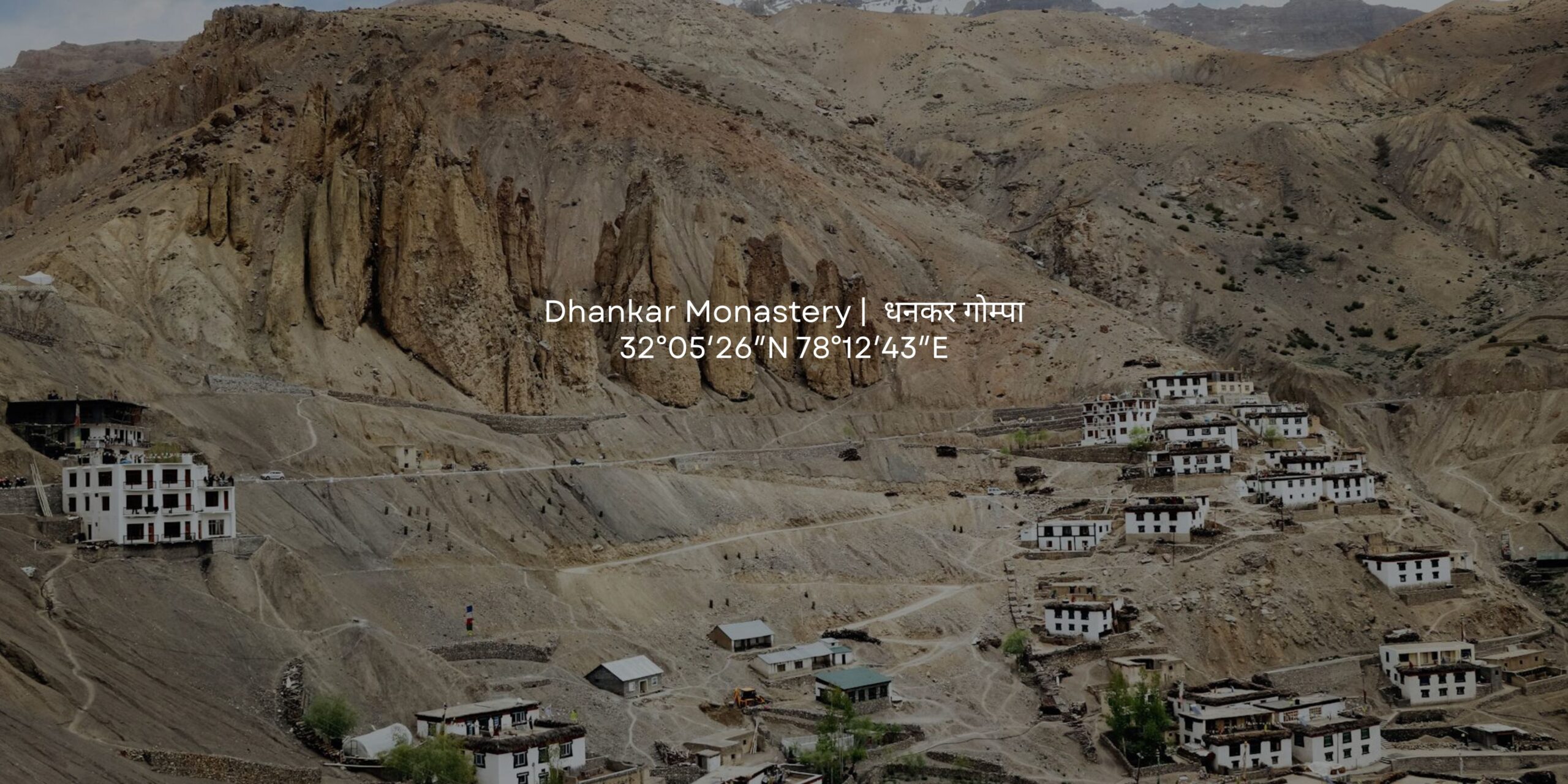
Dhankar Monastery – A Complete Guide to Spiti Valley’s Cliffside Wonder
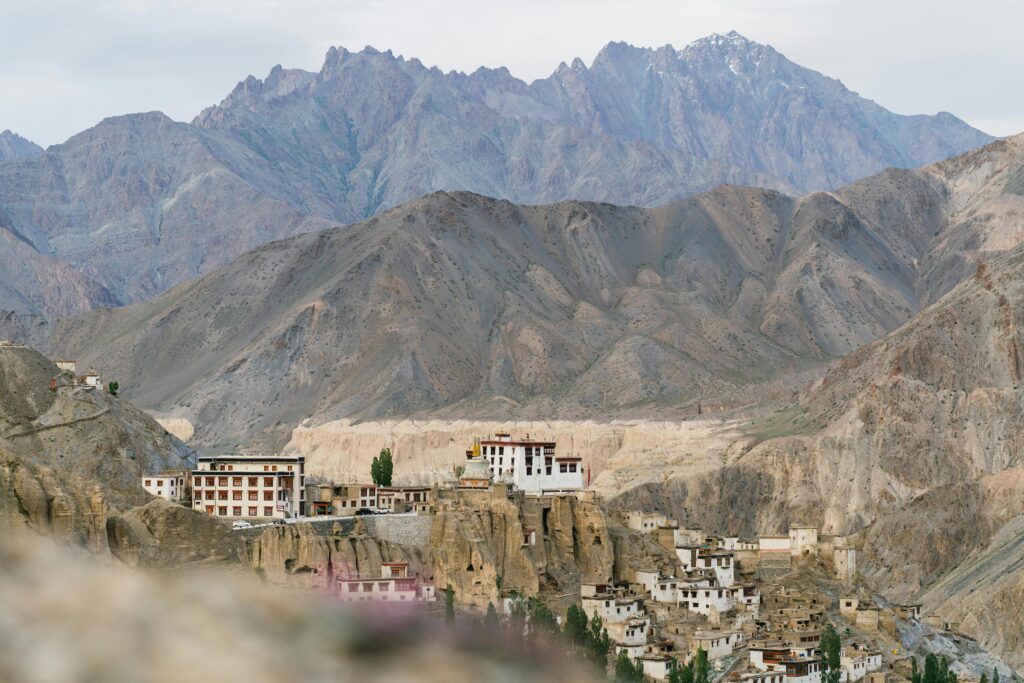
If you’ve ever seen Dhankar Monastery for the first time, you know the feeling—it’s the kind of place that makes you stop, stare, and forget everything else for a moment. Sitting dramatically on a sharp cliff above the Spiti River, the monastery looks almost unreal, like something carved into the mountains by time itself. And when you finally stand there, surrounded by nothing but wind, silence, and endless valleys, you can’t help but think, “How did anyone build something this beautiful in such a remote place?”
Dhankar Monastery isn’t just a tourist spot—it’s a peaceful world of its own. With over a thousand years of history, ancient prayer rooms, narrow mud passages, and views so vast they make you feel tiny, this gompa captures everything that makes Spiti Valley magical. Travelers come here for many reasons: spirituality, photography, trekking, culture, or simply to experience a place untouched by noise and chaos.
In this guide, I’ll take you through everything you need to know before planning your trip—its location, altitude, route, distances from Kaza and Tabo, history, timings, what to expect, and practical tips that genuinely help when you’re visiting such a high-altitude monastery. By the end, you’ll know exactly how to reach, what to see, and how to make the most of your journey to Dhankar Monastery.
What is Dhankar Monastery?
Dhankar Monastery is one of the most striking and historically rich landmarks in the Spiti Valley. If someone asks you where Dhankar Monastery is, the simplest answer is: right in the middle of Spiti, perched high on a cliff in Dhankar Village, between Kaza and Tabo. But the real essence of this place goes far beyond its location.
This ancient gompa—often referred to as Dhangkar Monastery—has been standing for over a thousand years, acting as both a spiritual centre and a watchpoint over the valley. When you reach Dhankar, the first thing that hits you is the dramatic setting: the monastery is built on top of steep, fragile mountains that look sculpted by the wind over centuries. Imagine a cluster of old mud rooms, prayer halls, and monk quarters sitting right above the merging of the Spiti and Pin rivers—it’s no surprise that Dhankar is often described as one of the most beautifully placed monasteries in the Himalayan region.
Dhankar Monastery is deeply rooted in the Buddhist heritage of the Spiti Valley. It once served as the traditional capital of Spiti, meaning it wasn’t just a religious centre but also an important administrative and cultural hub. Even today, the vibe here is different from the more touristy monasteries—Dhankar still feels quiet, secluded, and untouched, which is exactly what makes it so special.
The monastery is a must-visit for anyone exploring Dhankar Monastery Spiti because it offers a perfect mix of spirituality, adventure, culture, and unbelievably scenic views. Whether you’re on the route from Kaza to Tabo or doing the loop in reverse, Dhankar becomes a natural and essential stop on your journey through the Spiti Valley.
Explore More Monasteries in Spiti Valley.
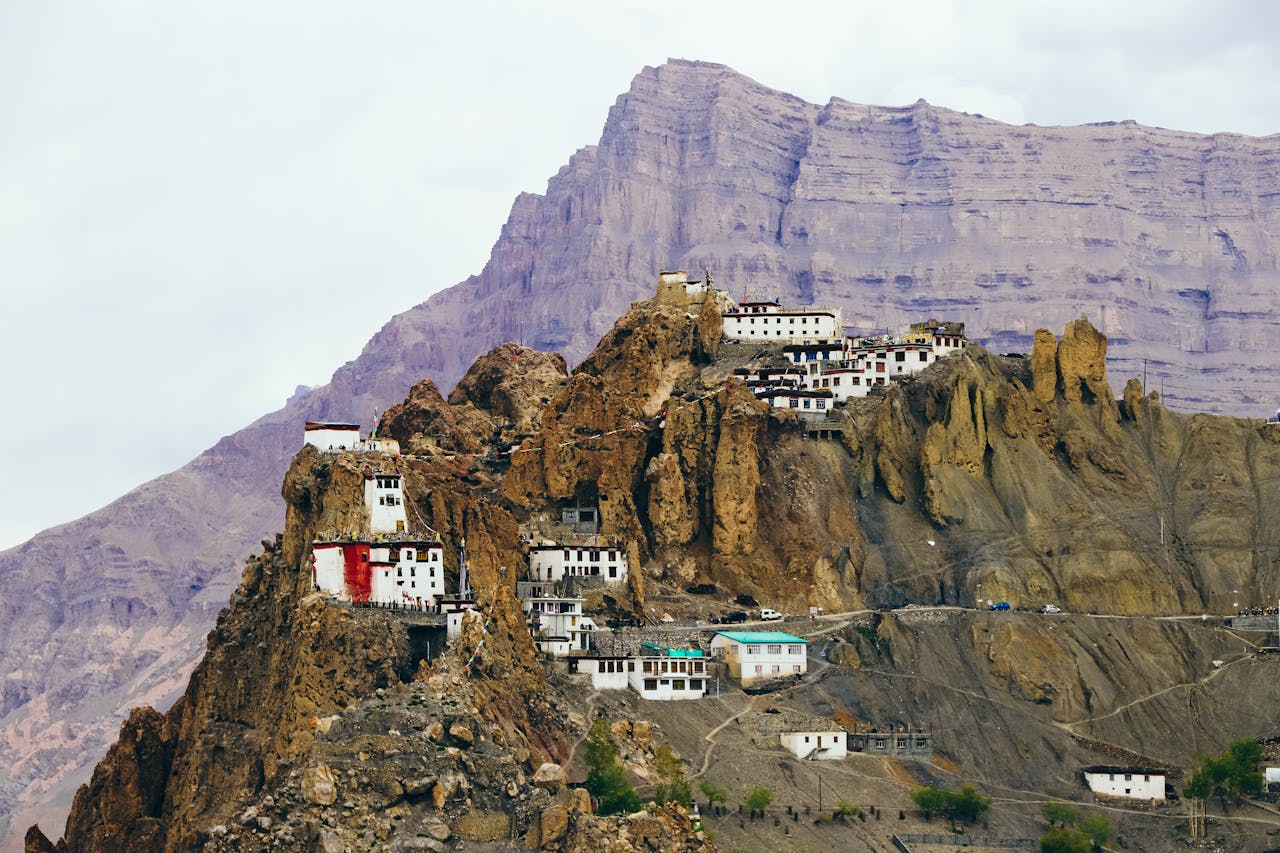
Location, Height & Altitude of Dhankar Monastery
Where Exactly Is Dhankar Monastery Located?
Dhankar sits on a high, sharp cliff that overlooks the confluence of the Spiti River and the Pin River. The moment you take the detour road from the Tabo–Kaza highway and start climbing uphill, you’ll see why monks chose this location—it gives a clear view of the entire valley, almost like a natural watchtower.
District: Lahaul & Spiti
State: Himachal Pradesh, India
Region: Middle Spiti
Nearest Towns: Kaza (32 km), Tabo (22 km)
This makes Dhankar an extremely accessible stop whether you’re traveling from the Kaza to Dhankar Monastery side or the Tabo to Dhankar Monastery side.
Dhankar Monastery Height
The Dhankar Monastery height is 3,894 metres (12,775 feet) above sea level, which places it among the highest monasteries in the entire Spiti Valley. This high elevation is a huge part of what makes Dhankar feel so surreal when you first arrive.
At this altitude, the entire landscape around the monastery looks dramatically shaped by centuries of wind and erosion. The cliffs are steep, the mountains look raw and untouched, and the view stretches endlessly across the valley. The monastery’s cliffside location becomes even more impressive when you realize it was built more than a thousand years ago at such a height with simple tools and techniques.
Because the Dhankar Monastery altitude is close to 4,000 metres, the air here is thinner than what most travelers are used to. Even a short climb inside the old monastery or the walk towards the viewpoint may feel slightly tiring if you haven’t acclimatized in Kaza or Tabo. Spending at least a day at a similar elevation before visiting is always a smart choice.
But the height is also what makes the experience unforgettable. From the upper prayer rooms and viewpoints, you get a clear look at the meeting point of the Spiti and Pin rivers, the rugged valley floor, and distant snow-covered peaks. Most travelers say these views alone make the journey to Dhankar completely worth it.
Dhankar Monastery Altitude – What It Means for Travelers
At an altitude of nearly 3,900 metres, Dhankar is a high-altitude location, which means:
You will feel cooler temperatures throughout the year.
The air is thinner, so it’s normal to feel a bit breathless during steep climbs.
Acclimatization is important—ideally spend a day in Kaza or Tabo before visiting.
Traveling slowly and staying hydrated makes the visit more comfortable.
Why This Location Is So Special
The monastery’s cliffside placement is not just for beauty—it was chosen strategically.
In ancient times, Dhankar served as a fort monastery where the rulers of Spiti could monitor the valley and protect the region. Today, the same strategic location offers travelers one of the most panoramic viewpoints in the entire Spiti Valley.
When you stand here and look down at the winding Spiti River, the brown mountains, and the scattered villages below, you understand instantly why Dhankar Monastery is considered a masterpiece—not just spiritually, but geographically.
History of Dhankar Monastery
The history of Dhankar Monastery is one of the most fascinating parts of Spiti’s cultural heritage. This ancient gompa has stood on its cliffside perch for over 1,000 years, making Dhankar Monastery not just a religious landmark but a living witness to Spiti’s evolution through centuries. When you walk through the old prayer halls, you can instantly feel the weight of its long past.
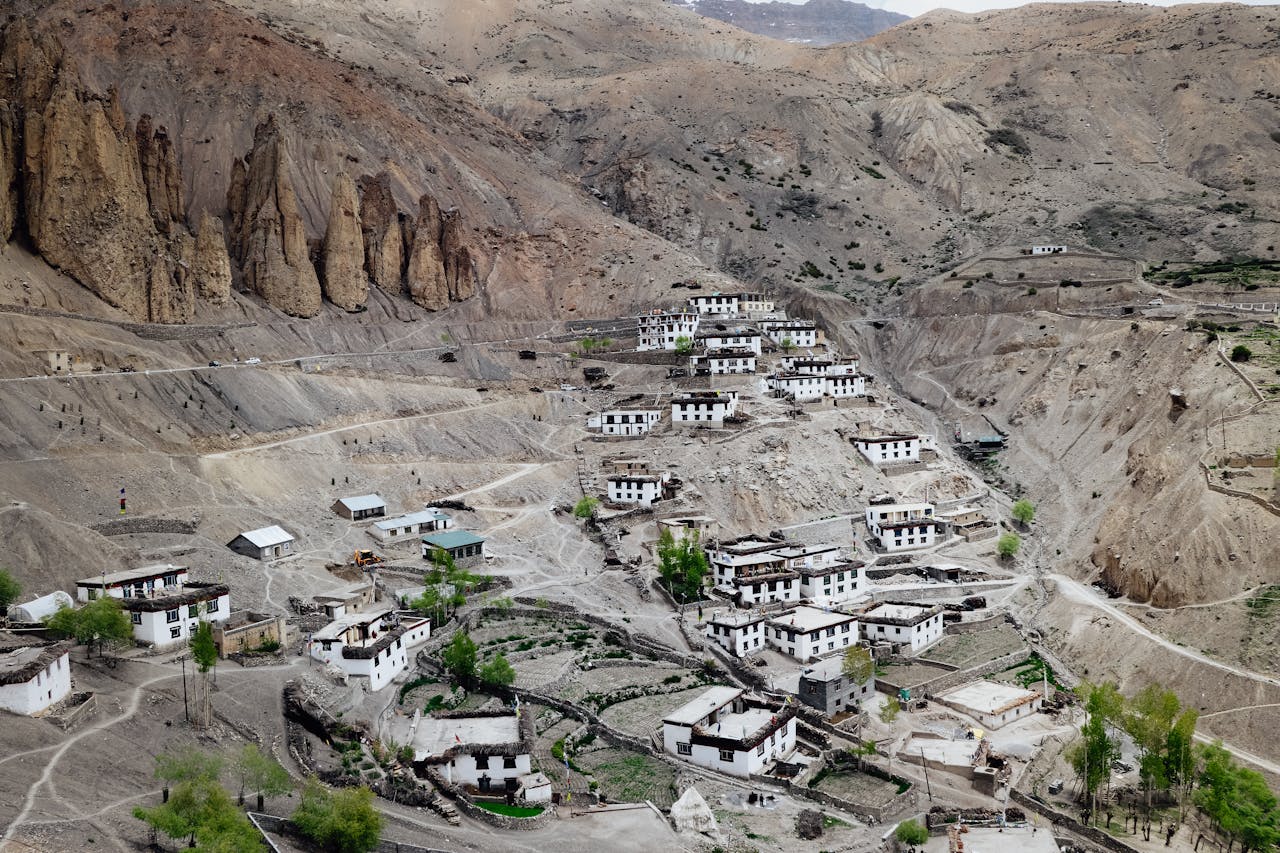
Dhankar: The Ancient Capital of Spiti
One of the most important aspects of Dhankar Monastery history is its role as the ancient capital of Spiti. For centuries, Dhankar served as the administrative and spiritual headquarters of the region. The monastery doubled as a fortified lookout for the Nono, the royal rulers of Spiti.
The cliffside location wasn’t chosen by chance — it offered a perfect vantage point to monitor the Spiti and Pin valleys. This strategic positioning is one of the reasons the ancient Dhankar Monastery became such a powerful centre in the region’s early governance.
A 1,000-Year-Old Gompa of the Gelugpa Tradition
When we talk about the history of Dhankar Monastery, it’s important to know that this gompa belongs to the Gelugpa (Yellow Hat) sect of Tibetan Buddhism. It is believed that the monastery was founded sometime between the 10th and 12th century, placing it among the oldest monasteries in the Himalayan belt.
Over centuries, Dhankar Monastery became a hub for Buddhist teachings, philosophy, and meditation, attracting monks and scholars from Spiti, Tibet, and Ladakh.
Inside the Old Monastery – Ancient Art & Sacred Spaces
The old section of Dhankar Monastery is a treasure for anyone interested in its cultural and artistic past. Built from mud, stone, and timber, the structure reflects the architectural style of early Himalayan monasteries. Inside, you’ll find:
Ancient murals and thangkas that date back hundreds of years
Traditional prayer halls used by generations of monks
A rare statue of the four-armed Dharmachakra Vajradhara
Narrow meditation rooms that are still used even today
These elements together showcase the historic essence of Dhankar Monastery and how it has preserved Buddhist heritage across centuries.
Dhankar as a Centre of Buddhist Learning
For many years, the history of Dhankar Monastery was closely tied to education. The gompa functioned as an important learning centre for Buddhist philosophy. Monks travelled from various Himalayan regions to study here because of the peaceful and isolated environment that supports deep meditation and scholarly work.
Erosion, Decline & Preservation Efforts
Because the monastery stands on fragile clay cliffs, parts of the old structure have deteriorated over time. Natural erosion, earthquakes, and severe winters have made the original building vulnerable. To protect its legacy, a new Dhankar Monastery was constructed nearby, while the old monastery continues to be preserved for visitors and historical significance.
Even today, conservation efforts aim to protect the original complex so that the rich Dhankar Monastery history is not lost to environmental damage.
A Living Monument of Spiti’s Past
What makes the history of Dhankar Monastery truly special is that it is still alive. Monks continue their traditional practices, hold rituals, and maintain the teachings that have been passed down for centuries. When you visit today, you’re not just seeing an old building — you’re stepping into a sacred space that has survived political changes, shifting kingdoms, and over a thousand Himalayan winters.
How to Reach Dhankar Monastery
Reaching Dhankar Monastery is actually quite simple once you know the route, because it lies right between Kaza and Tabo on the main Spiti Valley road. The journey itself is scenic, with barren mountains, river valleys, and charming villages along the way.
Dhankar is connected by a short hillside road that goes upwards from the highway, and although the last stretch is slightly narrow, it’s manageable for most vehicles during the summer season.
How to Reach Dhankar Monastery from Kaza
The Kaza to Dhankar Monastery distance is approximately 32 km, making it one of the most convenient and popular routes for travelers exploring Spiti. Most people start their journey from Kaza in the morning and combine Dhankar with other middle-Spiti attractions like Tabo or Pin Valley.
To reach Dhankar Monastery from Kaza, drive towards Tabo on the main Hindustan–Tibet Highway (NH-505). The drive is smooth and scenic, passing through wide valleys and traditional Spiti villages. After covering around 25–28 km, you will see the signboard for Dhankar Village on your left. This is the point where you leave the highway.
The final 7 km uphill road toward Dhankar is a narrow mountain road, but it is fully motorable during the main travel season (May–October). As you gain altitude, the view keeps getting better, and the monastery starts appearing dramatically across the cliffside.
This Kaza to Dhankar route is the most commonly used one because:
It offers the smoothest entry to Dhankar Monastery
Travelers already acclimatize in Kaza (good for high-altitude visits)
It fits naturally into the clockwise Spiti circuit
If you’re self-driving or riding a bike, you’ll find this route accessible and beautiful, with clear road conditions for most of the year except winter.
Distance: ~32 km
Travel Time: 1 hour – 1 hour 15 minutes
How to Reach Dhankar Monastery from Tabo
The Tabo to Dhankar Monastery distance is shorter — around 22 km, and it usually takes 45 minutes to 1 hour to reach. This makes it an ideal route for travelers who want to explore Tabo Monastery in the morning and visit Dhankar Monastery in the same day.
From Tabo, drive towards Kaza on the main NH-505. After a smooth and scenic ride along the Spiti River, you’ll spot the same signboard for Dhankar Village, this time appearing on your right. Once you turn off the highway, the route merges with the same uphill road used by travelers coming from Kaza.
This is a preferred route because:
It is the fastest way to reach Dhankar Monastery
Travelers often club Tabo → Dhankar → Kaza in a single stretch
The views along this side are exceptionally beautiful in the morning light
The ascent from the highway to the monastery follows the same winding road, offering spectacular views of the valley as you climb.
For travelers coming from Tabo or moving upward toward Kaza, this route is usually more relaxing and quicker, making it one of the best ways to visit Dhankar Monastery without rushing.
Distance: ~22 km
Travel Time: 45 minutes – 1 hour
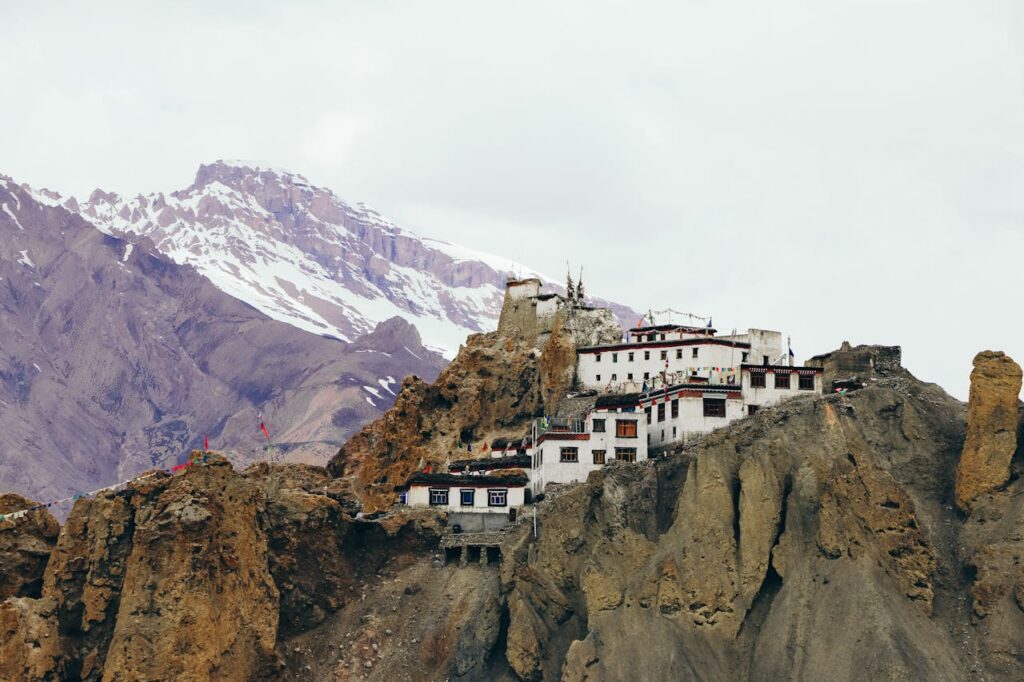
Road Conditions to Dhankar Monastery
The main Kaza–Tabo highway is well-paved and smooth.
The 7 km uphill road to Dhankar is motorable but slightly narrow.
Small cars, motorcycles, SUVs, and tempo travelers can all reach the monastery without issues.
During winter (Dec–March), snow or ice can occasionally make the road slippery.
The best time for smooth travel is May to October, when the road is dry and fully open.
Public Transport to Dhankar Monastery
While there is no direct bus to Dhankar Monastery, you can still reach easily:
Take a bus from Kaza to Tabo or Tabo to Kaza.
Get down at the Dhankar road junction.
Hire a local taxi or hitchhike for the 7 km uphill stretch.
Some travelers even prefer walking the last stretch (around 1.5–2 hours uphill), though it can be tiring due to altitude.
Shared taxis from Kaza and Tabo are also quite common in peak season.
Self-Drive or Bike Ride Tips
If you’re driving yourself:
Keep the car in a lower gear on the uphill stretch.
Avoid stopping on very narrow bends.
Carry enough water; altitude can make climbing tiring.
Start early in the day to enjoy better visibility and avoid afternoon winds.
For bikers, Dhankar is considered one of the most scenic detours in the valley.
How Long Does It Take to Explore Dhankar?
Monastery visit + viewpoint: 1 to 1.5 hours
Dhankar Lake trek (optional): 2–3 hours additional
Many travelers club Dhankar Monastery and Dhankar Lake in a half-day visit.
Best Time to Visit Dhankar Monastery
Because Dhankar Monastery sits at a high altitude of nearly 3,900 metres, the weather can change dramatically throughout the year. Knowing the best time to visit helps you plan a smooth and comfortable trip, especially if you’re traveling for the first time to the Spiti Valley.
1. Summer (May to June) – The Best Overall Time
Late spring and early summer are considered the best time to visit Dhankar Monastery. This is when the valley opens up after winter, the roads from Kaza, Tabo, and Reckong Peo become fully accessible, and the weather is pleasant.
Temperature: 10°C to 20°C during the day
Road Conditions: Mostly clear; great for self-driving
Views: Crystal-clear skies, warm sunshine, and mild winds
This is the ideal season if you want to enjoy comfortable walking, good photography, and an easy trek to Dhankar Lake.
2. Monsoon (July to September) – Green Landscapes & Spiti’s Peak Season
Although Spiti doesn’t receive heavy monsoons due to its cold desert terrain, this period brings slightly unpredictable weather.
Temperature: 12°C to 20°C
Road Conditions: Can be affected by landslides between Shimla–Kinnaur
Highlights: Beautiful greenery and dramatic skies
This is also the peak tourist season for Spiti, so Dhankar Monastery gets more visitors than usual.
3. Autumn (September to October) – Clear Skies & Golden Mountains
Many experienced travelers say that September and early October are the most magical months to visit Dhankar.
Temperature: 5°C to 15°C
Road Conditions: Very stable and dry
Best For: Stunning photography, peaceful visits, crisp mountain views
The golden-brown Spiti mountains look incredible during this time.
4. Winter (November to April) – Only for Experienced Travelers
Winter transforms Dhankar into a remote and extremely cold destination. Roads may get blocked due to snow, and temperatures fall sharply.
Temperature: -5°C to -20°C
Road Conditions: Risk of closure or ice patches
Monastery Access: Open, but reaching may be challenging
If you’re planning a winter visit, be prepared for harsh weather and limited services. Only attempt this if you’re comfortable with high-altitude winter travel.
Dhankar Monastery Timings & Entry Details
Knowing the right timings and basic entry information makes your visit much smoother, especially because Dhankar is located at high altitude and has limited daylight hours. The monastery follows simple visiting hours, but due to its remote location, it is always better to plan your visit during the daytime.
Dhankar Monastery Timings (Daily)
| Season | Opening Time | Closing Time | Notes |
|---|---|---|---|
| Summer (May–Oct) | 6:00 AM | 6:00 PM | Best time for comfortable visits |
| Winter (Nov–April) | 7:00 AM | 5:00 PM | Shorter hours due to cold and reduced daylight |
Important:
The old monastery (the cliffside mud structure) may sometimes close early due to wind or safety restrictions.
The new monastery usually remains open the full duration.
Entry Fee at Dhankar Monastery
| Type | Fee | Remarks |
|---|---|---|
| Indian Visitors | ₹30–₹50 | Usually collected at the entrance of the old monastery |
| Foreign Nationals | ₹100 | Includes access to prayer halls |
| Camera Charges | May vary | Often ₹50–₹100, but depends on the monk on duty |
Note: The fees are small and used for monastery maintenance.
Best Time of Day to Visit Dhankar Monastery
Because of the altitude and the direction the monastery faces, certain times of the day enhance the experience:
Morning (8 AM – 11 AM) – Best for Photography
Soft light on the mountains
Clear valley views
Ideal for trekking to Dhankar Lake afterward
Afternoon (12 PM – 3 PM) – Warmest Hours
Good for exploring the monastery interiors
More stable winds
But the sun can be strong at high altitude
Late Afternoon (4 PM – 5:30 PM) – Golden Hour
Stunning warm light on the mud cliffs
Great for landscape shots
Roads become colder after 6 PM, so head back early
Prayer Timings at Dhankar Monastery
Prayer timings aren’t fixed for tourists, but monks usually hold rituals during:
Early mornings (6 AM – 7 AM)
Evenings (5 PM – 6 PM)
If you’re lucky, you may catch chanting or traditional rituals inside the old prayer hall — a rare and peaceful experience.
Travel Tips for Visiting as per Timings
Reach before 3 PM if you plan to explore both the old and new monasteries.
The altitude can cause headaches or fatigue — move slowly and stay hydrated.
Winters have shorter daylight; plan your return route accordingly.
If winds pick up, the old monastery may temporarily restrict entry.
Photography inside prayer halls may be restricted unless monks allow it.
Also Checkout : Tabo Monastery in Spiti
Things to See at Dhankar Monastery
This covers everything a traveler would want to explore, including the Old Monastery, New Monastery, rare artifacts, viewpoints, and the natural surroundings. The tone remains conversational, easy to understand, and SEO-friendly.
Things to See at Dhankar Monastery
Even though Dhankar Monastery looks small from a distance, there’s a surprising amount to explore once you’re inside. Each section of the monastery has its own charm — from ancient prayer halls and cliffside rooms to modern structures and breathtaking viewpoints. Here is everything worth experiencing during your visit.
1. The Old Dhankar Monastery (Main Cliffside Gompa)
This is the highlight for most travelers and the part of the monastery with over 1,000 years of history behind it. The Old Monastery is built on fragile clay cliffs and has a raw, authentic feel that makes you feel like you’ve stepped back in time.
What to see inside the Old Monastery:
Narrow mud-walled corridors that lead into tiny prayer rooms
Ancient murals painted in natural pigments
Wooden beams and traditional Himalayan architecture
The iconic statue of Dharmachakra Vajradhara (four-armed Buddha)
Old scriptures and thangkas preserved for centuries
Because the structure is old and delicate, monks may restrict some sections during strong winds — but whatever you get to see is unforgettable.
2. The New Dhankar Monastery (Modern Complex)
A short walk from the old structure is the newer, bigger monastery that the monks use today. It’s more spacious and well-maintained, offering a calm environment for meditation and daily rituals.
Highlights of the New Monastery:
A grand assembly hall
Large Buddha statues
Peaceful sitting areas
Monks chanting during morning/evening rituals
Clean pathways and accessible prayer rooms
Many travelers prefer starting at the new monastery and then heading up to the old one.
3. The Cliffside Viewpoint (One of Spiti’s Best Views)
This is one of the most breathtaking viewpoints in the entire Spiti Valley. From the edge, you can see:
The confluence of the Spiti and Pin rivers
Villages and terraced fields scattered across the valley
Sharp mountain ridges and snow-capped Himalayan peaks
A wide, open landscape that feels almost surreal
Sunrise and late afternoon are the best times to enjoy this spot.
4. Ancient Prayer Halls & Meditation Rooms
Inside the Old Monastery, you will find small, dimly lit rooms where monks meditate. These rooms are centuries old and offer a rare glimpse into traditional monastic life.
Stone floors
Butter lamps
Handwritten scripts
Wooden altars
It’s a peaceful and deeply spiritual experience, especially when the monastery is quiet.
5. Rare Buddhist Art & Sculptures
Dhankar is home to some of the most unique Buddhist artworks in the region:
Rare four-armed Vajradhara statue
Ancient thangkas depicting Buddhist cosmology
Wall paintings that date back hundreds of years
Carved wooden altars and statues
These artworks make Dhankar one of the most culturally important monasteries in Spiti.
6. The Fort Ruins (Remains of the Ancient Capital)
Just above the old monastery are ruins believed to be part of the old fort where the Nono (Spiti kings) once ruled.
What you can still see:
Old walls
Watchtower remnants
Foundation outlines
Panoramic vantage points
This spot gives context to Dhankar’s role as the ancient capital of Spiti.
7. Dhankar Village
The village surrounding the monastery is simple, beautiful, and very typical of Spiti’s mud-house culture.
You can explore:
Local homes
Small fields
Friendly villagers
Local cafés/homestays
It’s a peaceful place to spend a few hours.
8. The Short Walk to the Dhankar Lake Trail Starting Point
The actual Dhankar Lake trek is a separate attraction, but even reaching the starting point offers lovely views and a sense of adventure.
You will see:
Wildflowers (in summer)
Herds of goats and yaks
High-altitude landscapes
This is also a great photography spot.
9. Monastic Life & Rituals
If you visit at the right time, you may get a chance to:
Watch monks chanting
Attend evening prayers
See butter-lamp lighting ceremonies
Observe how the monastery functions daily
It’s one of the most authentic cultural experiences in the valley.
10. Photography Spots
Dhankar is a dream for photographers. Popular spots include:
The main cliffside monastery
Valley viewpoints
Prayer flags with mountains in the background
River confluence shots
Sunset silhouettes of the gompa
Every angle offers something dramatic and unique.
Visiting Dhankar Monastery is more than just a stop on a Spiti itinerary – it’s an experience that stays with you long after you leave. Whether it’s the dramatic cliffside setting, the thousand-year-old history, the peaceful atmosphere inside the prayer halls, or the breathtaking views of the Spiti and Pin rivers, every part of Dhankar feels special.
The journey to the monastery—whether from Kaza or Tabo—is smooth and scenic, and once you reach the top, you’ll instantly understand why this ancient gompa has been revered for centuries. Add the nearby Dhankar Lake trek, the old fort ruins, and the quiet charm of Dhankar Village, and you get one of the most rewarding experiences in the entire Spiti Valley.
If you’re planning a Spiti trip, make sure Dhankar isn’t just a quick stop. Spend time here, explore both the old and new monasteries, take in the views, and let the silence of the high Himalayas sink in. Dhankar Monastery is a place that combines culture, history, spirituality, and natural beauty in the most unforgettable way—making it a must-visit for every traveler stepping into the heart of Spiti.
Tips for Visiting Dhankar Monastery
Visiting Dhankar Monastery is a memorable experience, but because of its altitude and remote location, a little preparation can make your trip smoother, safer, and much more enjoyable. Here are some important tips every traveler should know before heading to Dhankar.
1. Acclimatize Properly Before Visiting
Dhankar sits at nearly 3,900 metres, so the air here is thin.
Spend at least 1 day in Kaza or Tabo before visiting to avoid breathlessness, headaches, or altitude discomfort.
Avoid:
Rushing directly from low altitude towns
Running or climbing too fast inside the old monastery
2. Visit During the Morning or Late Afternoon
The lighting and weather at Dhankar can change quickly.
Morning (8 AM – 11 AM): Best for photography and peaceful exploration
Late Afternoon (4 PM – 5:30 PM): Golden hour light, incredible views
Avoid visiting after 6 PM — roads get colder and windy.
3. Wear Comfortable Shoes
The monastery has steep stairs, narrow corridors, and uneven surfaces.
Sports shoes or trekking shoes are highly recommended, especially if you plan to visit the Old Monastery or trek toward Dhankar Lake.
4. Stay Hydrated, But Don’t Overexert
High altitude can make even small climbs feel tiring.
Sip water frequently and climb slowly. This helps with altitude adjustment and prevents fatigue.
5. Respect Monastic Etiquette
Dhankar is a place of worship, and monks live here.
Keep your voice low
Remove shoes where required
Don’t touch sacred objects
Ask before taking photos inside prayer halls
Most monks are friendly and happy to guide you if you’re respectful.
6. Watch Out for Strong Winds at the Old Monastery
Because the Old Monastery sits on fragile clay cliffs, strong winds can affect safety.
Entry may be restricted during windy afternoons
Hold onto railings when walking along cliff-sided paths
Avoid going too close to edges
Safety is always a higher priority than photos.
7. Carry Cash – No Digital Payments
The monastery’s entry fee and camera charges are usually collected by monks in cash.
There is no UPI or digital payment facility available here.
Carry small notes for:
Entry fee
Camera fee
Donations
Buying tea/snacks from village stalls
8. Be Prepared for Sudden Weather Changes
Even in summer, the weather can shift quickly.
Carry:
A light jacket or windcheater
Sunglasses
Sunscreen (UV rays are strong at high altitude)
Cap / scarf
Winters are extremely cold, so carry thermal layers if visiting Nov–March.
9. Start the Dhankar Lake Trek Early
If you’re planning the lake trek:
Start before 9 AM
Carry 1–1.5 liters of water
Wear solid shoes
Take short breaks — the climb is steep
The lake and the views are absolutely worth it!
10. Plan Your Visit Smartly if You’re Self-Driving
Use lower gears on the final uphill stretch
Avoid parking too close to the cliff edges
Check tire pressure before the climb
Return before dark — road visibility drops quickly
The route is safe, but careful driving makes it even better.
11. Spend Time at the Cliff Viewpoint
Many travelers rush through Dhankar, but the best part is the view from the cliff.
Don’t miss:
Panoramic view of the Spiti & Pin river confluence
Golden hour photography
Watching clouds move across the valley
It’s one of the most peaceful and rewarding viewpoints in Spiti.
12. Respect Local Culture and Privacy
Dhankar Village is home to families who live a simple and spiritual life.
Avoid:
Entering private homes without permission
Photographing people closely without asking
Disturbing livestock or village areas
A little kindness goes a long way.