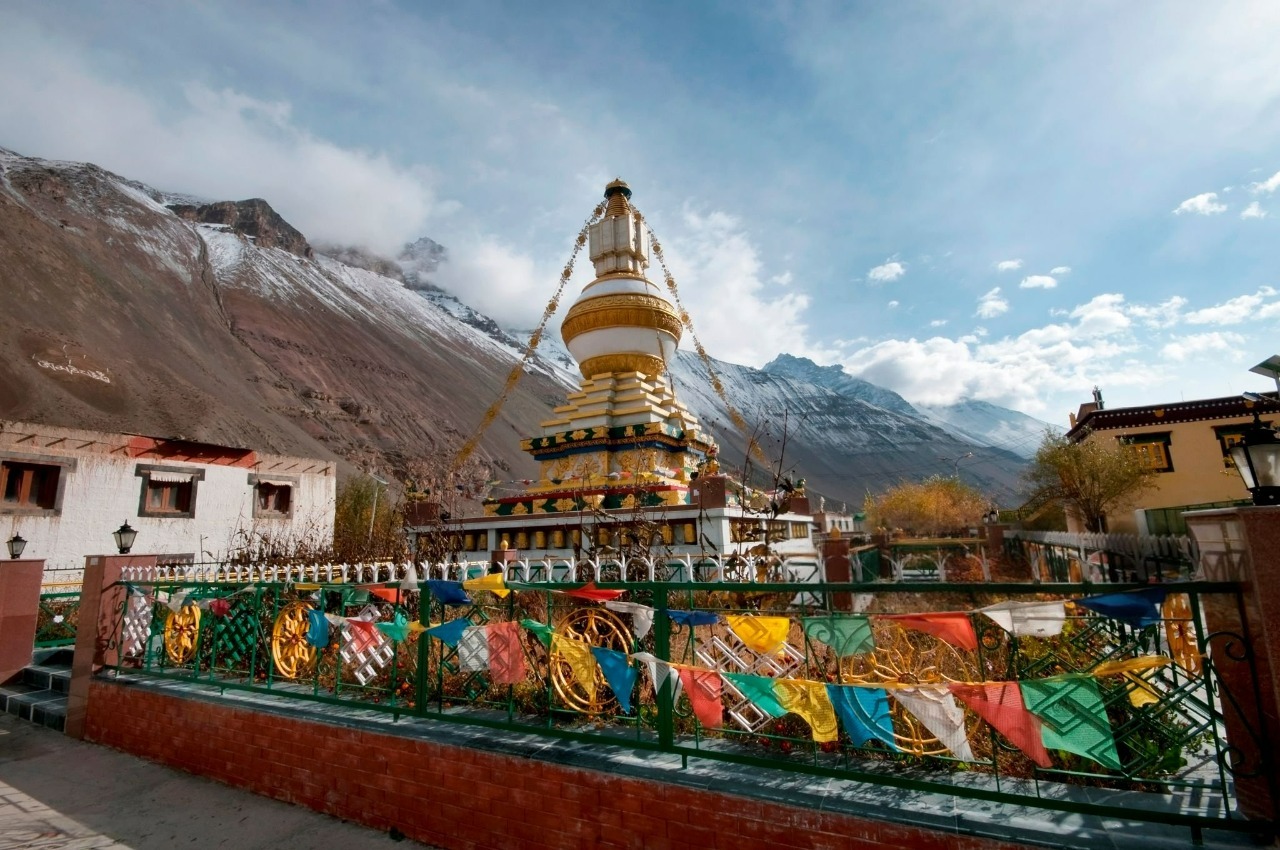
Tabo Monastery Destination Image with Coordinates

Tabo Monastery – The Oldest Monastery in Spiti Valley

Tabo Monastery is not just a religious site — it’s a living piece of Himalayan history. Built in 996 AD, this ancient complex is one of India’s oldest continuously functioning Buddhist monasteries, predating even the famous monasteries of Ladakh and Spiti. It is often referred to as the “Ajanta of the Himalayas”, thanks to its remarkably preserved murals, clay sculptures, and wall paintings that have survived for over a thousand years.

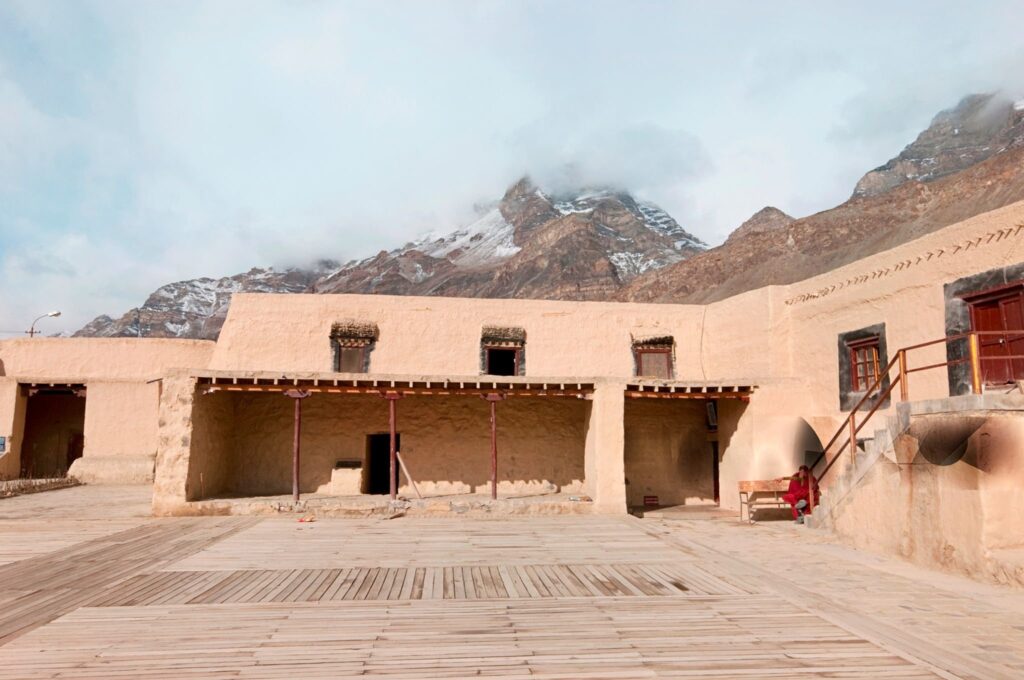
What makes Tabo truly extraordinary is the fact that it has preserved its original structure and authenticity for centuries. Unlike many monasteries that have been modernized over time, Tabo still stands in its original mud-brick form, with dimly lit halls, hand-crafted wooden pillars, and ancient paintings that glow softly in the natural light that filters through tiny openings. Walking inside feels like stepping into a time capsule, where every wall, sculpture, and painting whispers stories of monks, artisans, and kings who shaped its legacy.

The monastery sits quietly in Tabo village, a serene and desert-like stretch of the Spiti Valley surrounded by rugged brown mountains. High above the village are steep cliffs containing old meditation caves, once used by monks for deep spiritual practice. Many of these caves still remain open to visitors, adding to the raw, mystical charm of the region.

Travellers often describe Tabo as a place that combines history, art, culture, and spirituality in the purest form. There are no towering modern buildings or golden-roofed structures here — just ancient Himalayan architecture that stands resilient against the harsh climate of Spiti. The paintings inside represent a unique blend of Tibetan, Indo-Nepalese, and Kashmiri artistic styles, making them some of the most valuable Buddhist artworks in the world.

This complete 2025 guide will give you everything you need to know about the monastery — from its location and history to its altitude, inner temples, timings, routes, and travel tips — so you can fully appreciate the wonder of this incredible Himalayan treasure.

Where Is Tabo Monastery? (Location in Spiti Valley, Himachal Pradesh)

Tabo Monastery is located in Tabo village, a small yet historically rich settlement in the heart of Spiti Valley, Himachal Pradesh. The village lies along the banks of the Spiti River and sits on the flatter, wider part of the valley — very different from the steep, cliff-hugging landscapes you find near Kaza or Kibber. This gives Tabo a calm, open, desert-like charm that feels both peaceful and timeless.

Geographically, Tabo is positioned on the Kaza–Reckong Peo highway, making it one of the most accessible stops on the Spiti circuit. It lies roughly 48 km from Kaza and around 26 km before Dhankar Monastery, which is why many travellers club both monasteries in the same day’s journey. The entire village is built around the monastery complex, which stands right beside the road — no trekking, climbing, or hiking required. You simply walk in and find yourself in front of an ancient mud-walled monument that has witnessed more than a thousand Himalayan winters.

Tabo’s location is also special because of its surroundings. Instead of dense greenery, the valley here opens into wide plains, ochre cliffs, and crisp blue skies. High above the monastery, you can spot the famous Tabo meditation caves, carved into the rocky cliffs that overlook the village. These caves are one of the most iconic sights in the area, often glowing golden during sunrise and sunset.

Despite being remote, Tabo is surprisingly easy to navigate. There are a few homestays, cafés, small shops, and a gentle river flowing nearby. Everything in the village feels slow, quiet, and perfectly in sync with the peaceful energy of the monastery. For many travellers entering Spiti from the Shimla side, Tabo is often the first major historic stop, and for good reason — its location in the valley makes it both accessible and incredibly scenic.

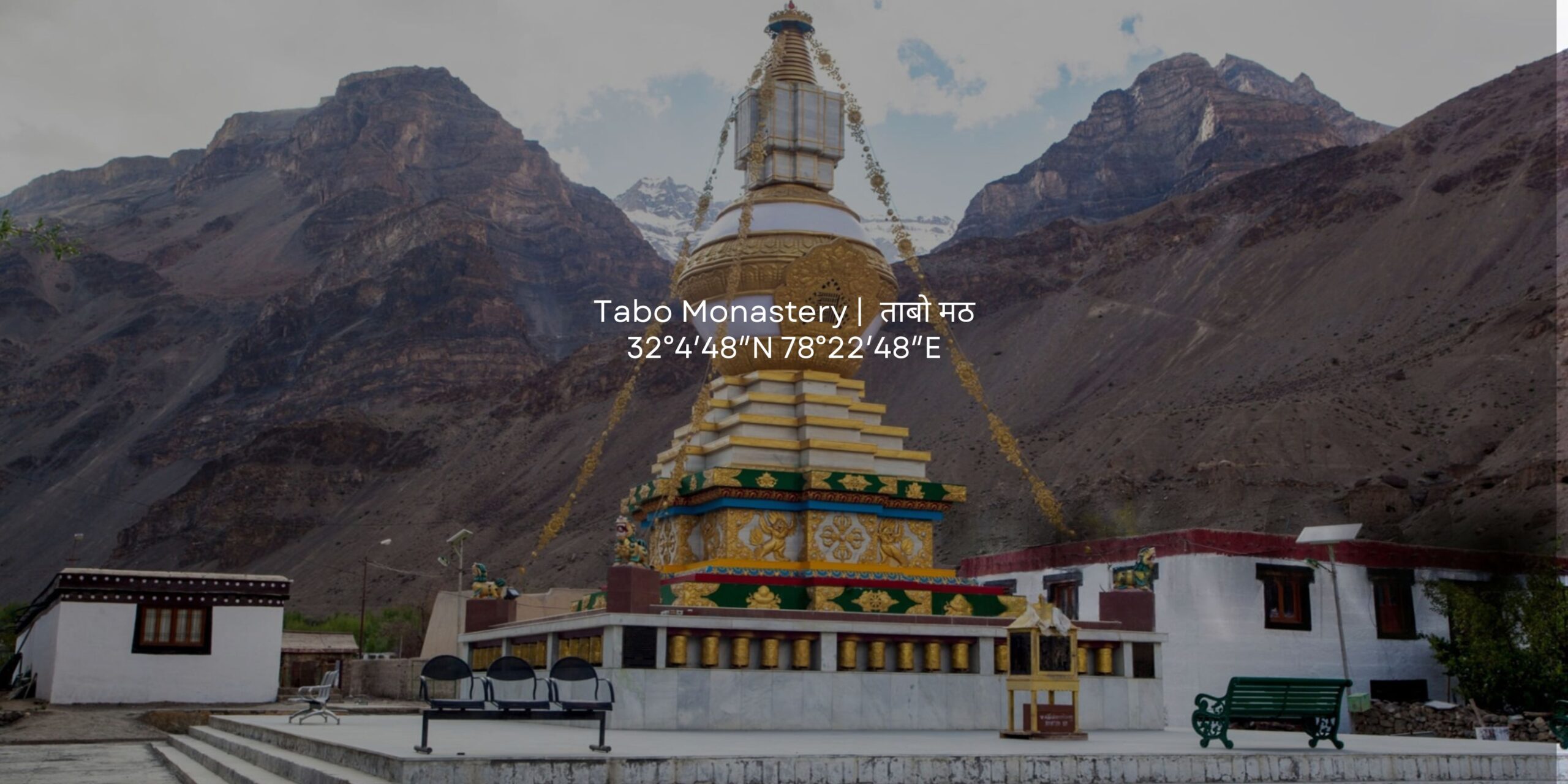
Tabo Monastery image from the street with mountains at back. Full Hd

Tabo Monastery in Himachal Pradesh – Geography & Surroundings

Tabo Monastery lies in one of the most dramatic and unusual landscapes in Himachal Pradesh. Instead of pine forests and steep green hills, Tabo sits in the cold desert zone of Spiti Valley, surrounded by wide open plains, rugged mountains, and a deep blue sky that makes everything look almost surreal.

1. Landscape & Terrain

The geography around Tabo is defined by:

  • A flat, open valley — rare in Spiti, where most villages sit on cliffs.

  • Brown, rocky mountains rising sharply on both sides.

  • Cold desert climate, similar to parts of Ladakh.

  • Minimal greenery, which enhances the monastery’s ancient feel.

This harsh yet stunning terrain has played a major role in preserving the monastery’s 1000-year-old murals, as the dry air prevents moisture damage.

2. Climate & Weather Influence

Tabo experiences:

  • Mild summers (May–September): warm days, cool nights.

  • Harsh winters (November–February): temperatures often drop below –15°C.

  • Extremely low humidity, which helps protect ancient artworks.

This unique climate is part of why Tabo is still known as the best-preserved monastic complex in India.

3. Surrounding Highlights

What makes the surroundings truly special:

  • Meditation Caves: Visible right above the monastery, carved into the cliffs. These caves were once used by monks for long meditation retreats.

  • Spiti River: Flows quietly beside the village, adding calm and contrast to the dry landscape.

  • Traditional Mud Houses: The village architecture blends perfectly with the monastery’s ancient mud-brick style.

  • Clear Skies: Tabo is known for incredibly clear nights — perfect for stargazing.

4. Why This Location Was Chosen

Tabo’s surroundings create the perfect setting for a monastery:

  • The wide valley ensures sunlight throughout the day, keeping the interiors naturally illuminated.

  • The isolated landscape creates a natural environment for deep meditation and monastic life.

  • The dry desert climate helps preserve ancient scrolls, murals, and clay sculptures.
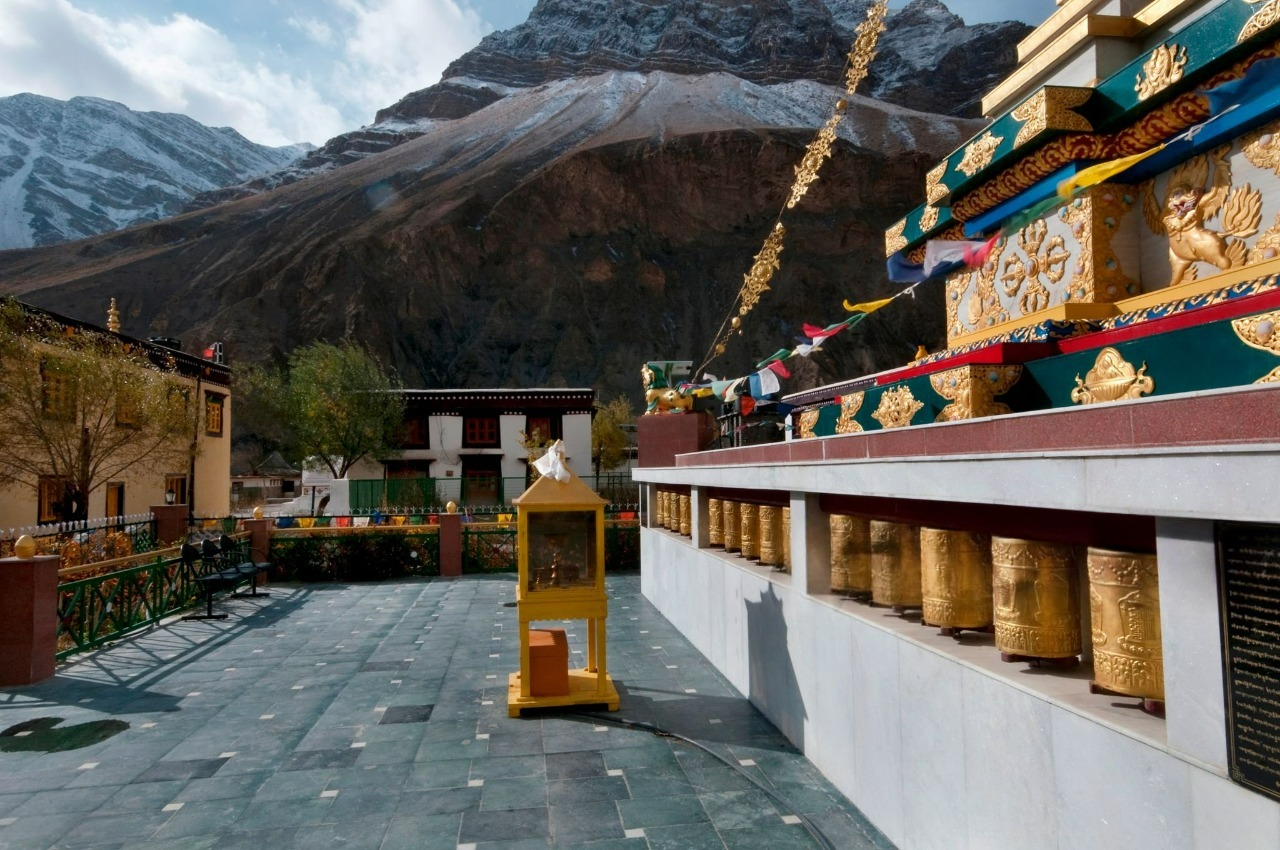
Tabo Village Overview – What Makes It Special

Tabo village is one of those rare Himalayan places where time seems to slow down. Set along the calm flow of the Spiti River, this small settlement is simple, peaceful, and deeply rooted in Buddhist culture. The entire village feels like an extension of the monastery — quiet lanes, mud-plastered homes, and locals who greet travellers with warmth and curiosity.

What makes Tabo special is its sense of openness. Unlike most Spiti villages perched on cliffs, Tabo spreads across a wide, flat valley. That means you get uninterrupted views of the surrounding mountains, making sunrise and sunset especially beautiful. Early mornings often fill the village with a soft golden glow that reflects off the mud houses and monastery walls, giving the area an almost sacred stillness.

Life in Tabo is slow and uncomplicated. You’ll see children walking to the monastic school, monks stepping out for morning routines, and locals tending to small fields or chatting outside their homes. Even cafés and homestays here maintain a quiet charm, serving simple Tibetan food, butter tea, and local dishes that match the laid-back vibe of the village.

A highlight of Tabo is the network of ancient meditation caves carved high into the cliffs above the village. They’re easily visible from anywhere in Tabo and look especially striking during sunset when the cliffs turn a warm shade of orange. Many travellers take a short hike up to these caves for the views and the fascinating glimpse into monastic life centuries ago.

Despite being remote, Tabo offers just the right balance of comfort and authenticity. You’ll find a few clean homestays, small shops, a monastery guesthouse, and reliable road connectivity — but none of the noise or commercialisation that affects other tourist spots. Everything feels untouched, honest, and perfectly in tune with the ancient monastery that stands at its heart.

Tabo Monastery History – The “Ajanta of the Himalayas”

The history of Tabo Monastery is one of the most fascinating chapters in Himalayan Buddhism. Built in 996 AD during the reign of the Tibetan king Yeshe-Ö, Tabo is widely believed to be the oldest continuously operating Buddhist monastery in India — and one of the very few in the world that has survived for more than a thousand years without losing its original identity.

Its founder, the great Tibetan translator Rinchen Zangpo, is said to have established 108 monasteries across the Himalayan region, but Tabo is considered his masterwork. What sets this monastery apart is that almost everything inside — murals, scriptures, clay idols, and woodwork — belongs to the 10th and 11th centuries, preserved in their raw, original form.

Tabo monastery prayer bells images latest November 2025

Why Tabo Is Called the “Ajanta of the Himalayas”

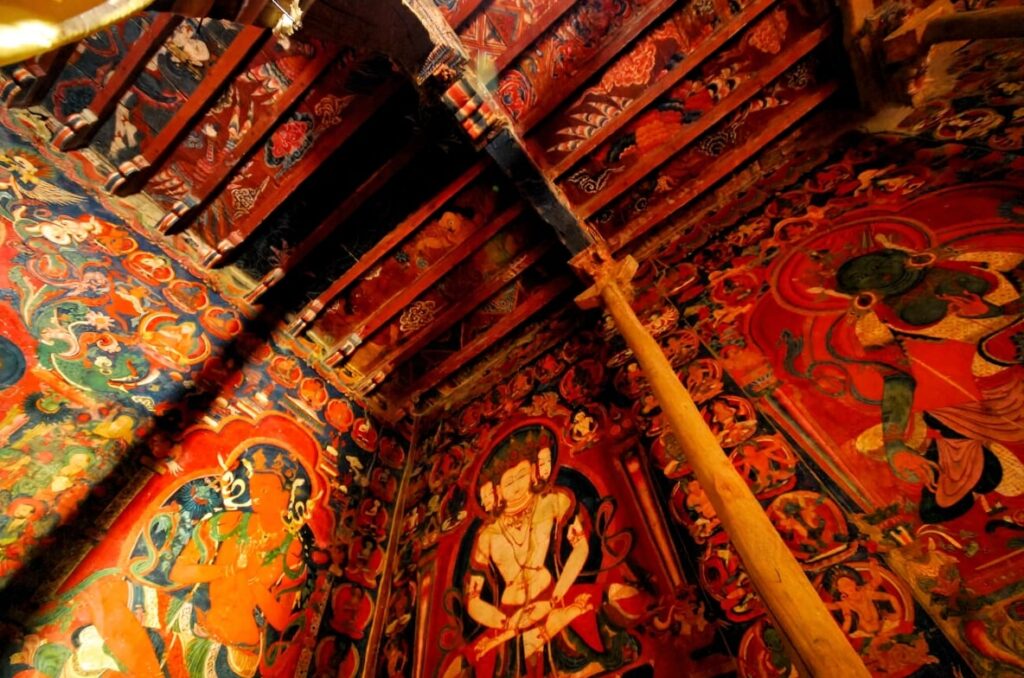
The monastery earned this title because of the extraordinary murals and frescoes that cover its walls. These paintings depict Buddhist deities, mandalas, mythical stories, and scenes from monastic life, created using natural pigments made from crushed stones and minerals. Their style blends Indian, Tibetan, Kashmiri, and Central Asian influences, making Tabo one of the richest examples of Indo-Tibetan art in existence.

Unlike many other monasteries with bright, renovated interiors, Tabo’s paintings sit inside dim, mud-walled halls. When sunlight enters through tiny openings in the walls, the artwork glows gently — exactly as it would have a thousand years ago.

A Centre of Learning and Culture

Throughout the centuries, Tabo has functioned not just as a monastery but as:

  • A Buddhist university, where monks studied philosophy, scriptures, arts, and medicine.

  • A scripture translation centre, preserving rare Tibetan texts.

  • A cultural hub, where artisans, scholars, and monks from Tibet, Kashmir, and India exchanged knowledge.

Several ancient manuscripts discovered here are still preserved in the monastery’s library and are considered priceless.

Survival Through Harsh Himalayan History

Tabo has witnessed:

  • Harsh winters

  • Earthquakes

  • Political shifts in the Himalayan kingdoms

  • Sparse resources

  • A remote, near-isolated existence

Yet, it has remained almost untouched. The reason is simple — Spiti’s arid climate and the monastery’s mud-brick architecture allow the murals and artifacts to survive naturally. Even the 1975 Kinnaur earthquake, which damaged many Himalayan structures, left Tabo largely unharmed.

Modern Recognition

Today, Tabo Monastery is protected as an Archaeological Survey of India (ASI) heritage site. It is also one of the few monasteries where the Dalai Lama has expressed interest in retiring because of its peaceful energy and spiritual significance.

From ancient art to centuries-old meditation caves, Tabo’s history is not just preserved — it continues to live and breathe through the monks and villagers who still call this place home.

When Was Tabo Monastery Built?

Tabo Monastery was built in 996 AD, making it one of the oldest surviving Buddhist monasteries in the Himalayas. Its construction is credited to the great Tibetan king Yeshe-Ö of the western Himalayan kingdom of Guge, along with the legendary scholar and translator Rinchen Zangpo, who played a key role in spreading Buddhism across the region.

The monastery was built during a period known as the Second Diffusion of Buddhism, when scholars, translators, and artisans traveled across the Himalayas to revive Buddhist knowledge and art. Tabo became one of the main centres of this revival, attracting masters from Tibet, Kashmir, and Central Asia who helped design its temples, murals, and sculptures.

What makes the date especially remarkable is that the monastery has continued to function uninterrupted for more than 1,000 years. Despite sitting in a harsh, cold desert environment, Tabo has remained a centre for learning, meditation, and monastic life throughout the centuries. Its age is not just a number — it’s a testament to how perfectly the monastery was built to withstand both time and climate.

Even today, the main temple complex of Tabo — known as the Tsuglagkhang — still retains much of its original architecture and artwork from the 10th and 11th centuries. When you step inside, you’re literally walking into a space that has remained almost unchanged for a millennium.

Ancient Murals, Scriptures & Artistic Heritage Inside Tabo Monastery

Stepping inside Tabo Monastery feels like walking into a 1000-year-old art museum preserved entirely by nature. The monastery’s inner temples are dimly lit, silent, and built with mud walls that have protected some of the oldest Buddhist artworks in the world.

Murals and Frescoes Inside Tabo

The walls of Tabo are covered with extraordinary murals painted between the 10th and 11th centuries. These artworks depict:

  • Stories from the life of the Buddha

  • Mandalas and cosmological diagrams

  • Protectors, deities, and Bodhisattvas

  • Scenes of daily monastic life

  • Symbolic patterns and mythological figures

What makes them special is their artistic style. The colour palette — made from natural pigments like crushed minerals, stones, and organic dyes — has survived the test of time. The strokes are delicate, the expressions are detailed, and the blending of Tibetan, Kashmiri, Indian, and Central Asian influences makes the artwork incredibly rich.

When sunlight enters through the small openings, the murals glow softly, giving you a glimpse of what monks saw here centuries ago.

paintings-inside-temple-at-tabo-monastery-in-india

Clay Sculptures & Carvings

Inside the main temple (Tsuglagkhang), you’ll see dozens of clay sculptures of Buddhist deities arranged in intricate formations. These sculptures:

  • Are hand-crafted using mud, grass, and natural binding materials

  • Stand on ornate pedestal structures

  • Still retain traces of their original colours

  • Show expressions and detailing rarely found in Himalayan monasteries

Many of these figures are life-sized and have been preserved exactly as they were when first created.

Scriptures & Ancient Manuscripts

Tabo Monastery houses several priceless Tibetan manuscripts, including handwritten scrolls and ancient scriptures wrapped in traditional cloth. These texts include teachings, commentaries, and translations attributed to Rinchen Zangpo and other early masters.

Many manuscripts are stored safely within the monastery and are displayed only during special rituals or festivals.

Architectural Layout

The entire monastery complex consists of:

  • The main assembly hall (Tsuglagkhang)

  • Several smaller temple rooms

  • Mud-roofed corridors

  • Hidden chambers with murals and sculptures

  • Monk’s quarters and prayer rooms

Each room has its own set of murals, painted themes, and sculptural elements, making the monastery feel like a maze of ancient art.

Why Tabo’s Art Survived So Long

Surprisingly, the reason these murals and sculptures have survived for over 1000 years is the dry, cold desert climate of Spiti. There is almost no humidity, which prevents decay. The mud construction also naturally insulates the interiors, keeping the artwork stable even during extreme winters.

For travellers, the experience is unforgettable — quiet mud chambers, glowing ancient artwork, and a sense of stepping into history that few places in India can offer.

Cultural Importance of Tabo Monastery in Buddhism

Tabo Monastery holds immense cultural and spiritual significance in Himalayan Buddhism. For more than a thousand years, it has served as a centre of learning, meditation, artistic creation, and religious scholarship—making it one of the most influential monasteries in the trans-Himalayan region.

A Thousand-Year-Old Centre of Buddhist Education

For centuries, Tabo functioned as a monastic university, where monks from Tibet, Ladakh, Kinnaur, and Spiti came to study Buddhist philosophy, ethics, medicine, literature, and art. The monastery was deeply connected to the Kadampa and later Gelugpa traditions and played a major role in preserving Tibetan teachings during turbulent periods in the region’s history.

Its classrooms and prayer halls once echoed with debates, teachings, and scriptural recitations that shaped generations of Himalayan monks.

A Crucial Part of Rinchen Zangpo’s Legacy

Rinchen Zangpo, the great translator who introduced Buddhist scriptures and art to the western Himalayas, considered Tabo one of his most important creations. Many of the artistic styles seen in Tabo’s murals—particularly the Kashmiri-influenced motifs—reflect the craftsmanship he brought from artists he invited from Kashmir and Central Asia.

Because of this legacy, Tabo stands as a cultural bridge between India and Tibet.

Spiritual Significance for Himalayan Buddhists

Tabo is regarded as a sacred site by Buddhists across the Himalayas. Major rituals, festivals, and initiations have historically taken place here. Even today, monks from neighbouring regions visit Tabo for retreats and long meditation periods, especially in the meditation caves above the village.

The monastery is often seen as a place of transformation, where monks come to deepen their practice in silence and isolation.

The Dalai Lama’s Connection with Tabo

The 14th Dalai Lama has visited Tabo multiple times and has openly expressed his admiration for its peaceful energy. He once mentioned that if he ever chooses a place to retire, it would be Tabo, which speaks volumes about the spiritual resonance of this ancient site.

Tabo was also the venue for the Dalai Lama’s Kalachakra Initiation in 1983 and 1996, events attended by thousands of devotees.

A Living Cultural Treasuring

What makes Tabo truly special is that it is not just a preserved monument—it is a living monastery. Monks still perform daily rituals, travelers sit quietly in prayer halls, children study in monastic schools, and festivals bring the entire village together.

It continues to be a place where:

  • Ancient traditions are preserved

  • Art and culture are respected

  • Spiritual practice remains deeply rooted

In many ways, Tabo Monastery is a reminder of how deeply Buddhist culture has shaped the identity of Spiti Valley, and how this thousand-year-old heritage still thrives against the dramatic Himalayan backdrop.

Tabo Monastery Height & Climate – What to Expect at This Altitude

Tabo Monastery sits at an altitude that perfectly blends accessibility with the dramatic landscapes of Spiti Valley. Unlike many monasteries perched high on steep cliffs, Tabo is located in a broad, flat portion of the valley, making it easier to reach while still offering the stark beauty that Spiti is famous for.

Tabo Monastery Height & Altitude

  • Altitude: ~3,280 metres (10,760 ft) above sea level

  • Location type: Cold desert plateau

  • Terrain: Flat valley base with steep mountains rising around it

This moderate–high altitude is one of the reasons Tabo has remained so well-preserved. The dry air, minimal rainfall, and strong sunlight naturally protect the murals and clay sculptures inside the monastery.

How the Altitude Feels to Travellers

Most travellers adapt comfortably to Tabo’s altitude because it’s lower than many other spots in Spiti, such as Kibber, Langza, or Komic.
You may feel:

  • Slight breathlessness during fast walking

  • Dry throat due to cold desert winds

  • Strong sunlight during daytime

Nothing severe — Tabo is considered one of the easier high-altitude villages in the valley.

Climate in Tabo – Month by Month Overview

Here’s a quick climate snapshot so travellers know what to expect:

MonthTemperature (Approx.)What It Feels Like
May–June5°C to 20°CPleasant, warm days and cool nights
July–Sept8°C to 22°CPeak season, clear skies, bright sunlight
Oct0°C to 15°CCold mornings, winter begins to set in
Nov–Feb–15°C to 5°CHarsh winter, heavy frost, extremely cold nights
March–April–5°C to 12°CSlow transition into spring

What the Climate Means for Visitors

  • Summer: Warm days, cool nights, and easy access to the monastery and caves.

  • Autumn: Crystal-clear skies and excellent photography conditions.

  • Winter: Very cold but incredibly quiet and beautiful — ideal for travellers who want solitude.

  • Monsoon Season: Spiti is outside the monsoon belt, so Tabo remains dry even in July–August.

Sunlight Advantage

Tabo sits in an open valley, so it receives sunlight almost the entire day. This natural lighting is one of the reasons the monastery’s murals glow beautifully inside the dim chambers — something that doesn’t happen in many cliff-side monasteries.

Wind & Dryness

Because Tabo lies in a cold desert:

  • The air is extremely dry

  • Lips and skin can crack easily

  • Hydration is essential

  • Sunlight is strong due to thin atmosphere

A simple combination of sunscreen, lip balm, and steady hydration makes the experience perfectly comfortable.

Altitude & Height of Tabo Monastery

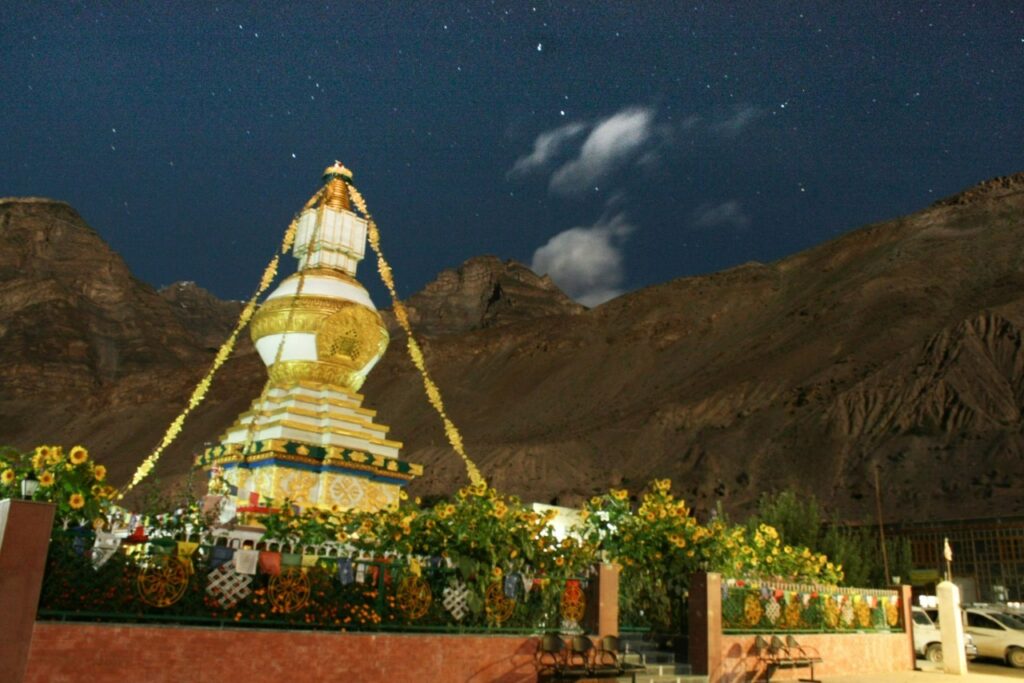
Tabo Monastery at night

Tabo Monastery stands at an altitude of around 3,280 metres (10,760 feet) above sea level. This elevation places it in the middle-altitude zone of Spiti Valley — high enough to offer dramatic landscapes and crisp mountain air, yet low enough for most travellers to acclimatize comfortably.

What makes Tabo’s altitude unique is that the monastery is built on a flat valley base, not on a cliff or a steep slope. This is unusual for ancient Himalayan monasteries, which are typically perched high for defensive or strategic reasons. Tabo’s founders intentionally chose this open, sunlit valley because the dry climate and constant exposure to sunlight would help preserve the murals and clay sculptures inside the monastery — something that has proven true for over a thousand years.

At this height, you may feel a light shortness of breath when climbing or walking fast, but it’s nowhere near as demanding as places like Komic, Hikkim, or Kibber. The air is cold and extremely dry, typical of Spiti’s desert-like environment, so staying hydrated makes a noticeable difference in comfort.

The altitude also enhances Tabo’s visual appeal. The surrounding mountains appear taller and sharper against the open valley floor, creating wide panoramas that are especially beautiful during sunrise and sunset. Whether you’re exploring the monastery, wandering through the village, or hiking up to the meditation caves, the altitude makes the entire experience feel vast, peaceful, and deeply connected to the Himalayan landscape.

Weather Conditions Throughout the Year

Weather in Tabo is shaped by its cold desert geography and high altitude. The village experiences sharp temperature variations, extremely dry air, and some of the clearest skies in the Himalayas. Understanding the weather by season helps you plan the perfect visit.

Summer (May to June)

Summer is the most comfortable time to visit Tabo. Days are pleasantly warm, with temperatures ranging between 12°C and 20°C, while nights stay cool. The roads are fully open, the monastery is easily accessible, and the meditation caves are safe to explore. This is also the time when the Spiti River flows steadily, adding a fresh contrast to the arid mountains.

Monsoon Period (July to September)

Spiti, including Tabo, lies outside the traditional monsoon zone. While the rest of Himachal receives heavy rains, Tabo stays dry with occasional cloud cover. This makes it an excellent time for photography, sightseeing, and monastery visits. Temperatures hover around 10°C to 22°C, and the skies remain clear enough for stargazing.

Autumn (October)

Autumn brings crisp air, golden light, and sharp mountain views. Temperatures drop quickly, especially at night, with daytime averages around 5°C to 15°C. This is one of the best months for travellers who enjoy quiet landscapes and dramatic Himalayan backdrops. By late October, winter slowly begins making its presence felt.

Winter (November to February)

Winter in Tabo is harsh and intense. Temperatures can fall as low as –15°C, with daytime highs rarely crossing 5°C. The valley experiences heavy frost, icy winds, and extremely cold nights. The monastery remains open, but travel becomes more challenging due to snow on higher roads and limited accommodation options. Only experienced travellers or those seeking solitude usually visit during this period.

Spring (March to April)

Spring marks the transition from winter’s harshness to warmer days. Temperatures rise gradually to –5°C to 12°C, and the valley begins to open up again. Roads become easier to navigate, and the monastery receives increasing sunlight. This is a calm period with fewer tourists, ideal for a peaceful visit.

How to Reach Tabo Monastery – Routes, Distances & Road Conditions

Reaching Tabo Monastery is an experience in itself. The journey takes you through winding mountain roads, river valleys, and dramatic desert landscapes that define Spiti Valley. Despite its remote setting, Tabo is surprisingly well-connected through two major routes — one from Shimla and another from Manali. Both offer completely different travel experiences.

Below is the most practical, up-to-date breakdown for 2025 so you can choose the best route based on weather, season, and your itinerary.

Route from Kaza to Tabo Monastery

Distance: ~48 km
Travel Time: 1.5 to 2 hours
Road Type: Smooth, scenic, and well-maintained (for Spiti standards)

This is the easiest and most common route to Tabo. The road runs parallel to the Spiti River the entire way, offering incredible views of rock formations, valley walls, and small villages like Schichling and Lari.

Kaza → Schichling → Lingti bridge → Tabo

Road conditions are generally good except for occasional rough patches. This route remains open from May to early January and reopens again from March onwards, depending on snowfall.

Route from Shimla to Tabo Monastery

Distance: ~365 km
Travel Time: 2 days (usually via Reckong Peo/Kalpa)
Best Season: May to November
Road Type: Easier for altitude acclimatization, more reliable in early season

This is the most preferred and stable route, especially for travellers who want a gradual increase in altitude. The journey from Shimla to Tabo passes through:

Shimla → Narkanda → Rampur → Reckong Peo → Pooh → Nako → Tabo

Why this route is ideal:

  • The road stays open for a longer period of the year.

  • Perfect for those concerned about altitude sickness.

  • Landscapes shift from forested hills to high-altitude desert, making the drive more scenic and varied.

  • You can combine stops like Kalpa, Nako, and Gue Mummy.

Don’t expect smooth highways everywhere — some stretches around Malling and Sumdo can be rough — but overall, this route is safer and more predictable.

Route from Manali to Tabo Monastery

Distance: ~250 km
Travel Time: 9–12 hours (depending on stops and road conditions)
Road Type: Extremely scenic but steeper and more challenging
Best Season: June to mid-October

This route is for adventure lovers and experienced mountain travellers. The drive includes crossing the Rohtang–Atal Tunnel region and then entering the raw desert landscapes of Lahaul and Spiti.

Manali → Atal Tunnel → Batal → Kunzum Pass → Losar → Kaza → Tabo

Important notes for 2025:

  • Kunzum Pass remains closed for 7–8 months due to snow.

  • Open only roughly from June to mid-October.

  • The stretch from Batal to Kunzum is rough and challenging but offers iconic views.

If you’re short on time or want the fastest route during summer, this is the one.

Tabo to Dhankar Monastery Distance

Distance: ~26 km
Travel Time: 45 minutes to 1 hour
Road Conditions: Mostly good, with a short, steep climb near Dhankar

Many travellers club Tabo and Dhankar Monastery on the same day. The road runs along the Spiti River before turning into the mountains toward Dhankar’s cliffside location.

Tabo → Schichling → Dhankar Road → Dhankar Monastery

This is one of the most scenic stretches in Spiti, especially during sunset.


Road Conditions Overview (2025)

RouteBest MonthsRoad QualityDifficulty Level
Kaza → TaboMay–JanGoodEasy
Shimla → TaboMay–NovModerateModerate
Manali → Tabo (via Kunzum)Jun–OctRough in partsDifficult

If you’re planning your first trip to Spiti, the Shimla route is the safest and easiest. For pure adventure, the Manali–Kunzum–Kaza route is unforgettable.

Inside Tabo Monastery – Temples, Caves & Archaeological Treasures

Inside Tabo Monastery

Walking inside Tabo Monastery is like stepping into a thousand-year-old world where nothing has changed except the silence that has grown deeper. Unlike the brightly painted monasteries of Ladakh and Spiti, Tabo’s interiors are dim, raw, and deeply atmospheric. The mud walls, ancient murals, and natural lighting instantly draw you into a different era.

Tabo Monastery is not a single building—it’s a complete complex of temples, halls, shrines, monk quarters, and meditation caves, each with its own unique history and artwork.

Here’s what you can expect inside:

Main Temple Complex – What You’ll See Inside

The heart of Tabo Monastery is the Tsuglagkhang, the main assembly hall. It is the oldest and most important structure in the entire complex.

1. Tsuglagkhang (Main Assembly Hall)

  • Built entirely with mud, stone, and timber.

  • Interiors illuminated by soft natural light from small openings.

  • Walls, pillars, and ceilings covered with 10th-century murals.

  • Home to several life-sized clay sculptures of Bodhisattvas.

The atmosphere inside is quiet and sacred—almost untouched by modern renovation.

2. Smaller Temple Rooms (Lhakhangs)

The complex includes several smaller temples such as:

  • The Golden Temple (renovated during the 16th century)

  • The Bodhisattva Temple

  • The Mandala Temple

Each room has distinct artwork, many focusing on Tantric Buddhist themes and mandalas.

3. Intricate Clay Sculptures

The clay idols in Tabo are among the most valuable in the Himalayas.
They are:

  • Handcrafted using ancient methods

  • Painted with natural pigments

  • Preserved in original form

  • Found nowhere else in India with such detail

Expressions, jewelry, robes, and gestures (mudras) are astonishingly intricate despite being centuries old.

Meditation Caves Above the Monastery

The cliffs rising above Tabo contain ancient meditation caves carved into the mountainside. These caves were used by monks for deep meditation retreats, often lasting months.

What You’ll Experience

  • A short, steep walk leads to the caves.

  • The interiors are simple stone chambers.

  • The view from the openings is incredibly peaceful.

  • Ideal for photography, sunrise views, and quiet reflection.

Some caves still have signs of soot and smoke marks from ancient butter lamps used by monks.

These caves are one of the most unique features of Tabo and a must-visit for anyone exploring the area.

Museum & Monastic School

Tabo Monastery also houses:

  • A monastic school, where young monks study scriptures, language, and philosophy.

  • A museum that displays artifacts, traditional robes, ancient manuscripts, and items used in rituals.

While the museum collection is small, it provides valuable insight into Tabo’s cultural and spiritual legacy.

Why Tabo’s Interiors Feel So Unique

Most monasteries in the Himalayas have undergone renovation or expansion, but Tabo retains its original 10th-century architecture. That means no modern paint, no bright decorations, and no artificial lighting inside the temples.

The result:
A rare, authentic monastic atmosphere that feels as old as the mountains surrounding it.

Also Know About : Dhankar Monastery in Spiti

Tabo Monastery Timings, Entry Details & Visitor Information

Visiting Tabo Monastery is simple and hassle-free. The entire complex is centrally located in the village, and travellers can walk in without any major restrictions. Still, knowing the timings, basic rules, and entry details helps you plan your visit better—especially if you’re clubbing Tabo with Dhankar or Kaza on the same day.

Timings of Tabo Monastery

Tabo Monastery follows traditional monastic routines, so the timings are adjusted slightly based on seasons. However, the general schedule is:

  • Opening Time: 6:00 AM

  • Closing Time: 6:00 PM

The monastery remains open throughout the day, except during prayer sessions or occasional private rituals. During winter (Nov–Feb), monks sometimes close the inner chambers earlier due to freezing temperatures and lack of daylight.

Best time to visit inside: Morning to early afternoon
This is when sunlight enters the monastery and naturally illuminates the murals beautifully.

Entry Fee

  • Entry Fee: Free
    Tabo Monastery does not charge any entry fee for visitors.
    However, donations are welcomed and go towards monastery maintenance and community activities.

Photography Rules

Photography rules are quite strict to protect the 1000-year-old murals.

  • Inside the temples: Photography is generally not allowed.
    Flashlight damages the ancient pigments, so the rules are very firm.

  • Outside the monastery: Photography is allowed anywhere in the complex.

  • Meditation caves: You can take photos here as long as you respect the space.

Always check with the monks or caretaker if you’re unsure. Rules may vary slightly by season or room.

Dress Code & Behaviour

There is no strict dress code, but visitors are expected to maintain cultural sensitivity.

Recommended:

  • Dress modestly

  • Remove shoes before entering temples

  • Speak softly inside the halls

  • Avoid touching walls, murals, or sculptures

The monastery is an active place of worship, so respectful behaviour is essential.

Accessibility

Tabo Monastery is one of the most accessible monasteries in Spiti.

  • No steep climbs

  • No trekking required

  • Located directly beside the road

  • Suitable for all age groups, including elderly travellers

This is one reason why Tabo is often included even on short Spiti itineraries.

Facilities Available

Inside or near the monastery complex, you’ll find:

  • Clean washrooms

  • Drinking water points

  • A small guest house run by the monastery

  • Basic shops for snacks and essentials

  • Homestays and cafés within short walking distance

Everything is simple, but sufficient for a comfortable visit.

Best Time to Visit Tabo Monastery

While Tabo Monastery is open throughout the year, the overall experience varies greatly depending on the season. Because of Spiti Valley’s cold desert climate, choosing the right time can make your journey smoother, safer, and far more enjoyable.

1. May to October – The Ideal Season

This is the best time to visit Tabo. The weather is pleasant, roads remain open, and the entire valley is accessible.

  • Temperature: 10°C to 20°C

  • Road Conditions: Stable and safe

  • Best For: Sightseeing, exploring caves, photography, cultural visits

You can comfortably explore the entire monastery complex and even hike up to the meditation caves without any weather challenges.


2. July to September – Clear Skies & Peak Spiti Season

These months bring bright blue skies and warm, dry days. Since Spiti lies outside the monsoon zone, rainfall is minimal.

  • Excellent for stargazing

  • Murals look stunning in natural sunlight

  • Ideal for travellers combining Tabo with Kaza, Dhankar, and Pin Valley


3. October – Cold but Beautiful

October brings sharp visibility and golden light, making the monastery look incredibly photogenic.

  • Temperature: 0°C to 12°C

  • Crisp mornings and cold nights

  • Perfect for travellers who want fewer tourists and dramatic Himalayan landscapes

However, nights start getting noticeably cold.


4. November to April – Winter & Off-Season

Winter in Tabo is harsh. Temperatures can drop to –15°C, and heavy frost covers the valley.

Visiting during this time is only recommended if:

  • You’re an experienced winter traveller

  • You’re prepared for freezing temperatures

  • You’re okay with limited accommodation and facilities

The monastery remains open, but reaching Tabo from Manali is impossible due to Kunzum Pass being closed. The Shimla route remains the only access point.

Important Travel Tips for Visiting Tabo Monastery

1. Acclimatize Properly

Even though Tabo’s altitude is moderate compared to upper Spiti, take it easy on the first day. Stay hydrated and avoid rushing uphill walks.

2. Respect Photography Restrictions

The murals are over 1000 years old. Flash photography can damage them. Stick to outside photography unless permitted.

3. Start Your Day Early

Sunlight in Spiti is strong in the morning but fades fast by evening.
Exploring early helps you see the murals in their natural glow.

4. Carry Essentials

The village is small, so pack:

  • Sunscreen and lip balm

  • Water bottle

  • Light snacks

  • Warm layers even in summer (nights are cold)

5. Book Accommodation in Advance (Peak Season)

Tabo has limited homestays and guesthouses. They fill up quickly between June and September.

6. Combine Tabo With Nearby Attractions

Tabo pairs perfectly with:

  • Dhankar Monastery

  • Nako

  • Pin Valley

  • Kaza

  • Gue Mummy

This helps maximise your Spiti itinerary.

7. Visit the Meditation Caves

The caves above the village offer incredible views and a peaceful environment. Go during sunrise or sunset for the best experience.