

Best Time to Visit Vietnam: Complete Guide
Vietnam is a country where every season tells a different story, misty mountains in the north, golden beaches in the south, and lantern-lit streets glowing in the center. But planning a trip to Vietnam can feel a bit confusing because the country stretches vertically over 1,600 km meaning the weather in the north can be completely different from what’s happening in the south at the same time. While Hanoi might be cool and misty, Ho Chi Minh City can be sunny and warm.That means the best time to visit depends on where you plan to go and what you want to experience.
Whether you’re planning a honeymoon, a budget-friendly vacation, or a family trip, this blog will help you choose the perfect time for your Vietnam adventure.
Why Knowing the Best Time for Vietnam Important
Knowing the best time to visit Vietnam helps you plan a trip with good weather, fewer crowds, and better experiences. Vietnam’s climate changes from north to south, so choosing the right month ensures you avoid heavy rains, humidity, or typhoons. It also helps you pick the perfect time for beaches, trekking, cruises, and festivals. Plus, traveling in the right season can save money on hotels and flights. In short, the best timing means a smoother, more enjoyable Vietnam trip.
Vietnam Weather: North, Central & South
Vietnam’s weather changes continuously because the country stretches over 1,600 km. Understanding regional weather is key to choosing the best time to visit Vietnam. Here’s a simple breakdown:
Best Time to Visit North Vietnam
The best time to visit North Vietnam is between October to April. If you are planning to explore Hanoi, then this time is the best as this region offers diverse weather patterns that make certain months far more enjoyable. This area also includes some of the most iconic places to visit in Vietnam such as Sapa, Ha Giang, Halong Bay, and Ninh Binh, all of which are especially beautiful during the cooler, drier months.
Winter (Dec–Feb): Winter is quite chilly in North Vietnam, with temperatures dropping to 10–18°C. It is one of the best times to visit Hanoi, offering cozy weather for walking around the city and enjoying the misty, magical views of Halong Bay.
Spring (Mar–Apr): Spring in North Vietnam offers fresh, green weather, perfect for Sapa trekking and Ninh Binh day trips. It’s considered one of the best times to travel to North Vietnam for outdoor adventure.
Autumn (Oct–Nov): Autumn is the best time to travel to North Vietnam, with clear skies, cool air, and golden rice terraces that make it perfect for trekking and photography.
Summer (May–Aug): Summer in North Vietnam is hot, humid, and rainy, making it less suitable for travelers seeking mountain views or pleasant city sightseeing.
Rainfall
Peak rainfall starts in the months of July and August.
Driest months: December – February
Summer storms are common — expect short, heavy showers.
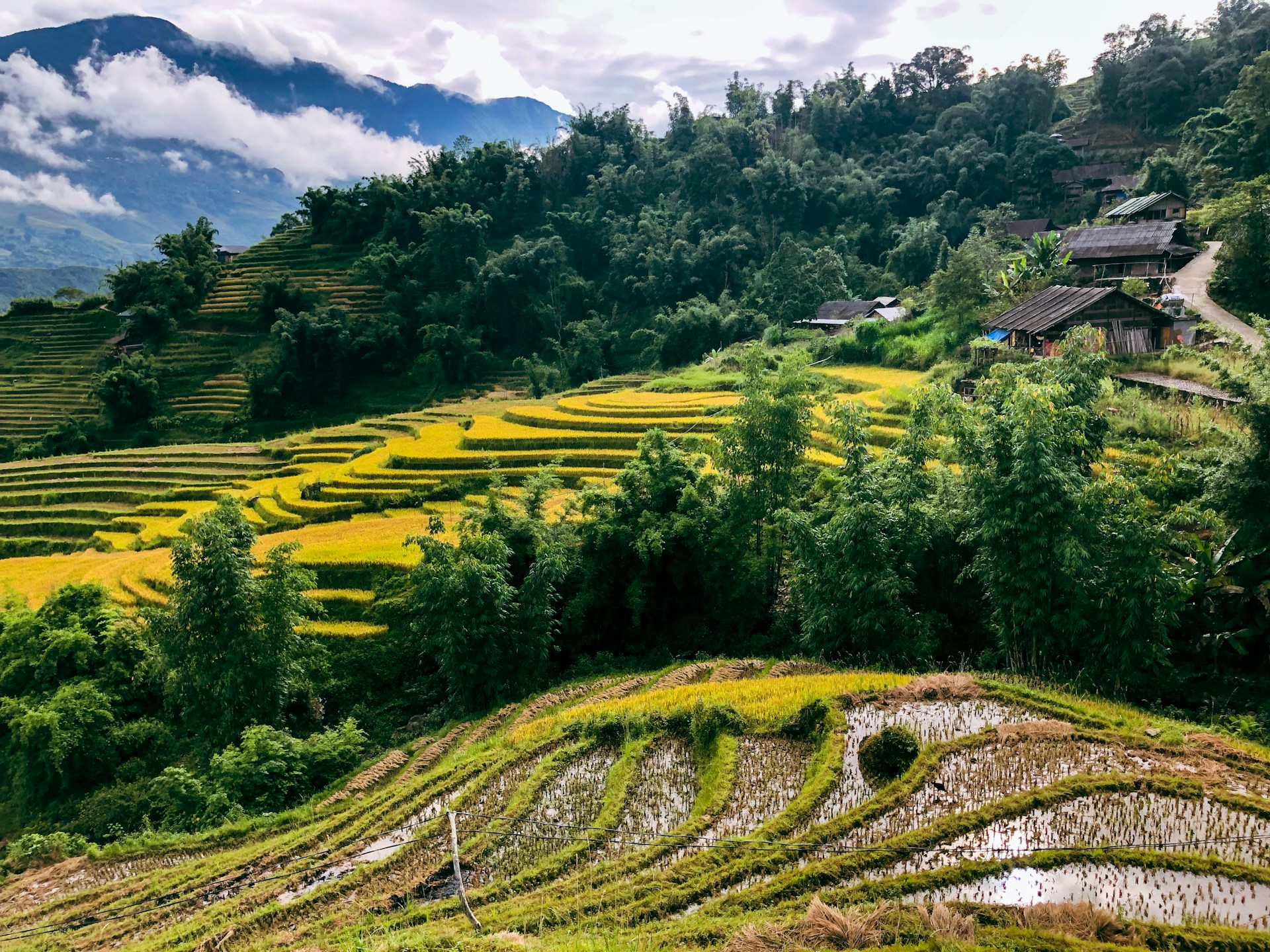
Sapa Vietnam
Best Time to Visit Central Vietnam
The best time to visit central Vietnam for beaches is from February to July.For travelers looking for the best time to go to Vietnam for beaches, festivals, and dry weather, Central Vietnam stands out. Its sunny days and stable climate make it one of the best times to travel to Vietnam.
Spring (February – April): Spring is one of the most pleasant seasons in Central Vietnam, offering warm, sunny, and dry weather. It’s ideal for Hoi An beaches, Da Nang outdoor activities, and sightseeing in Hue. Clear skies and comfortable temperatures make this one of the best times to visit the region.
Summer (May – July): Summer is hot, bright, and sunny across Central Vietnam making it perfect for beach lovers. This is the peak season for swimming, snorkeling, and exploring coastal areas. Despite the heat, it’s considered the best time for beach vacations in Da Nang and Hoi An due to stable weather and calm seas.
Autumn (August – November): Autumn marks the rainy season with higher humidity and an increased chance of typhoons along the coast. Heavy showers can affect travel plans, especially beach activities. However, cultural cities like Hue and Hoi An can still be enjoyed during clearer breaks, and crowd levels are lower.
Winter (December – January): Winter brings cooler temperatures and cloudy skies, but it remains a comfortable time to explore cities. While beach activities are limited, the mild weather is perfect for walking tours, sightseeing, and enjoying the ancient towns of Hoi An and Hue without summer heat.
Rainfall
Central Vietnam receives heavy rain and typhoons in the months of September and November.
Driest Months: March – July
Coastal cities like Hue and Hoi An can experience flooding in peak monsoon.
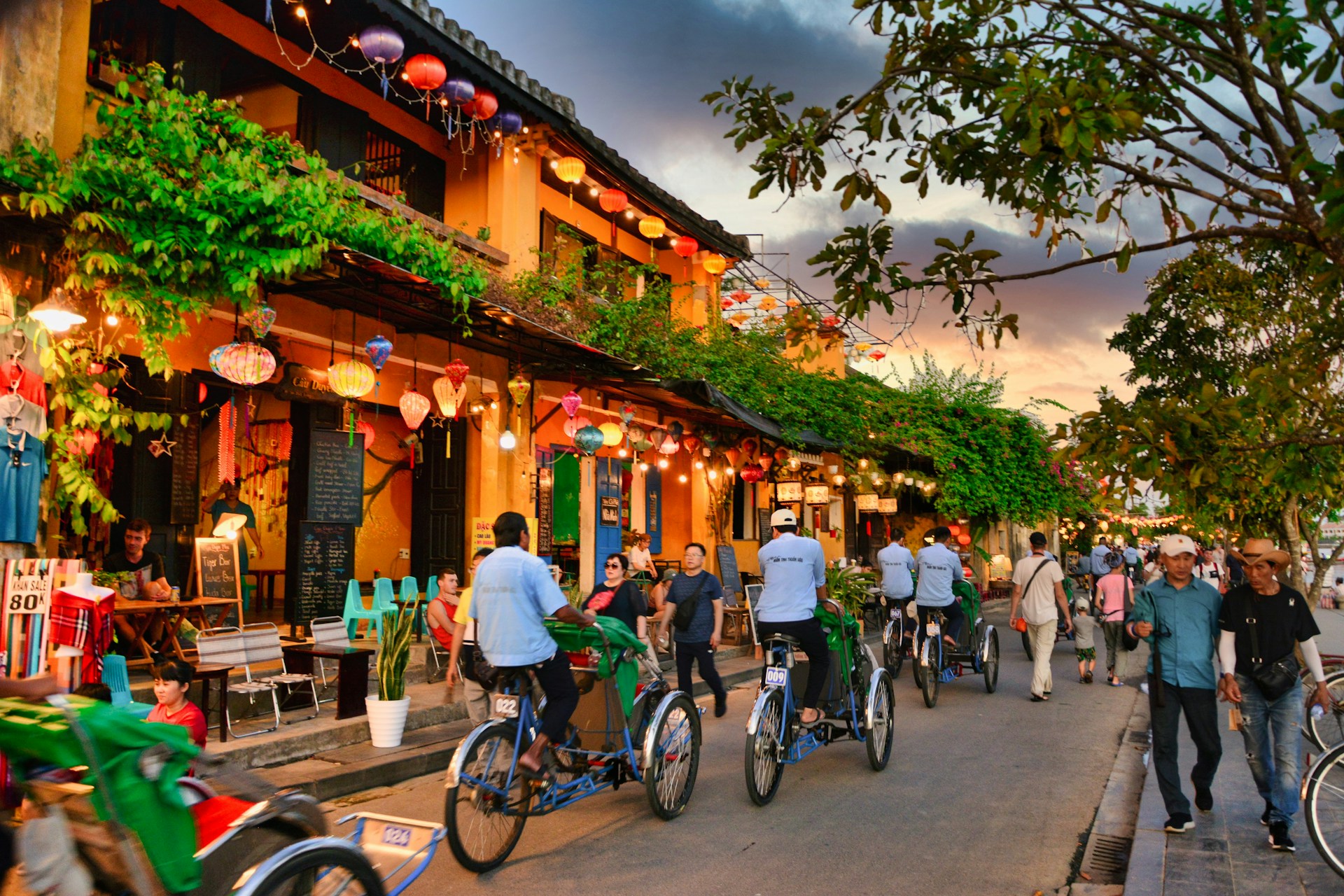
Hoi An
Best Time to Visit South Vietnam
The best time to visit south Vietnam is from December to march as during this time Vietnam offers some of the most stable and sunny conditions in the country. With warm temperatures all year, south Vietnam is perfect for beach lovers, city explorers and for those who wanted to explore for the first time.
Spring (February – April): Spring brings warm, pleasant weather with temperatures between 28–34°C. Rainfall is minimal, making it an excellent time to explore Ho Chi Minh City, the Cu Chi Tunnels, and enjoy Mekong Delta tours. This season also marks the beginning of beach weather in Phu Quoc.
Summer (May – July): Summer is hot and humid, with brief afternoon showers that don’t last long. Travel and beach activities are still enjoyable. It’s also the ideal season for visiting fruit markets and taking river cruises in the Mekong Delta.
Autumn (August – October): This is the peak rainy season, especially during afternoons. The surroundings turn lush and green, and fewer tourists mean lower prices. While it’s not suitable for beach activities, city sightseeing is still very much possible.
Winter (November – January): Winter is the best time to visit South Vietnam, with temperatures ranging from 25–30°C. Days are dry, sunny, and clear, making it perfect for exploring Phu Quoc, Ho Chi Minh City, Can Tho, and Vung Tau.
Rainfall: There is not much rainfall in this region. It only receives afternoon showers which are typically short, predictable and rarely affect the travel.
Dry Season (Dec–Apr): Minimal rain, great travel weather.
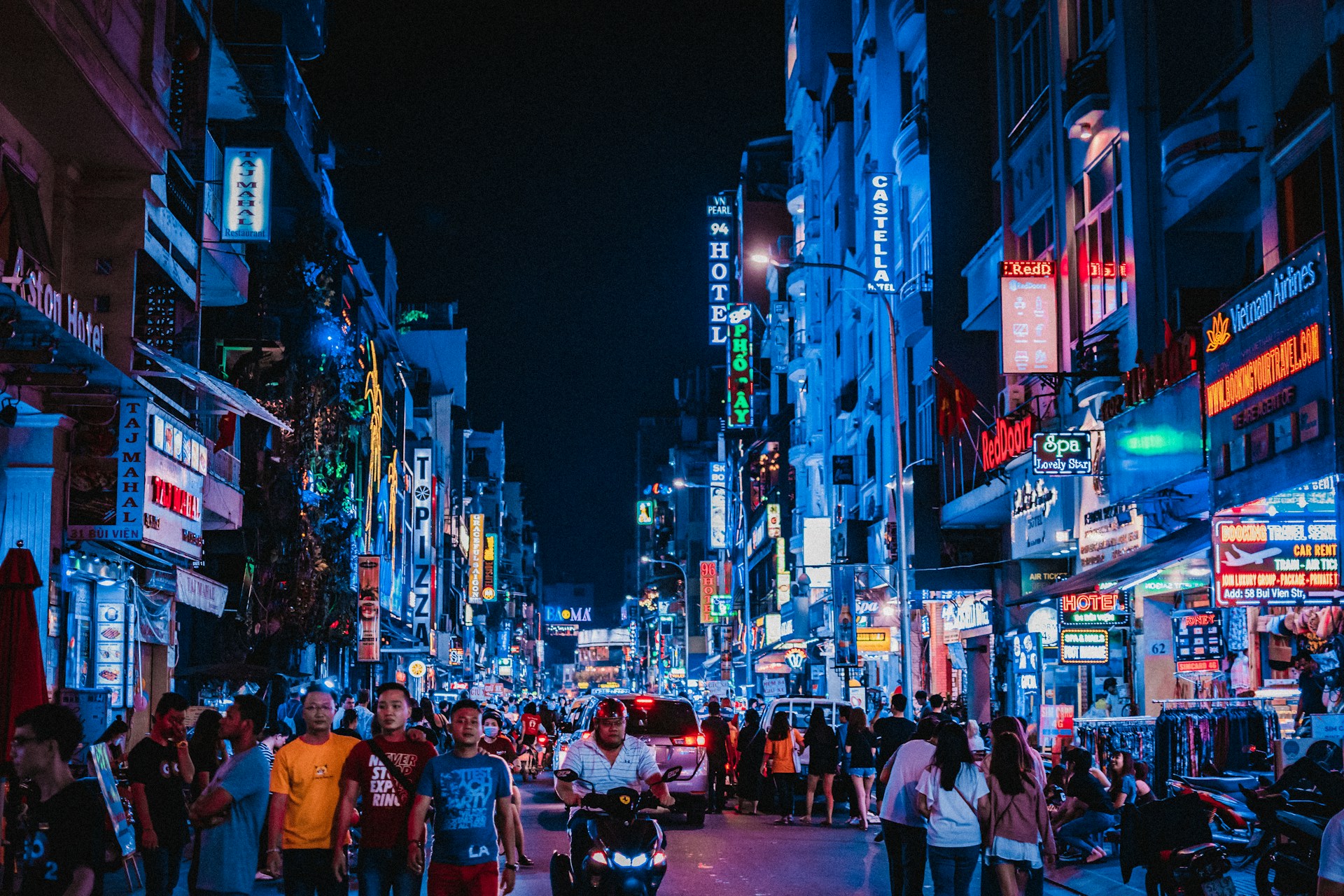
Ho Chi Minh
Best Time to Visit Vietnam Month-by-Month (January–December)
January in Vietnam
January is one of the best months to visit Vietnam. The weather is cool, dry, and comfortable, making it perfect for city tours, cruises, and outdoor sightseeing. From misty northern landscapes to sunny southern beaches, January offers great conditions both day and night, whether you want to explore, relax, or enjoy festivals.
Average Temperature: 12–20°C
Things to Do in January in Vietnam
- Explore Hanoi sightseeing spots in cool daytime weather
- Take a Halong Bay cruise for clear skies and calm seas
- Enjoy Ho Chi Minh City nightlife with warm evenings
- Attend New Year & cultural festivals happening across the country
February in Vietnam
February is another excellent month to visit Vietnam. The weather is dry, sunny, and pleasant across the country. It’s also the time of Tet (Vietnamese New Year), making February culturally vibrant. Days are perfect for sightseeing, while nights stay comfortable for walking tours and night markets.
Average Temperature: 15–25°C
Things to Do in February in Vietnam
- Visit Hanoi & Ninh Binh in clear and mild weather
- Cruise Halong Bay with less fog
- Join Tet celebrations across Vietnam
- Enjoy lanterns & festivals in Hoi An
- Relax on Phu Quoc beaches with sunny days
March in Vietnam
March brings warm, pleasant weather and minimal rainfall. It is the best time for beaches in south Vietnam and trekking in the north. Daytime stays sunny and bright, while nights remain cool and comfortable.
Average Temperature: 18–28°C
Things to Do in March in Vietnam
- Sapa & Ha Giang treks in fresh spring weather
- Ninh Binh boat rides under clear skies
- Explore Hoi An & Da Nang in perfect temperatures
- Phu Quoc and Mui Ne beaches
- City sightseeing in Hanoi & Ho Chi Minh
- Sapa & Ha Giang treks in fresh spring weather
April in Vietnam
April is warm but still pleasant across most regions. It’s the last good month before the summer heat arrives. Perfect for sightseeing, beaches, and adventure travel during the day; evenings remain breezy.
Average Temperature: 22–32°C
Things to Do in April in Vietnam
- Visit Halong Bay in bright sunshine
- Explore Hue, Hoi An & Da Nang
- Relax on beaches (Nha Trang, Phu Quoc, Da Nang)
- Hiking in the northern mountains
- City tours without rainfall interruptions
May in Vietnam
May marks the start of the summer season hot but manageable. Their will be less crowd. Expect sunny days and increased humidity. Nights are warm and lively, perfect for beach destinations.
Average Temperature: 25–34°C
Things to Do in May in Vietnam
- Enjoy beaches: Nha Trang, Mui Ne, Da Nang
- Island trips to Phu Quoc & Con Dao
- Waterfalls & nature in Dalat
- Night markets & nightlife (Ho Chi Minh, Hanoi)
- Early morning boat tours in Mekong Delta
June in Vietnam
June is hot and tropical with occasional short showers. Rain usually comes in the evening, so days are still good for travel. Nights stay warm with clear skies after the rain.
Average Temperature: 26–34°C
Things to Do in June in Vietnam
- Beaches & water activities (great waves in Mui Ne)
- Adventure sports in Dalat
- Visit Sapa for green views
- Explore Ho Chi Minh nightlife
- Shop & eat in cool malls/markets
July in Vietnam
July is warm, tropical, and popular for beach holidays. Showers are common but quick. Days are perfect for swimming; nights become cooler after rainfall.
Average Temperature: 26–35°C
Things to Do in July in Vietnam
- Beach vacations: Nha Trang, Da Nang, Phu Quoc
- Island hopping
- Visit Sapa rice fields
- Indoor attractions & museums
- Rain-washed night markets
August in Vietnam
August brings peak rain in central Vietnam but remains good for north and south. Days may be cloudy and evenings are cool and pleasant.
Average Temperature: 25–33°C
Things to Do in August in Vietnam
- Visit Hanoi, Sapa & Ha Giang
- Cruise Halong Bay
- Explore Ho Chi Minh & Mekong Delta
- Enjoy beaches in Phu Quoc (still sunny)
- Night cafés & rooftop bars
September in Vietnam
September marks the start of autumn in the north, one of the best months for travel. This month marks the beginning of golden rice terraces.The weather becomes cool, golden, and beautiful. Days are great for photography; nights are refreshing.
Average Temperature: 22–30°C
Things to Do in September in Vietnam
- Sapa & Mu Cang Chai golden rice terraces
- Hanoi sightseeing in cool weather
- Halong Bay cruising
- Visit Hue & Hoi An (rain reduces)
- Cultural festivals
October in Vietnam
October is one of the best months for Vietnam travel. Perfect temperatures, sunny days, and comfortable nights. Autumn landscapes make the north especially stunning.
Average Temperature: 20–28°C
Things to Do in October in Vietnam
- Ha Giang Loop (peak season)
- Explore Hanoi in autumn
- Trek Sapa in clear weather
- Visit Da Nang, Hue & Hoi An
- Beach time in Phu Quoc
November in Vietnam
November is cool and dry and it is the best month to visit Vietnam. Daytime is comfortable, and nights are clear and breezy.
Average Temperature: 18–27°C
Things to Do in November in Vietnam
- Northern Vietnam road trips
- Cruising Halong Bay
- Explore Hoi An lantern nights
- Beach trips in south Vietnam
- City tours and night markets
December in Vietnam
December is cool in the north and beautifully sunny in the south. One of the best months for beaches, city sightseeing, and Christmas celebrations.
Average Temperature: 15–26°C
Things to Do in December in Vietnam
- Winter sightseeing in Hanoi
- Halong Bay cruises with clear views
- Beach holidays in Phu Quoc & Mui Ne
- Christmas & festive events
- Ho Chi Minh nightlife
Best Time to Visit Vietnam Based on Travel Purpose
The best time to visit Vietnam depends on what you want to do.
December is the best time to visit if you want to explore beaches. April for sunny, dry weather.
City sightseeing is best from October–April, while trekking in Sapa or Ha Giang is ideal in March–April or September–October.
Halong Bay cruises are perfect from October–April. Festivals happen mainly between January–April, and budget travelers get the best deals in May, June, and September.
Food lovers should visit in November–March, and photographers get the best shots in September–October for rice fields and March–April for clear spring scenery.
Best Time to Visit Vietnam From India
The best time to visit Vietnam from India is between October and April, as the weather is cool and dry making it perfect for city tours, cruises and beaches.
Indians prefer to travel in these months as there is uniform temperature across all the regions. Flight prices and hotel rates are also stable during these months.
Also May, June and September are the less crowded months.
Tips for Planning Your Vietnam Trip (Weather-Wise)
- Carry light cotton clothes in summer (May–August) as humidity is high, so breathable fabrics help.
- Pack a light jacket for winter (December–February) especially for North Vietnam where temperatures drop to 10–15°C.
- Expect sudden showers in the rainy season (August–October) so keep a compact raincoat/umbrella handy.
- Wear good walking shoes as streets can be slippery during monsoon months.
- Stay hydrated during hot months as temperatures in the south often stay above 30°C.
- Check weather alerts before beach plans as typhoons can affect Central Vietnam between September–November.
- Carry sunscreen & sunglasses as there are strong UV levels year-round, especially in coastal areas.
- Plan early morning activities to avoid afternoon heat and unpredictable showers.
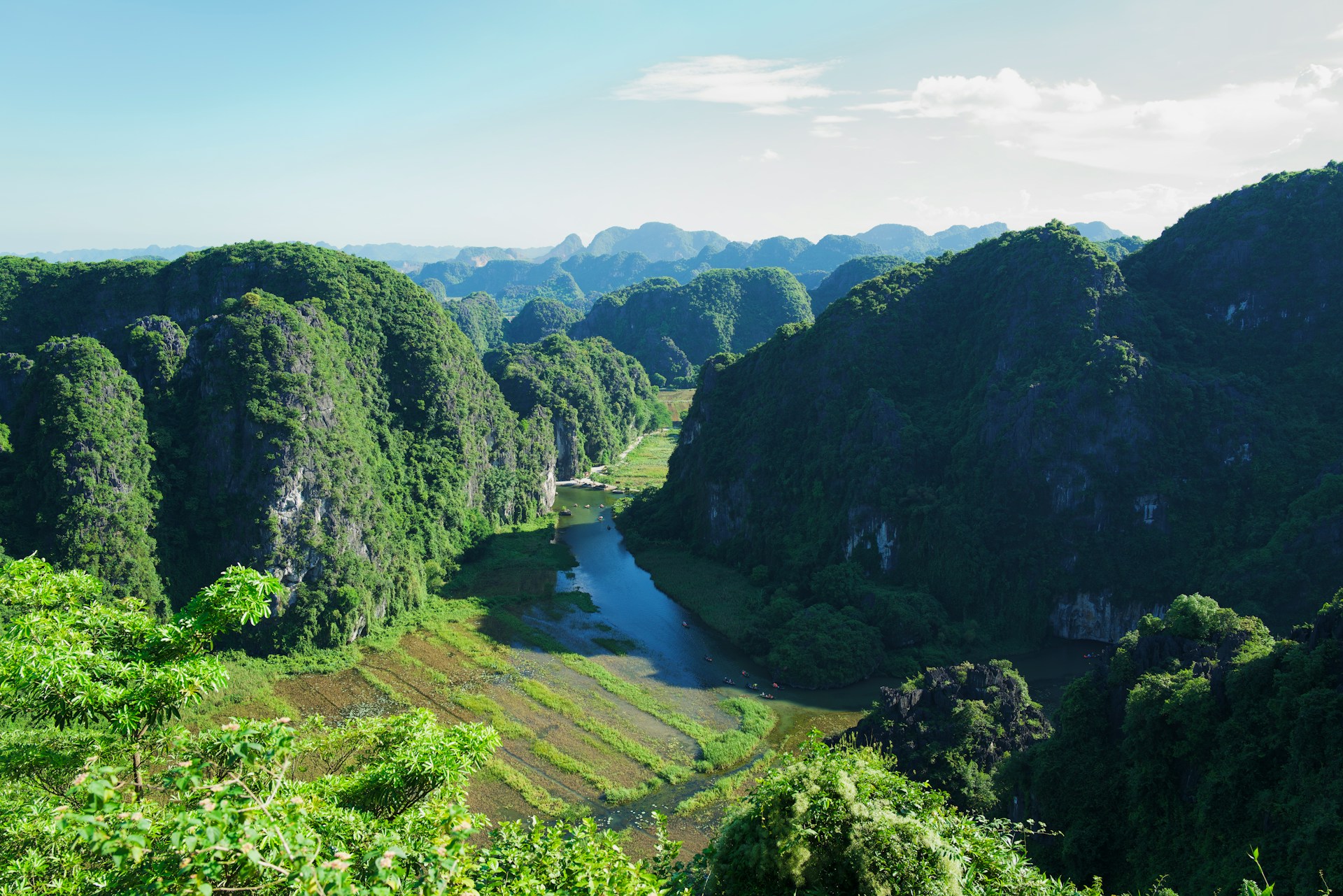
Ninh Bình, Vietnam
Vietnam is a year-round travel destination, but choosing the right season can make your trip smoother, cheaper, and more enjoyable. Whether you want sunny beaches, dry-weather sightseeing, or festival experiences, understanding Vietnam’s regional climate helps you plan better and avoid unexpected weather. Use this guide to pick the best month based on your travel style and enjoy Vietnam at its very best.