
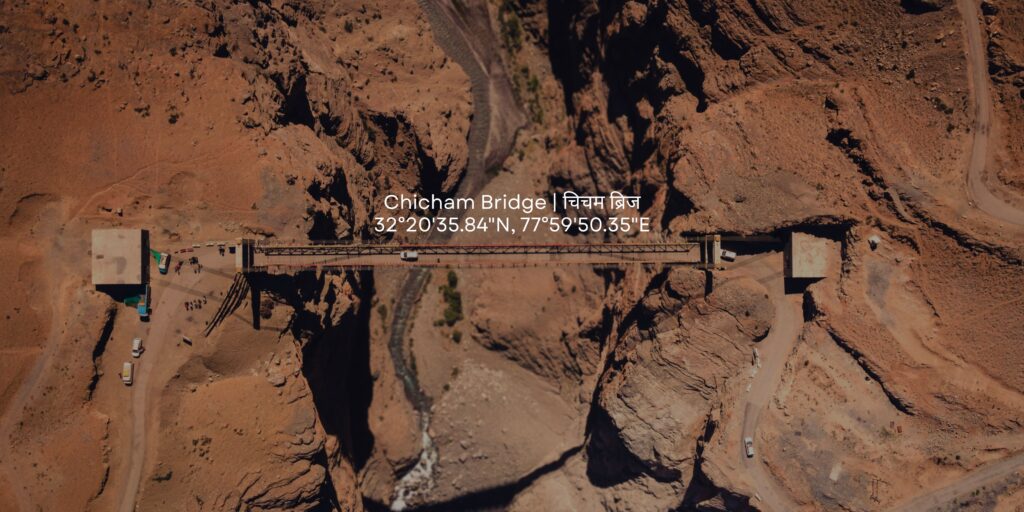
Chicham Bridge: Asia’s Highest Suspension Bridge in Spiti Valley | Ultimate Guide
If you’re planning a trip to the Spiti Valley, there’s one place that deserves a permanent spot on your itinerary — the Chicham Bridge. Perched at a jaw-dropping altitude of 13,596 feet, this isn’t just a regular bridge; it’s officially known as Asia’s highest suspension bridge, connecting the remote yet mesmerizing villages of Chicham and Kibber.
Whether you’re an adventure enthusiast, a landscape photographer, or simply someone craving a soul-stirring Himalayan escape, Chicham Bridge offers a rare blend of engineering brilliance and raw natural beauty. And yes, it’s not just about height — it’s about the thrill of crossing over a deep gorge with winds howling around you and snow-capped peaks watching silently.
Why is Chicham Bridge so Famous?
For years, residents of Chicham village had to rely on a makeshift ropeway, locally known as a “jula,” to cross a dangerous gorge called Samba Lamba Nallah. The construction of the Chicham Bridge changed their lives — making it a symbol of both progress and human resilience.
But beyond its utility, it’s also become an iconic tourist attraction. From motorbike riders cruising through Spiti, to Instagrammers capturing that perfect Himalayan shot, Chicham Bridge Spiti is now a must-see for anyone traveling to the region.
Height & Location: Standing at over 13,500 ft above sea level, it offers panoramic views that will leave you speechless.
- Height from Gorge: The bridge spans a breathtaking chasm, towering approximately 1,000 feet (120-150 meters) above the deep gorge below. Imagine that sheer drop!
- Length: The bridge stretches for around 114 to 135.7 meters (you’ll find slight variations in reported length, but it’s substantial enough to feel like a proper crossing!).
- Type: It’s a robust Suspension Bridge, designed to withstand the harsh Himalayan climate.
- Connected Villages: The bridge flawlessly connects the villages of Chicham and Kibber, creating a crucial link in the region.
- Completion Year: The bridge was inaugurated and opened to the public in 2017 after years of dedicated construction.
- Builder: This incredible feat of engineering was accomplished by the Border Roads Organisation (BRO), known for their exceptional work in developing infrastructure in India’s challenging border regions.
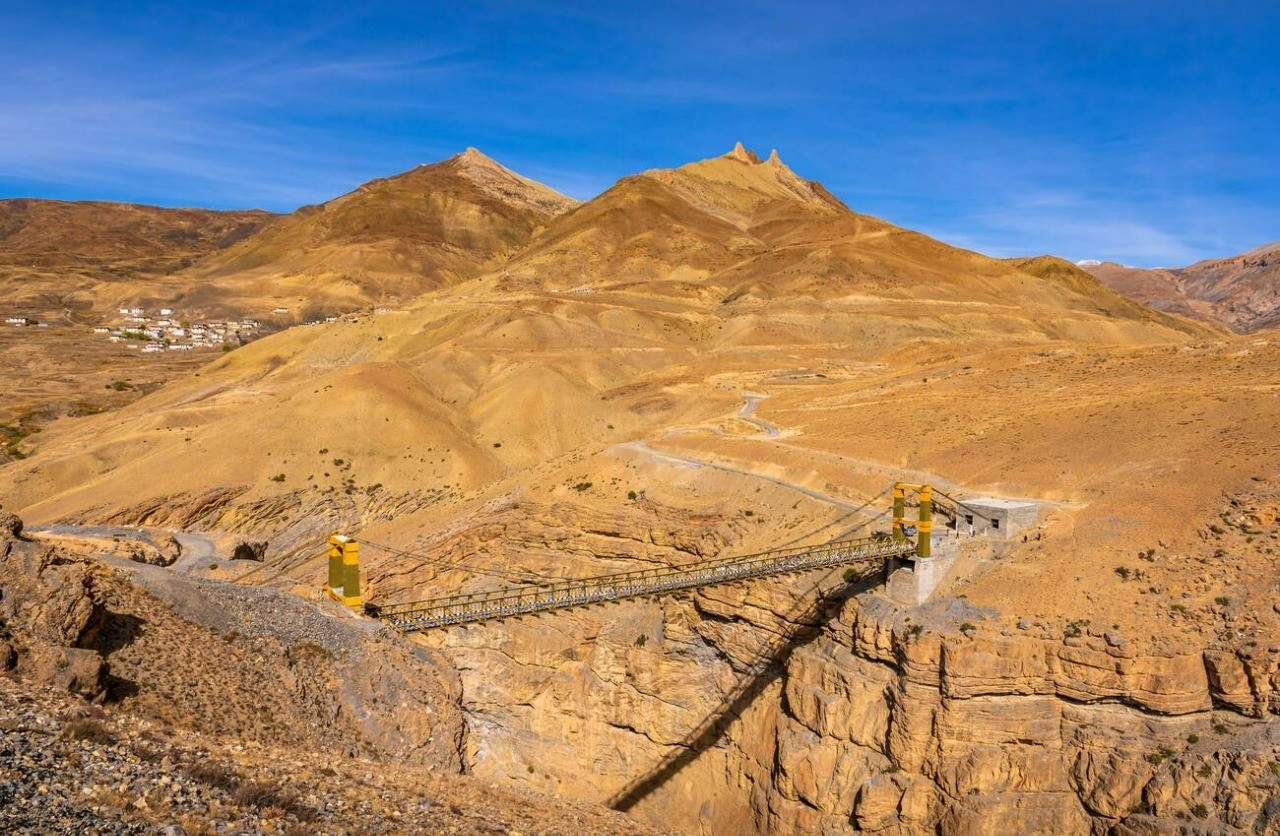
So if you’re mapping out your Himalayan adventure, Chicham Bridge isn’t just a stop — it’s a highlight. As we move forward in this guide, we’ll cover everything from Chicham Bridge’s height and history, to how to get there and what to explore nearby. Trust me — this isn’t just another travel article. This is your personal invitation to witness one of India’s hidden wonders.
The History of Chicham Bridge – From Ropeway to Engineering Marvel
To really get how amazing the Chicham Bridge is, let’s look back at its chicham bridge history. Before this sturdy bridge existed, crossing the deep, rocky gorge between Kibber and Chicham villages was incredibly dangerous. People used a simple, old ropeway system—basically, a small basket or trolley pulled by ropes. Imagine sitting in that tiny cage, dangling over a massive drop, with just ropes holding you! It was risky, slow, and not safe, especially for moving goods or in bad weather.
Locals desperately needed a safer, faster way to connect. So, the idea for the Chicham Bridge was born. Building it wasn’t easy, though. It took many, many years—some say as long as 15 or 16 years—to get it just right. The weather in Spiti Valley is incredibly harsh, with heavy snow and freezing temperatures for much of the year. Plus, getting all the heavy building materials to such a high, remote spot was a huge headache.
But thanks to the hard work and clever planning of the Border Roads Organisation (BRO), who are experts at building in difficult mountain areas, the bridge finally opened in 2017. This meant a whole new life for the people of Kibber and Chicham, making travel so much easier and safer. It’s a story of never giving up, turning a dangerous crossing into a modern, safe link.
When Was Chicham Bridge Built?
The Chicham Bridge construction began over a decade before its completion. Harsh terrain, unpredictable weather, and the sheer remoteness of the site made it one of the most difficult infrastructure projects in the Indian Himalayas. After years of planning, delays, and persistence, it was finally completed and inaugurated in August 2017.
Its completion brought immense relief and joy to the locals. Overnight, a perilous rope crossing was replaced by a safe, motorable road, forever changing life in Spiti Valley. The bridge, now a primary landmark in Spiti, became a beacon of progress — and of course, a major attraction for curious travelers.
Why Is the History of Chicham Bridge So Important?
Understanding the Chicham Bridge history gives context to its emotional and practical significance. It’s not just a photo-op or a box to tick off on your itinerary — it’s a living testament to human determination in one of the harshest inhabited terrains on Earth.
Today, when you stand on Chicham Bridge, you’re not just taking in views — you’re standing on a structure that redefined the future for entire communities.
While it might look simple, the design of the Chicham Bridge is very smart. Every part is carefully planned to withstand the tough mountain weather and keep people safe. It’s built to last and to be a lifeline for the Spiti Valley for many years to come.
Chicham Bridge Height, Construction & Engineering – A Marvel in the Mountains

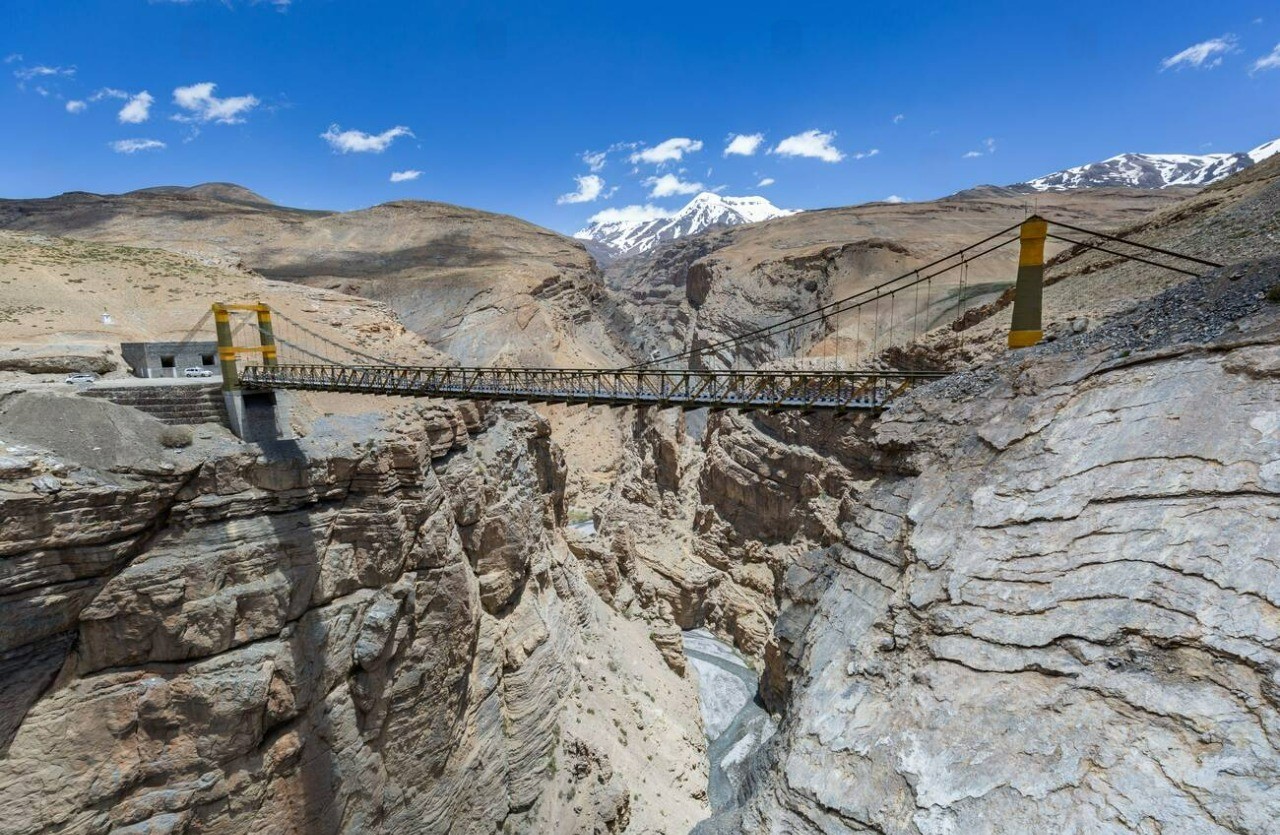
Constructing a bridge in the Himalayas isn’t your average civil project — especially not when you’re building at 13,596 feet above sea level. That’s where the Chicham Bridge stands tall, bridging the massive Samba Lamba gorge between Chicham village and Kibber in the heart of Spiti Valley.
But what truly sets this bridge apart isn’t just its height — it’s the story of how it was built, and the challenges that engineers had to overcome to make it a reality.
What Makes Chicham Bridge an Engineering Marvel?
Here’s why the Chicham Bridge construction deserves applause from more than just civil engineers:
Strategic Location: Built to connect the remote Chicham village with the rest of the valley, the bridge eliminated the need for risky rope crossings.
Precast Technology: Engineers used precast and prefabricated components, flown or hauled up to the site. Each piece had to be positioned with extreme precision — no room for error when you’re suspended over a 1,000-foot drop.
All-Weather Durability: The bridge is built to withstand extreme cold, snowfall, and high-altitude winds — making it both practical and sustainable.
Zero Compromise on Safety: The bridge has guard rails, reinforced steel cables, and an asphalt surface to allow for vehicle movement — rare for such altitudes.
How Tall is Chicham Bridge?
The Chicham Bridge height — a jaw-dropping 13,596 feet (4,150 meters) — makes it the highest suspension bridge in Asia. Its length is approximately 120 meters (393 feet), stretching dramatically over a gorge that once separated two villages by risk and time.
The altitude itself posed significant challenges. At this height, oxygen levels are lower, weather changes quickly, and transporting construction materials is a logistical nightmare.
Who Built Chicham Bridge in Spiti Valley?
While not often credited in travel blogs, the Himachal Pradesh Public Works Department (PWD) was the executing authority behind the project. Local laborers and engineers, many of whom were from Spiti and Lahaul, played crucial roles — showing that even in remote areas, innovation thrives when there’s community support.
Fun Fact
The bridge has become so popular that bikers and road trippers often plan their entire route through Spiti just to cross it! It has even appeared in several travel documentaries and Instagram reels, making it a modern-day cultural icon.
So next time you’re scrolling through scenic shots of Chicham Bridge in Spiti, remember — beneath that postcard-perfect frame is a story of ambition, altitude, and sheer human ingenuity.
Chicham Bridge Location – A High-Altitude Connector in Spiti Valley
Tucked deep within the Himalayan desert of Himachal Pradesh, the Chicham Bridge is not just a striking structure — it’s a lifeline in one of India’s most isolated and visually stunning regions. Located in the Spiti Valley, this bridge connects Chicham village with Kibber, one of the highest motorable villages in the world.
If you’re planning a road trip through the rugged beauty of Spiti, visiting Chicham Bridge isn’t just a possibility — it’s practically a rite of passage.
Where Exactly is Chicham Bridge?
Chicham Bridge’s location lies about 20 km from Kaza, the administrative capital of Spiti. To reach the bridge, travelers usually pass through Key Monastery, then continue toward Kibber village — a route known for its winding mountain roads and jaw-dropping views.
This area sits at an average elevation of over 13,000 feet, so altitude awareness is crucial. You’re not just exploring — you’re adventuring in one of the highest inhabited regions on Earth.
Why is Chicham Bridge’s Location So Special?
This isn’t your typical tourist stop. Chicham Bridge in Spiti is dramatically suspended over the Samba Lamba gorge, a deep natural canyon that previously made connectivity nearly impossible. Before the bridge existed, locals from Chicham village had to make dangerous detours or rely on a hand-pulled ropeway — especially during winters when snow cut off access.
With the completion of the bridge, Chicham Bridge location became strategically significant for:
Tourism: It’s now one of the top offbeat attractions in Himachal.
Local mobility: It provides vital access to healthcare, education, and supplies for remote villagers.
Adventure circuits: Bikers and overlanders include it in their high-altitude driving routes through Spiti Valley.
What is Chicham Bridge Like in Winter?
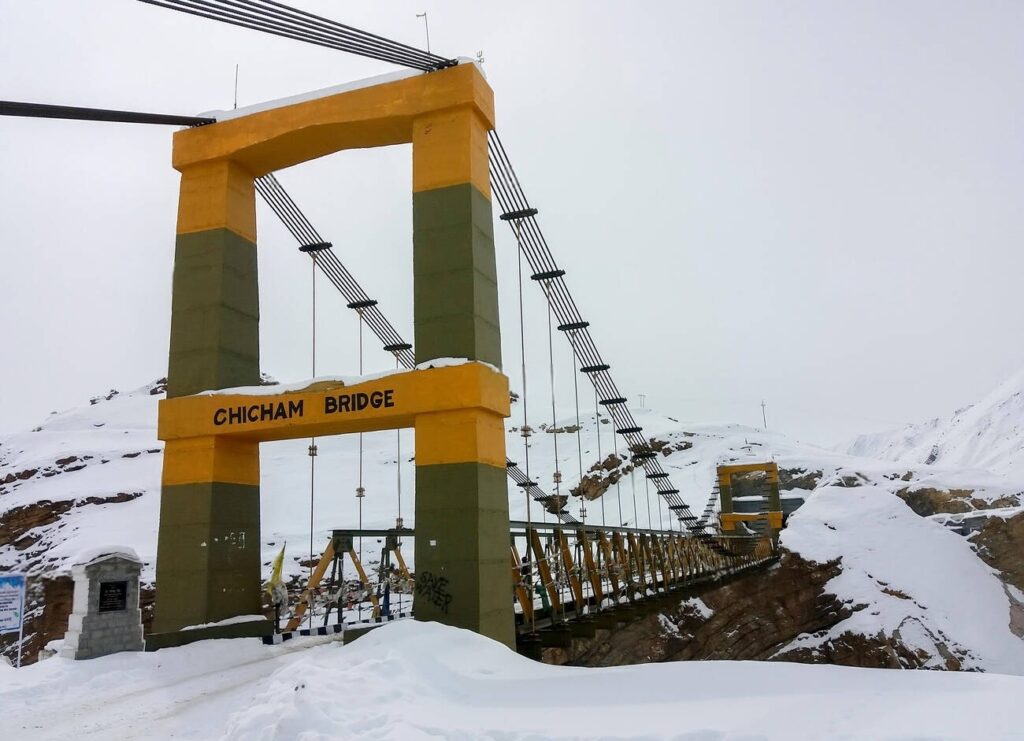
Visiting Chicham Bridge in winter is both magical and challenging. With snow-capped peaks all around and the bridge dusted in white, it looks straight out of a movie. However, heavy snow can block access roads, so proper planning is key.
If you’re visiting in winter:
Keep your vehicle well-maintained.
Be prepared for altitude sickness.
Dress in multiple thermal layers.
Start your journey from Kaza early in the day for safety.
Despite the chill, many travelers say that Chicham Bridge in winter is when it’s at its most majestic.
So whether you’re mapping out a summer adventure or a snow-season expedition, Chicham Bridge’s location offers not just access — but perspective. It’s where natural wonder and human resilience meet.
Travel Guide to Chicham Bridge – How to Reach, When to Go & Where to Stay
Planning a trip to Chicham Bridge? You’re in for one of the most unforgettable high-altitude adventures in India. But because Chicham Bridge is located in Spiti Valley, one of the remotest regions of Himachal Pradesh, a bit of planning goes a long way.
Whether you’re a solo backpacker, biker, or road tripper, here’s your ultimate guide to getting there, timing your visit right, and finding a place to rest after all that Himalayan awe.
Chicham Bridge location is about 20 km from Kaza, the main town and hub of Spiti. The route takes you through Key Monastery and Kibber village, with sweeping mountain views all along.
Route Options:
From Manali (Summer Route)
Route: Manali → Rohtang Pass → Gramphu → Batal → Kunzum Pass → Kaza → Kibber → Chicham
Best time: June to October
Note: Kunzum Pass is closed in winter due to heavy snowfall.
From Shimla (All-Season Route)
Route: Shimla → Rampur → Reckong Peo → Nako → Tabo → Kaza → Chicham
Best for winter travel and more reliable year-round access.
Nearest Airports:
Bhuntar Airport (Kullu) – 250 km from Kaza (via Manali route)
Shimla Airport – 450 km from Kaza
Nearest Railway Station:
Shimla Railway Station – from here, continue via road.
Timing your trip is crucial, especially in high-altitude areas like Spiti Valley and Chicham village.
| Season | Travel Conditions | What to Expect |
|---|---|---|
| Summer (May–October) | Roads are open; easiest access | Clear skies, lush valleys, ideal for photography |
| Winter (Nov–March) | Harsh but adventurous | Snow-covered beauty, frozen bridge deck, limited access |
| Monsoon (July–Aug) | Occasional landslides | Less crowded but can be risky |
Planning where to stay near Chicham Bridge is just as important as the journey itself. Whether you’re a solo traveler, a couple seeking serenity, or a photography buff chasing Himalayan light, your choice of stay can enhance your Spiti experience.
Fortunately, there are a number of cozy, authentic, and scenic places to stay in and around Chicham village, Kibber, and Kaza — all located within 30 minutes of Chicham Bridge.
Here are the top 5 places to stay near Chicham Bridge, handpicked for comfort, location, and local hospitality.
1. Desert Himalaya Homestay – Chicham Village
Distance from Chicham Bridge: Walking distance (less than 1 km)
Type: Traditional Himachali homestay
Why Stay Here:
Located in Chicham village, this is the closest possible accommodation to the bridge.
Run by local families offering warm hospitality and authentic Spitian cuisine.
Panoramic views of the gorge and snow-capped mountains.
Ideal for travelers who want an immersive, off-the-grid experience.
Keywords: chicham bridge, chicham village, homestay near chicham bridge
2. Tashi Homestay – Kibber Village
Distance from Chicham Bridge: 3 km
Type: Homestay
Why Stay Here:
Kibber village is famous for wildlife spotting and its proximity to Kibber Wildlife Sanctuary.
Tashi Homestay is one of the oldest and most reputed stays here.
Comfortable rooms, home-cooked food, and stunning views of the cold desert terrain.
Great base for those interested in snow leopard tracking in winter.
Keywords: kibber village, places to stay near chicham bridge, spiti valley
3. Norling Homestay – Kibber
Distance from Chicham Bridge: 3 km
Type: Homestay
Why Stay Here:
Family-run stay with clean rooms, warm quilts, and a traditional bukhari (wood heater).
Popular among winter travelers for its cozy setup and hot meals.
The host is known for sharing local stories and travel tips about Chicham Bridge in winter.
Keywords: homestay in spiti, chicham bridge in winter, kibber accommodation
4. Zostel Spiti – Kaza
Distance from Chicham Bridge: 20 km
Type: Backpacker hostel
Why Stay Here:
Perfect for solo travelers, bikers, and digital nomads looking to meet fellow explorers.
Dormitories and private rooms available with stunning mountain views.
Offers bike rentals, local tours, and direct routes to Chicham Bridge, Key Monastery, and beyond.
Open during summer; availability in winter is limited, so check ahead.
Keywords: zostel spiti, kaza stays, travel to chicham bridge
5. The Alpinist Café & Retreat – Kaza
Distance from Chicham Bridge: 22 km
Type: Boutique guesthouse
Why Stay Here:
A modern-meets-rustic stay with designer interiors and large windows offering Himalayan views.
Attached café serves gourmet coffee, local dishes, and Western meals — rare in Spiti!
Great for travelers who want a comfortable base near Chicham Bridge while enjoying the vibe of Kaza.
Keywords: boutique stay in kaza, chicham bridge nearby hotels, spiti valley travel
Visiting Chicham Bridge isn’t just about crossing a record-setting structure — it’s about standing in a place where nature, isolation, and innovation meet at 13,596 feet above sea level. Whether you’re a photographer, biker, spiritual seeker, or explorer, there’s something undeniably powerful about being here.
Here’s how to truly experience Chicham Bridge — beyond the basic selfie.
1. Take in the Views From Both Ends of the Bridge
Start by walking slowly across the bridge. Yes, it’s safe for both vehicles and pedestrians, but there’s a thrill in feeling the wind brush past your face as you stare down into the Samba Lamba gorge — especially if you’re visiting Chicham Bridge in winter, when everything is coated in pristine snow.
From one end, you’ll see the dramatic cliffs of Chicham village. From the other, the open valley view of Kibber and the vast cold desert landscape. These views change with the light — making it a photographer’s dream location.
2. Walk Across the Bridge (At Least Twice!)
There’s no better way to appreciate the engineering of Chicham Bridge Spiti than by walking across it — ideally both ways. The elevation makes every step feel different, and the 1000-foot drop below gives you that surreal floating feeling.
It’s also surprisingly quiet — no traffic horns, no crowds. Just the whisper of the wind and the distant call of Himalayan birds.
3. Capture Iconic Photos (Golden Hour is Best)
If you’re into photography or videography, plan your visit around sunrise or sunset. The golden hour here paints the entire Spiti Valley in warm, glowing light. Some ideas:
Wide-angle shots from the middle of the bridge
Drone shots (if permitted)
Portraits with snow in the background
Long exposures of stars if you’re staying in Chicham village overnight
Pro tip: On a clear night, this is an amazing spot for astrophotography — the Milky Way is often visible due to zero light pollution.
4. Watch for Wildlife Around the Bridge
This might surprise you, but the area around Chicham Bridge is a prime wildlife corridor. While the animals won’t walk across the bridge (obviously), the surrounding cliffs and ridges are home to:
Himalayan Blue Sheep (Bharal)
Snow Leopards (rare, but spotted in winter)
Golden Eagles and other birds of prey
Nearby, the Kibber Wildlife Sanctuary is one of the best places in India to track the elusive snow leopard — especially between January and March.
5. Soak in the Stillness
Most people don’t expect this, but Chicham Bridge offers something rare in today’s world: absolute stillness. No cellular network, no traffic, no rush — just time. Spend 10 minutes here doing nothing. Just be. The altitude, silence, and scenery combine for a strangely grounding experience.
Nearby Places to Explore After Chicham Bridge
Make your visit even more rewarding by exploring nearby gems:
Key Monastery – A centuries-old Buddhist monastery perched dramatically on a hilltop.
Kibber Village – One of the highest inhabited villages in the world.
Kibber Wildlife Sanctuary – Home to snow leopards, red foxes, and ibex.
Langza, Hikkim & Komic – The fossil village, the world’s highest post office, and the highest motorable village respectively.
Chicham Bridge Facts & Trivia – 7 Things Most Blogs Miss
Sure, most travelers know that Chicham Bridge is the highest suspension bridge in Asia, but that’s just scratching the surface. There’s a world of interesting stories, little-known engineering details, and cultural significance tied to this remarkable place.
So here it is — a list of surprising, fascinating, and totally shareable Chicham Bridge facts that will give your readers something to remember (and maybe brag about).
1. Asia’s Highest Suspension Bridge – Not Just a Catchy Tagline
Altitude: 13,596 feet (4,150 meters) above sea level
That makes it higher than most mountain passes in India and almost on par with the elevation of Leh in Ladakh.
It connects Chicham and Kibber villages, reducing what used to be a 40 km detour into a mere 3-minute drive.
2. Used to Be Crossed by a ‘Jula’ (Rope Trolley)
Before the bridge, villagers relied on a manual ropeway or jula to cross the deep gorge. There were no safety nets, no motors — just people pulling each other across a massive drop using a pulley system. It was both a survival tool and a daily necessity.
This story gives Chicham Bridge history a deep human touch — it’s not just infrastructure, it’s transformation.
3. Took Over a Decade to Complete
Construction started in the early 2000s but was delayed multiple times due to:
Harsh climate
Unpredictable snowfall
Logistical hurdles in transporting material to high altitudes
The bridge was finally inaugurated in August 2017, and instantly became a symbol of resilience for the Spiti Valley.
4. A Favorite Among Filmmakers & Travel Influencers
Though not widely featured in mainstream Bollywood, Chicham Bridge has appeared in:
Adventure documentaries
YouTube travel series
Instagram reels and drone videos (with over 1M+ views)
Its raw, unfiltered Himalayan backdrop makes it one of the most photogenic locations in Himachal Pradesh — especially when you catch it with morning mist or snowfall.
5. Survives Extreme Winter Conditions
Yes, Chicham Bridge in winter remains functional even when surrounding regions are buried under feet of snow. Temperatures in the area often plunge below -20°C, and yet the bridge stands firm, allowing locals to access Kaza and essential services.
This durability is one of its most underappreciated feats.
6. Built Using Modular, Precast Technology
To avoid building everything on-site, engineers used precast segments — built elsewhere and assembled piece-by-piece in Spiti. Given the elevation and terrain, this was the only practical way to finish the project.
7. One of the Most Googled Spots in Spiti Valley
Search trends from Serpstat show that “Chicham Bridge”, “Chicham Bridge location”, and “Chicham Bridge in winter” have a growing search volume in India — especially among:
Adventure bikers
Winter travel enthusiasts
Offbeat travel bloggers
People aren’t just visiting — they’re actively searching for it, meaning your article can tap into a rising curiosity.
Standing on Chicham Bridge, with the icy wind on your face and the abyss of Samba Lamba gorge below, you’ll feel something that’s hard to describe — a mix of awe, humility, and inspiration. Whether you’re visiting in the quiet, snow-draped chill of Chicham Bridge in winter or the sunlit days of summer, this remote Himalayan marvel leaves every traveler speechless.
It’s more than just the height of Chicham Bridge that makes it remarkable. It’s the story behind it — how an isolated community relied on ropes for decades, and how engineering changed lives at 13,596 feet. It’s the way this bridge connects more than two villages; it connects people to nature, to culture, and often, to something deeper within themselves.
From its unique location in Spiti Valley, to the warm homestays of Chicham village, and the wide-angle views that stretch across mountain horizons, this is a destination that’s as rewarding as it is offbeat.
So, if you’ve been dreaming of an escape that combines raw natural beauty, real stories, and a sense of accomplishment — this is your sign. Pack your thermals, charge your camera, and go stand where sky meets stone, on Asia’s highest suspension bridge.
You won’t just take photos.
You’ll take home a piece of the Himalayas.