
Best Time To Visit the Valley of Flowers in 2025
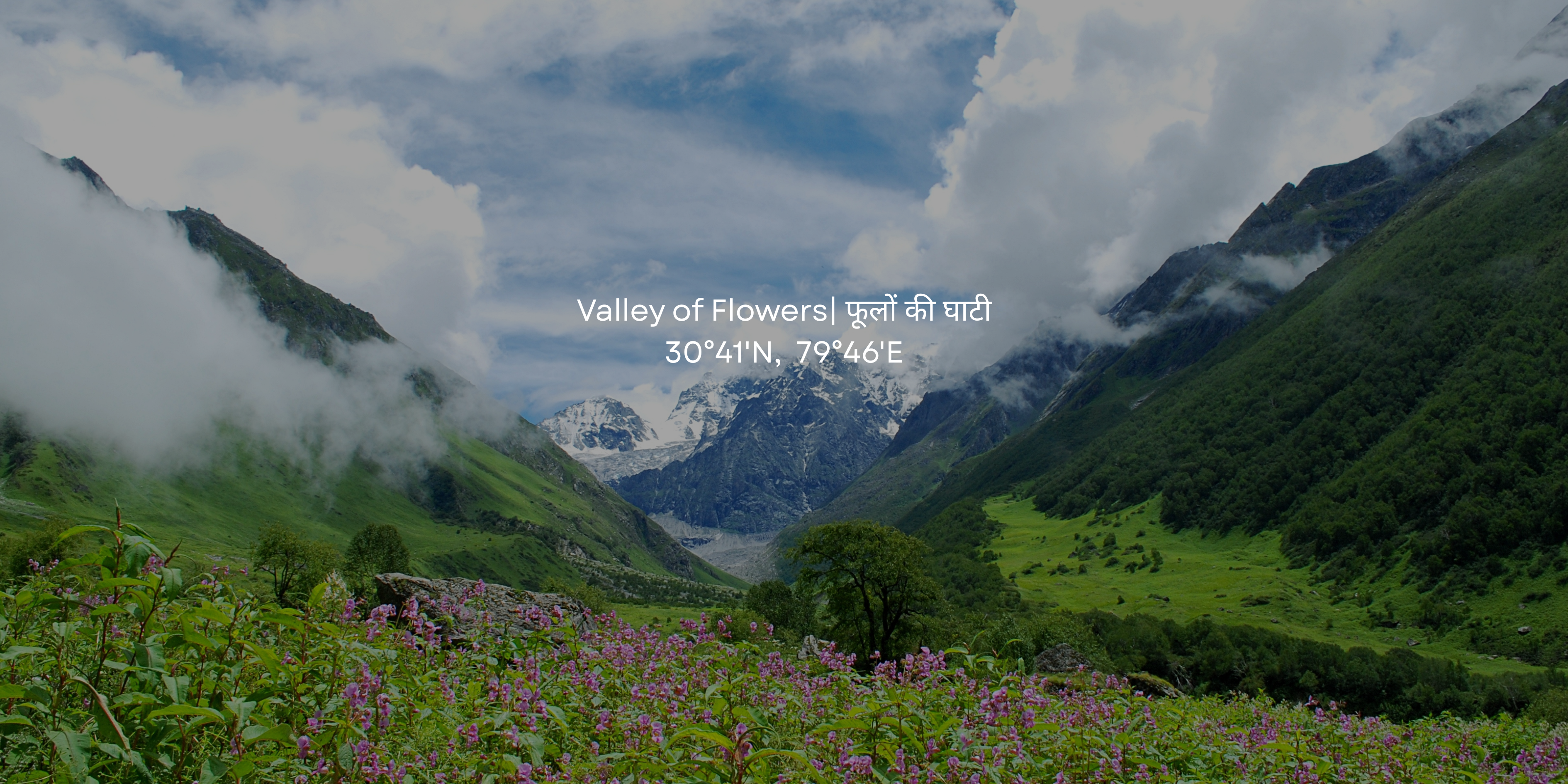
Tucked away in the heart of the Himalayas, the Valley of Flowers in Chamoli district of Uttarakhand is hidden deep within the Nanda Devi Biosphere Reserve in the Western Himalayas. It is one of those places that truly feels magical. At an altitude of around 3,658 meters (12,000 feet), this UNESCO World Heritage Site bursts into color every year as thousands of wildflowers bloom across its vast alpine meadows.
The name “Valley of Flowers” wasn’t given lightly. It was first discovered by British mountaineer Frank Smythe in 1931 when he accidentally stumbled upon this valley while returning from an expedition to Mount Kamet. Mesmerized by the endless stretch of blooming flowers, he documented his experience in a book titled “The Valley of Flowers”, and that’s how the name found its place in travel history.
So, when can you visit? As of this year, the Valley of Flowers officially opened for the 2025 season on June 1, and it will remain open until October 31, 2025 (subject to weather conditions). This five-month window is the only time you can explore the valley, as it remains snow-covered and inaccessible the rest of the year.
During the monsoon months, the valley transforms into a living carpet of over 600 different flower species—including the rare and sacred Brahma Kamal, blue poppies, and cobra lilies. Whether you’re a passionate nature lover, a photographer chasing colors, or someone just looking for a peaceful escape, this place has something soul-stirring to offer.
The journey to get here is just as breathtaking. The Valley of Flowers trek is moderately easy and takes you through scenic mountain trails, misty rivers, and charming villages. And don’t worry—we’ll cover everything you need to know about the best time to visit, how to reach, what to pack, and more, so your experience is seamless and unforgettable.
Ready to find out when’s the best time to witness this floral paradise in full bloom? Let’s explore that next.
Valley of Flowers Season Overview – What Months Is It Open?
If you’re planning a trip to this Himalayan paradise, timing is everything. The Valley of Flowers is open to visitors only from June to October each year, and outside this window, it remains completely snowbound and inaccessible.
In 2025, the valley opened to trekkers on June 1 and will remain accessible until October 31, weather permitting. That gives you about five months to explore this high-altitude gem. But here’s the catch — the best time to visit Valley of Flowers depends entirely on what you want to see and experience.
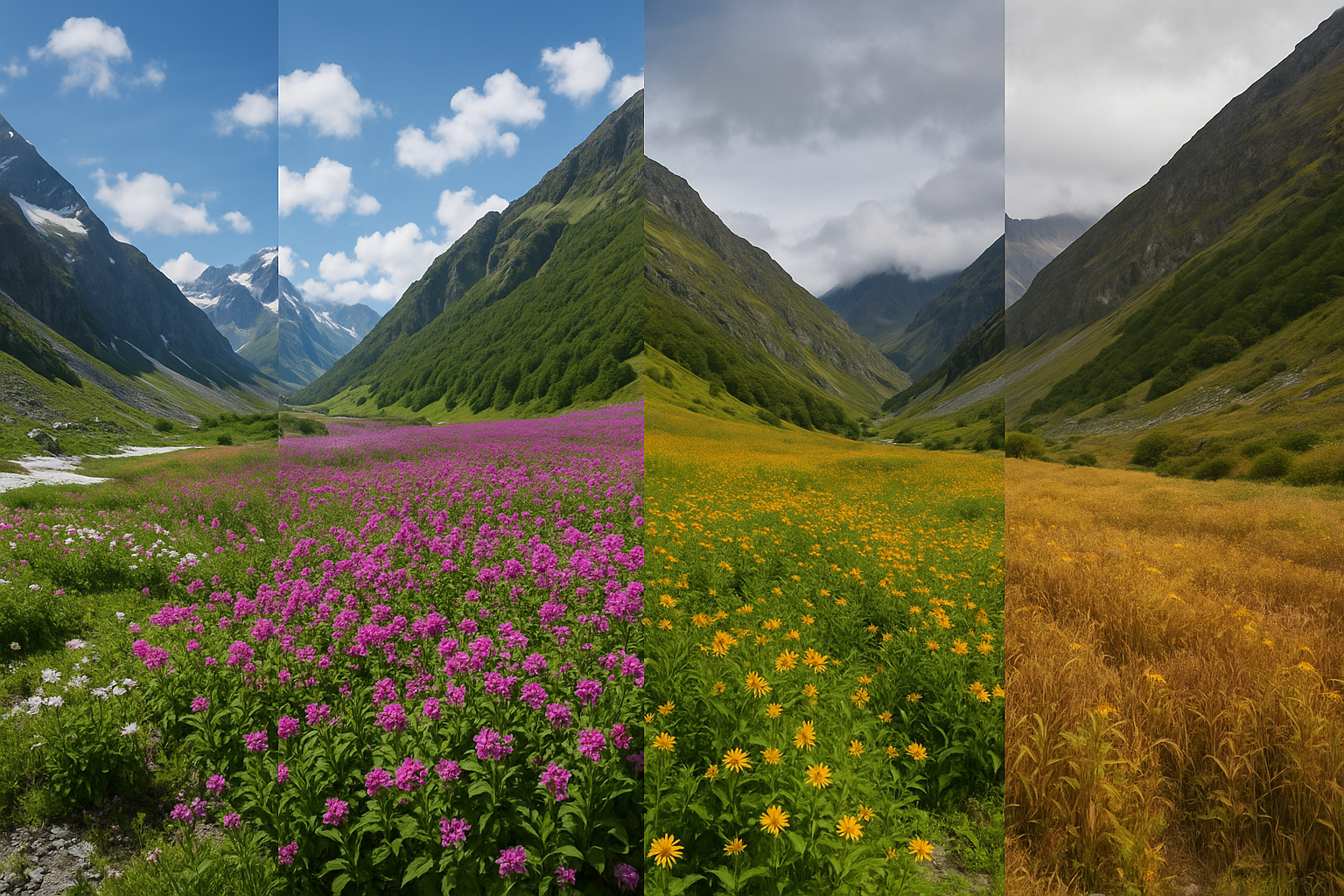
Each month in this window offers a different version of the valley:
June brings with it clear skies, chilly winds, and the first signs of blooming life as the snow begins to melt.
July and August are the peak bloom months when the valley looks like a living painting covered in wildflowers.
September is drier, less crowded, and filled with golden hues as the flowers begin to fade.
This is why the best time to visit Valley of Flowers for full bloom and rich greenery is generally from mid-July to mid-August. That’s when the meadows are at their lushest, and the maximum number of flower species are in bloom.
Whether you’re visiting to witness the full floral explosion, take photographs, or simply soak in the mountain serenity, knowing the seasonal rhythm of the valley helps you plan better. In the next section, we’ll go month-by-month to help you decide exactly when to go based on your personal travel goals.
Valley of Flowers in June – A Peaceful Start to the Season
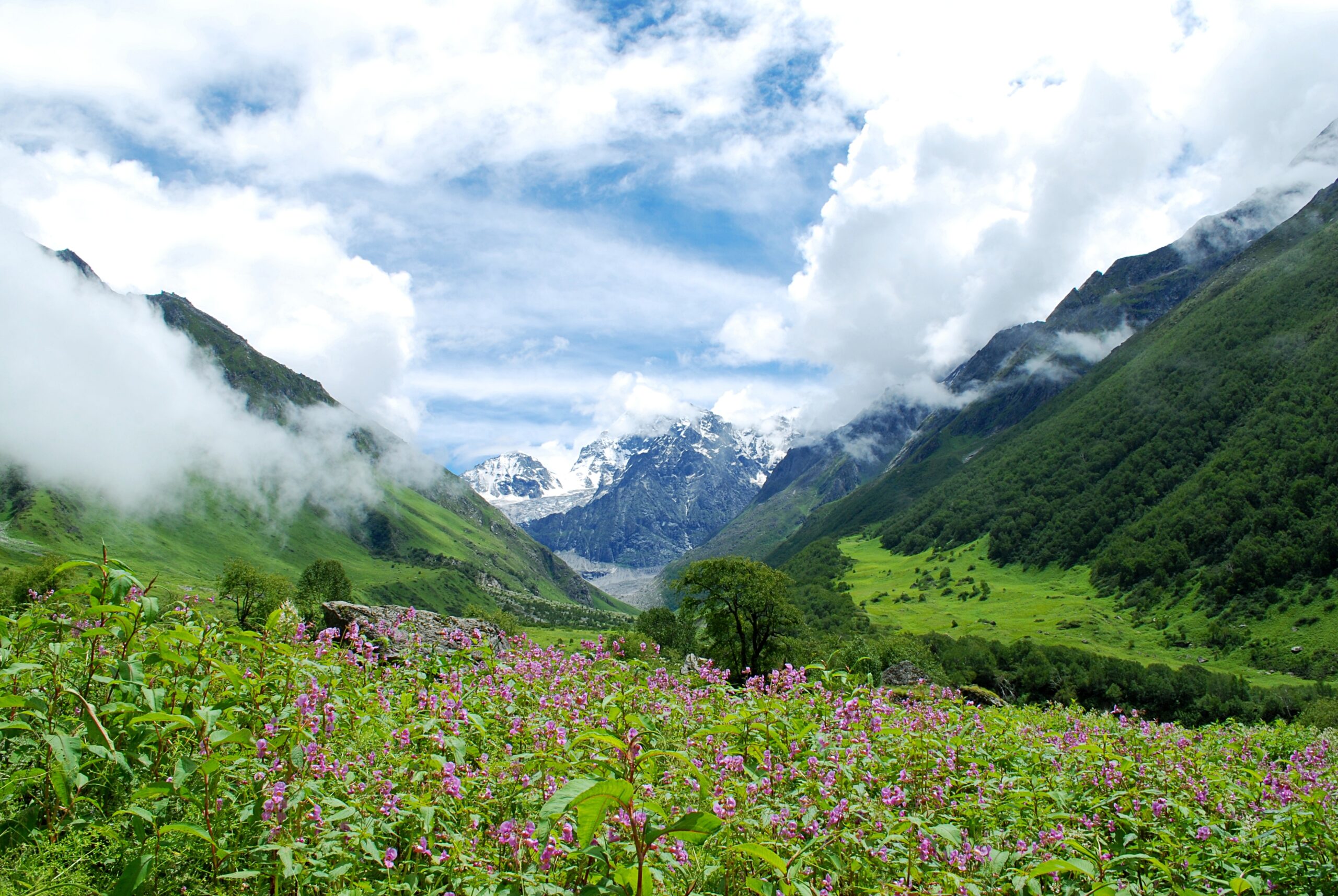
June marks the beginning of the trekking season. As the snow begins to melt, the valley slowly starts to wake up. You’ll still spot patches of snow, especially in the upper sections, and the flowers are just starting to bloom. The skies are often clear, and the weather is chilly, especially in the mornings and evenings.
This is the best time to visit if you want fewer crowds, serene landscapes, and a mix of snow and emerging greenery. However, don’t expect the valley to be in full bloom just yet—it’s more about witnessing the raw beauty of nature’s transition.
Daytime temperature: 10°C to 18°C
Night temperature: 2°C to 8°C
Sky conditions: Mostly clear in early June; light rain towards the end
Snow: Patches of snow still visible on higher trails and surrounding peaks
The valley of flowers in June feels fresh and crisp. Early mornings are cold, and the wind can get strong near the higher ridges. You’ll feel that typical post-winter chill, especially in shaded areas.
The trek route from Govindghat to Ghangaria is open but might be a little slippery in shaded areas due to snowmelt. From Ghangaria to the Valley, the trail is well-defined but expect occasional muddy patches and water streams crossing your path.
River crossings are gentle
Bridges and trail markers are in place
Be cautious on early morning treks — trails can be slippery with dew or residual frost
Low to Moderate footfall
Mostly trekkers, solo travelers, and nature photographers
Fewer tourists compared to July and August
If you prefer quiet trails, less foot traffic, and fewer people in your photos, the valley of flowers in June is a wonderful month to visit.
Because of the cool, transitioning weather, here’s what you absolutely must carry to Valley of flowers in June:
Warm thermal layers (mornings and evenings are cold)
Waterproof jacket or poncho (rain showers possible by end of June)
Trekking shoes with good grip (trails can be wet/slippery)
Light gloves and woolen cap
UV sunglasses and sunscreen (sun is harsh at higher altitudes)
A reusable water bottle & dry snacks
Trekking poles (optional but helpful in snowmelt areas)
Nature photographers looking for dramatic landscapes
Solo travelers and trekkers who love peace and nature
Botany enthusiasts curious to see the early bloomers
People who want to avoid monsoon crowds
Start your trek early in the day — trails are safest before noon
Check the Valley gate timings in Ghangaria (usually 7 AM to 2 PM entry window)
Stay alert for trail updates in case of early rains or snowfall on higher routes
Limited blooming means less color, but more charm and peaceful scenery
Valley of Flowers in July – When the Valley Comes Alive
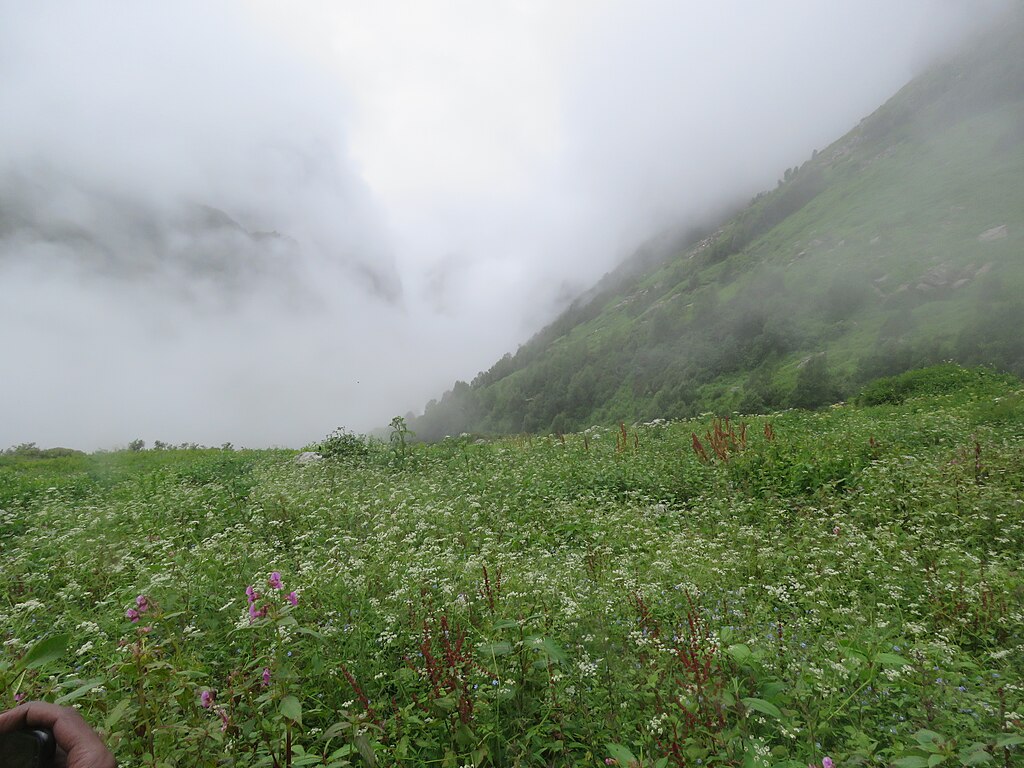
July is when things truly start to come alive. With the arrival of the monsoon rains, the valley begins to explode with colors. You’ll walk through lush meadows filled with blooming flowers in every direction. Expect frequent showers and misty surroundings, which only make the experience feel more surreal.
If you’re a botany lover, photographer, or just someone who loves vibrant natural beauty, this is one of the best times to visit the Valley of Flowers.
Daytime temperature: 12°C to 20°C
Night temperature: 6°C to 10°C
Sky conditions: Overcast and misty, with intermittent rain
Humidity: High, due to consistent monsoon showers
It rains frequently the valley of flowers in July — sometimes light drizzles, sometimes heavy bursts — but the valley looks magical in the mist. The rain also keeps temperatures pleasant throughout the day.
Suggested Read: Monsoon Treks in Uttarakhand
The trails in the valley of flowers in July are lush and green, but also wet and muddy. Expect slippery paths, water crossings, and occasional landslides on the drive from Govindghat to Pulna.
Trek from Pulna to Ghangaria is active with pilgrims and trekkers
Ghangaria to Valley trail is scenic, with rivers in full flow and flower meadows everywhere
Use caution on wet stones and wooden bridges
You’ll likely see streams crossing the trail, especially near Pushpawati River, so waterproof shoes are a must.
Moderate to high
Popular among photographers, botanists, nature lovers, and influencers
You’ll see a mix of solo travelers, couples, groups, and eco-tourism trekkers
Weekends are particularly busy, so plan weekday treks for quieter experiences.
The monsoon season demands a slightly different packing list. Here’s what you’ll need to visit the Valley of flowers in July:
Heavy-duty poncho or rain jacket
Backpack rain cover
Waterproof trekking shoes with strong grip
Quick-dry trekking clothes (avoid cotton)
Extra pair of socks and innerwear (you’ll likely get wet)
Camera protection (waterproof pouch or ziplock for phone and electronics)
Trekking poles for stability on slippery terrain
Basic meds for cold, fever, and motion sickness
Nature photographers and landscape lovers
Travelers seeking peak floral diversity
Trekkers who don’t mind getting a bit wet for the reward of spectacular views
Couples and families on their first high-altitude trek
Always check weather updates before trekking — sudden rain can delay routes
Waterproof everything — your bag, electronics, documents, and clothes
Start treks early in the day to avoid late-afternoon showers
Consider spending two nights in Ghangaria if you want to cover both Valley of Flowers and Hemkund Sahib comfortably
Valley of Flowers in August – The Grand Finale of Bloom Season
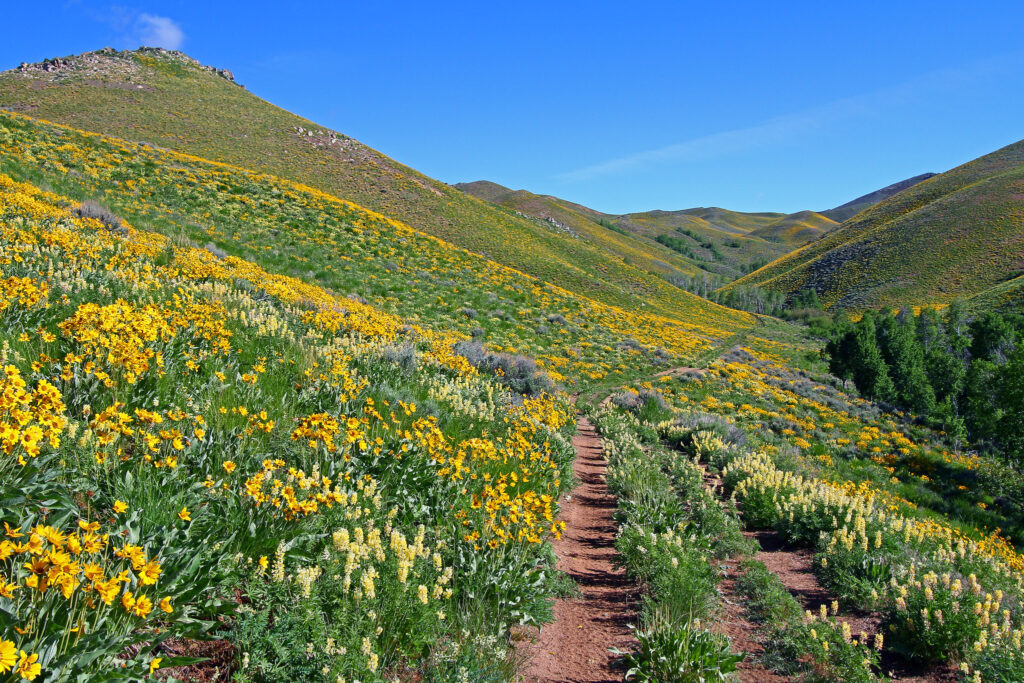
August is often considered the peak blooming season. The valley is now in its full floral glory, with a stunning variety of over 600 species of wildflowers swaying with the breeze. From blue poppies and cobra lilies to orchids and daisies, this is the time when you’ll see the valley exactly as it appears in postcards.
However, it can get crowded during weekends, so it’s best to plan your trek mid-week if you prefer solitude. Be prepared for rain and slippery trails, and don’t forget your poncho and waterproof shoes!
If you’re asking: “What’s the best time to visit Valley of Flowers?” — Late July to Mid-August is your golden window.
Daytime temperature: 12°C to 18°C
Night temperature: 6°C to 9°C
Sky conditions: Cloudy with occasional rain, often foggy early mornings
Humidity: High
Visibility: Misty in mornings; clearer by late morning or afternoon
It rains frequently in August, though not as heavily as July. The clouds hang low over the valley, creating an ethereal, dreamlike atmosphere.
The trails of the valley of flowers in August are green, vibrant, and occasionally challenging due to moisture and slippery terrain.
The Govindghat to Pulna road remains operational but can see landslides during very heavy rainfall
Pulna to Ghangaria trek is active but slippery in some parts
Ghangaria to Valley trail is lush and wet — small bridges, wooden crossings, and flowing streams add adventure
Trails are often wet, muddy, and uneven, so wearing the right shoes and starting early is key.
High, especially mid-August (Independence Day and Rakshabandhan holidays bring in many tourists)
Expect large trekking groups, photographers, students, and nature enthusiasts
Weekends can get crowded, so try weekday visits for a quieter experience
Here’s a checklist to help you stay dry, warm, and prepared:
Waterproof trekking shoes with deep grip
Quick-dry clothes + extra socks and undergarments
Rain jacket or poncho (must-have)
Rain cover for backpack
Trekking poles for balance
Cap or light woollen hat (for misty cold mornings)
Camera rain cover or waterproof pouch
Energy bars, dry fruits, and water bottle (hydration is key at altitude)
Basic medicine kit
Fields covered with blue poppies, marigolds, orchids, and cobra lilies
Butterflies, bees, and other pollinators at work
Clouds swirling through the valley — perfect photography conditions
Wet grasslands with sparkling water droplets from last night’s rain
It’s heaven for botanists and flower photographers.
Book your Govindghat and Ghangaria stays in advance — this is a high season
Begin your trek early in the morning to avoid afternoon showers
Carry a few Ziplocs or dry bags for your gadgets and documents
Pack a light windproof jacket — it can get chilly after rains
Be mentally prepared for slippery trails and rain delays
Valley of Flowers in September – Golden Meadows and Peaceful Trails

By September, the rains have started to slow down, and the crowds begin to thin out. The valley starts to take on a different look — more golden than green, with the flowers slowly fading and turning crisp. The skies are generally clearer, offering great views of the surrounding snow-capped peaks.
This is a great time to visit if you want peace, great photography conditions, and are okay with fewer flowers but more dramatic landscapes.
Daytime temperature: 10°C to 16°C
Night temperature: 2°C to 7°C
Sky conditions: Mostly clear with a few cloudy spells
Rainfall: Minimal; monsoon retreats by early September
Visibility: Excellent — clear skies and panoramic views
September offers stable trekking weather with almost no rain, making it a favorite among late-season trekkers and photographers.
With the rains gone, the trails begin to dry out and become more firm in the valley of flowers in September. You can walk comfortably without slipping, and water crossings are gentler.
The Pulna to Ghangaria trail is dry and less muddy
The Valley trail is easy to follow, with a few damp patches
No more landslide delays or waterlogged paths
This is one of the safest and cleanest months for trekking in the region.
Low to very low footfall
Mostly solo travelers, serious trekkers, and nature lovers
The valley feels quiet, reflective, and deeply peaceful
If you prefer no crowds and silent Himalayan meadows, the valley of flowers in September is a dream.
With the weather turning colder, your packing list should reflect light winter preparation. Here is a list of what to pack of the valley of flowers in September:
Fleece and thermal layers (especially for mornings and nights)
Full-sleeve trekking shirts + warm socks
Windcheater or light down jacket
UV sunglasses and sunscreen (sunlight is stronger now)
Trekking shoes with ankle support (drier trails = longer walks)
Headlamp or torch (sunset is earlier now)
Lip balm and moisturizer (air starts to get dry)
Peace-seekers, solo trekkers, and meditators
People who enjoy photography without crowds
Trekkers looking for the best terrain conditions
Anyone visiting Valley of Flowers for the landscape, not just the flowers
Trek timings remain the same, but plan to start early to return before sunset
Carry a thermos or insulated water bottle — the weather starts to get chilly
Book accommodation close to the start of the trek — Ghangaria begins closing mid- to late September
Be prepared for cooler nights — especially at higher elevations
The Valley of Flowers in October – A Final Glimpse Before Winter
The Valley of Flowers in October is like the last quiet breath before it goes to sleep under snow. The floral carpets are gone, the vibrant green turns to beige and brown, and the valley feels still — almost sacred. There’s a certain silence and rawness in the air that draws in hardcore nature lovers, photographers, and peace seekers.
If you’re planning to visit the Valley of Flowers in October, know that it’s a very short and sensitive window — the valley usually closes in the first or second week due to early snowfall and dropping temperatures.
Daytime temperature: 6°C to 12°C
Night temperature: Drops to 0°C or below
Sky conditions: Mostly clear, with cold winds
Rain/Snow: Light snow or frost is possible at higher altitudes
Air quality: Clean and crisp, ideal for landscape photography
October mornings are frosty, and evenings can be freezing. Snowfall may occur anytime after the first week — so if you’re going, go early.
October trails are mostly dry, but frozen patches begin to appear, especially early mornings or after sunset.
Pulna to Ghangaria is open but operates on reduced transport services
The path from Ghangaria to the Valley may have slippery or icy sections
Early snow at higher points can make navigation slower
The terrain feels more rugged, and fewer support services are available on the route.
Very low — it’s the least crowded month of the season
Only a few trekkers, forest officials, and last-minute explorers
The Valley of Flowers in October is often completely empty by mid-month
If you’re someone who thrives on solitude and untouched nature, this is when the valley offers it.
Pack for cold weather conditions — this isn’t the monsoon season anymore, it’s pre-winter at 12,000 ft.
Thermal base layers (top and bottom)
Heavy fleece or down jacket
Woollen gloves, socks, and cap/beanie
Full trekking pants, no shorts or 3/4ths
Snow-ready, waterproof trekking boots with ankle grip
Insulated flask for warm liquids
Headlamp or torch (sun sets early, power cuts possible)
Lip balm, hand cream, sunscreen — it’s dry but sunny
No flowers, but golden dry grasslands and rugged Himalayan landscapes
Valleys wrapped in mist and silence
Early signs of snow dusting on peaks and treetops
A few birds and wild animals preparing for the winter
Occasional forest officials doing closure rounds
The beauty of the Valley of Flowers in October is not in bloom, but in stillness.
Confirm with local forest authorities in Joshimath or Ghangaria before your trip
Plan to complete your trek by first or second week of October, latest
Book hotels in advance — most guesthouses start shutting down by mid-October
Carry portable chargers, extra batteries, and offline maps
Be prepared for emergency return plans in case of early snowfall
The Valley of Flowers in October offers a raw and silent goodbye to all who visit. It’s not about flowers now, but about witnessing nature’s transition into hibernation — a rare sight not many travelers get to experience.
Best Time to Visit Valley of Flowers - Month By Month Summary
| Month | Floral Bloom | Weather | Trail Condition | Crowd Level | Ideal For |
|---|---|---|---|---|---|
| June | Bloom begins (few species) | Cold, clear, crisp | Wet but manageable | Moderate | Early explorers, photographers |
| July | Peak bloom | Pleasant, occasional rain | Slippery, lush and muddy | High | Nature lovers, first-timers |
| August | Full bloom, bright hues | Rainy but beautiful | Wettest of all months | High | Botanists, photographers, adventure seekers |
| September | Fading bloom, golden valley | Cool, dry, stable | Mostly dry and clean | Low | Solo travelers, peace-seekers |
| October | No bloom, raw Himalayan views | Cold, early snowfall likely | Dry with icy patches | Very Low | Experienced trekkers, solitude seekers |